Blackened Hairline Brushed Brass is a study in restraint, where warmth meets shadow and the surface stays composed under changing light. The tone reads like brass that has been gently deepened, with a softened glow rather than a bright flash, and a quiet linear grain that brings order to reflections. In practice, this finish is often chosen when metal needs to feel present but not loud, supporting palettes of stone, timber, plaster, and dark hardware with a calm, tactile counterpoint. The material story begins with real brass character, then moves through controlled finishing that refines direction, sheen, and depth to align with an approved reference. What results is an architectural surface that behaves consistently across planes, edges, and details, whether it appears on cabinet fronts, wall panels, portals, or custom feature elements. If you want to compare substrates and execution paths, Modulux Services offers a clear overview, and News provides process notes that help teams coordinate expectations across design, fabrication, and installation.
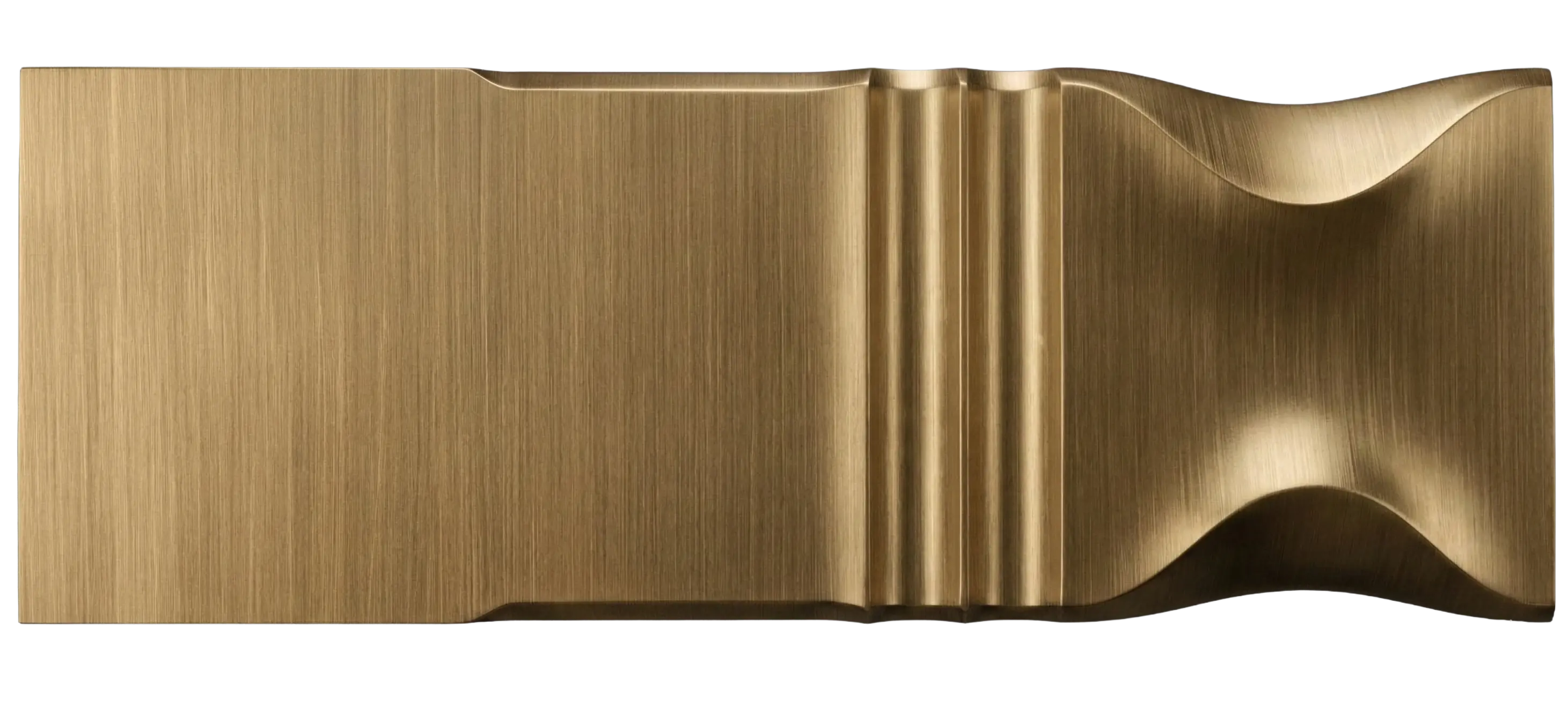
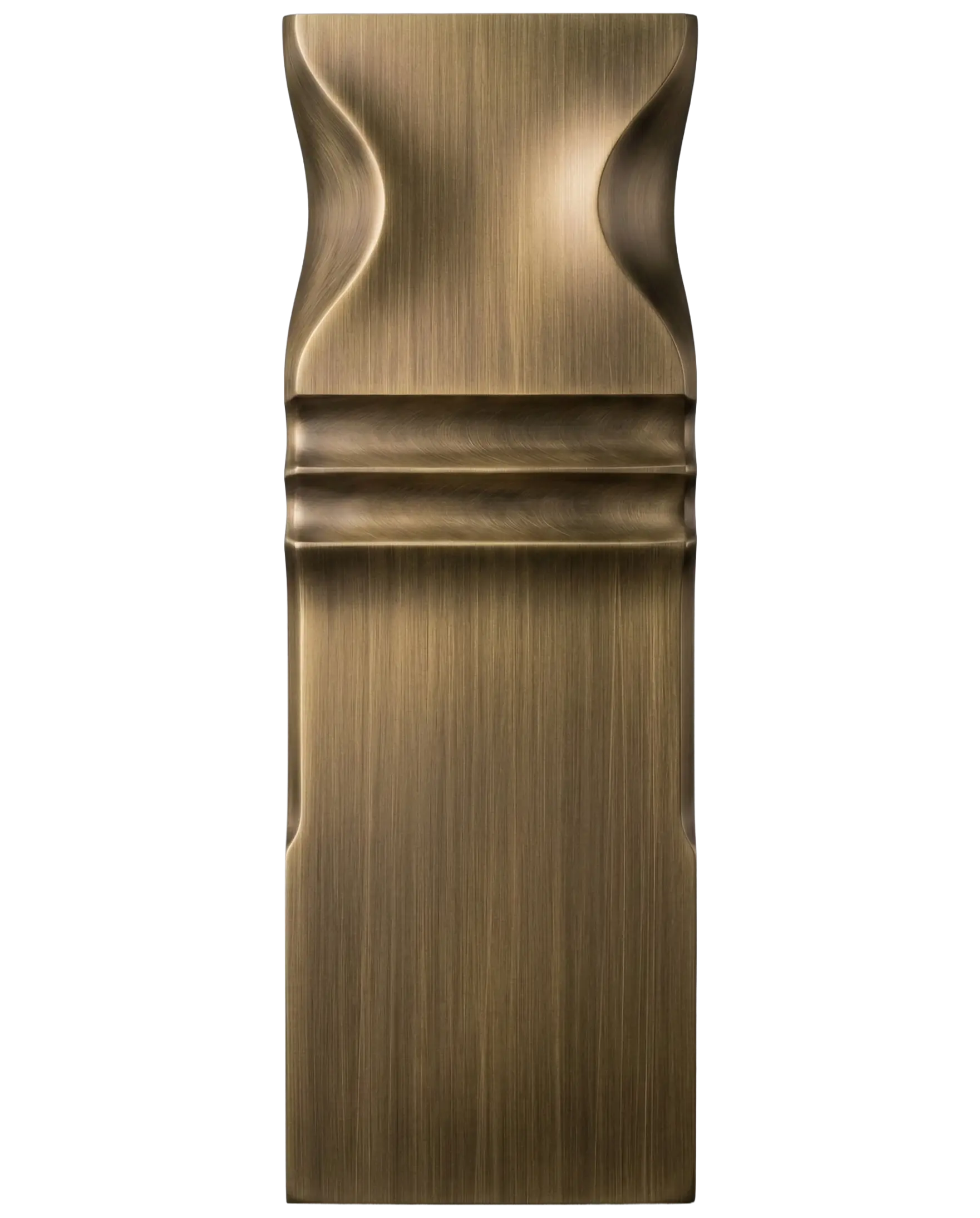
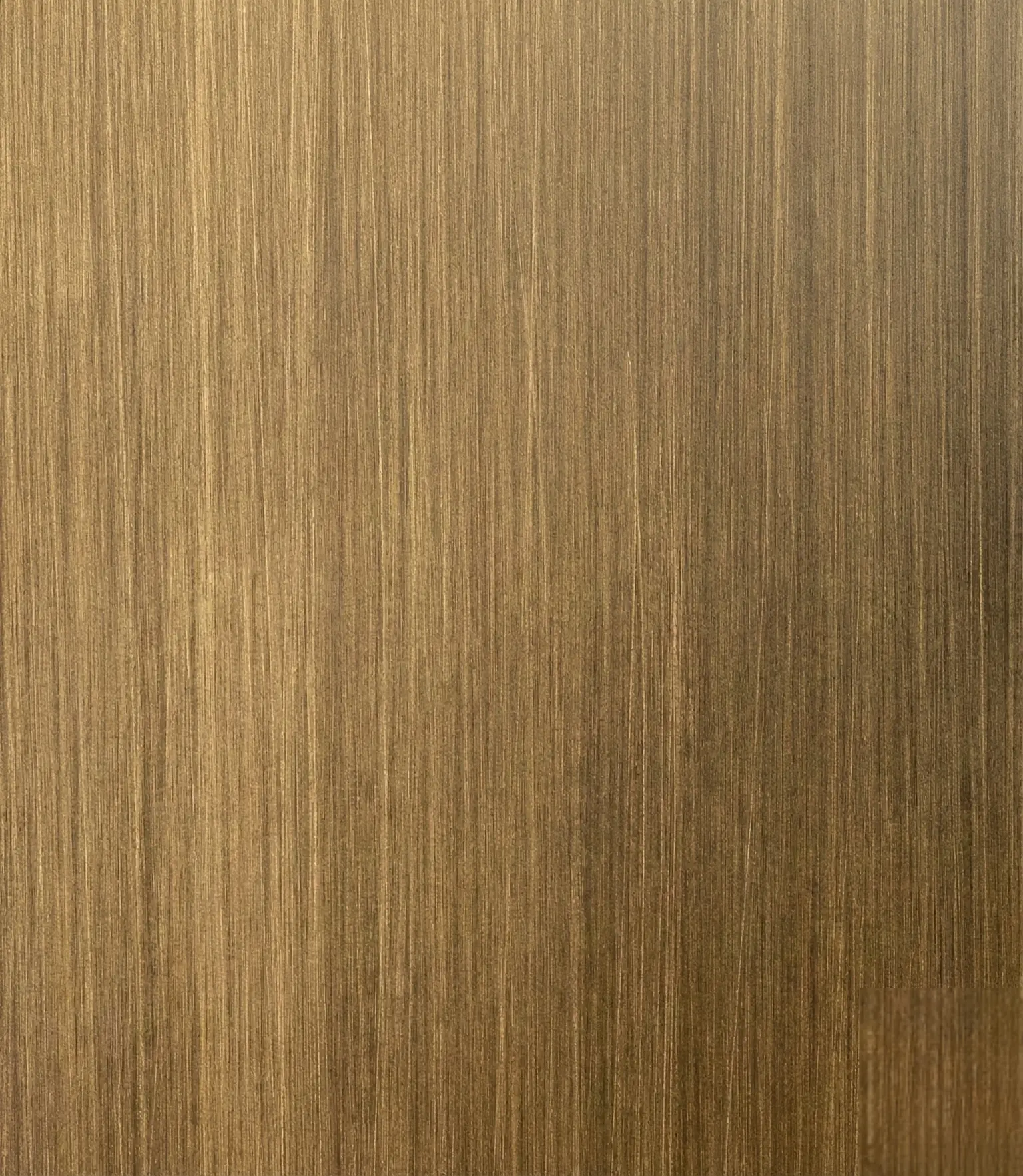
In interiors, Blackened Hairline Brushed Brass brings a grounded elegance to cabinet fronts, kitchen islands, appliance panels, wall cladding, door faces, pocket door surrounds, shelving back panels, display niches, fireplace framing, and reception desks. The fine hairline direction helps control glare in close view, while the darker brass tonality adds depth in spaces where lighting is warm and layered, and where materials are experienced by hand as much as by eye.
Architecturally, it scales into elevator lobby portals, column wraps, soffit features, ceiling trims, wayfinding and signage, facade accent zones, entry door surrounds, balcony detailing, exterior screens, and sculptural volumes where a quieter metallic note is preferred. The same visual direction can be developed through different Modulux methods, allowing the finish to be specified across varied substrates and geometries including flat panels, sharp edges, and curved forms, while keeping one coherent metal language.
This finish is sealed with a clear protective topcoat selected for the project. For routine care, remove dust with a clean microfiber cloth, then wipe with mild soap and water as needed. Rinse with clean water and dry thoroughly to prevent water marks, especially around edges, joints, and frequently handled areas where residue can build up over time.
Avoid abrasive pads, scouring powders, metal polishes, solvent based cleaners, and acidic or alkaline detergents, as they can burnish the sheen, shift the tone, or compromise the protective layer. In high touch zones such as pulls, door edges, and reception fronts, use more frequent gentle cleaning and keep rings and hard objects from dragging across the surface. If a panel becomes scratched or dulled, do not attempt to repolish it on site. Isolate the area and contact Modulux for touch up guidance aligned to the approved sample.
Share your substrate, geometry, and use zone, and we will recommend the right execution path and topcoat strategy. Request samples, confirm interior or exterior suitability, and coordinate the finish against adjacent stone, wood, and hardware for a calm, consistent result.
WhatsApp us