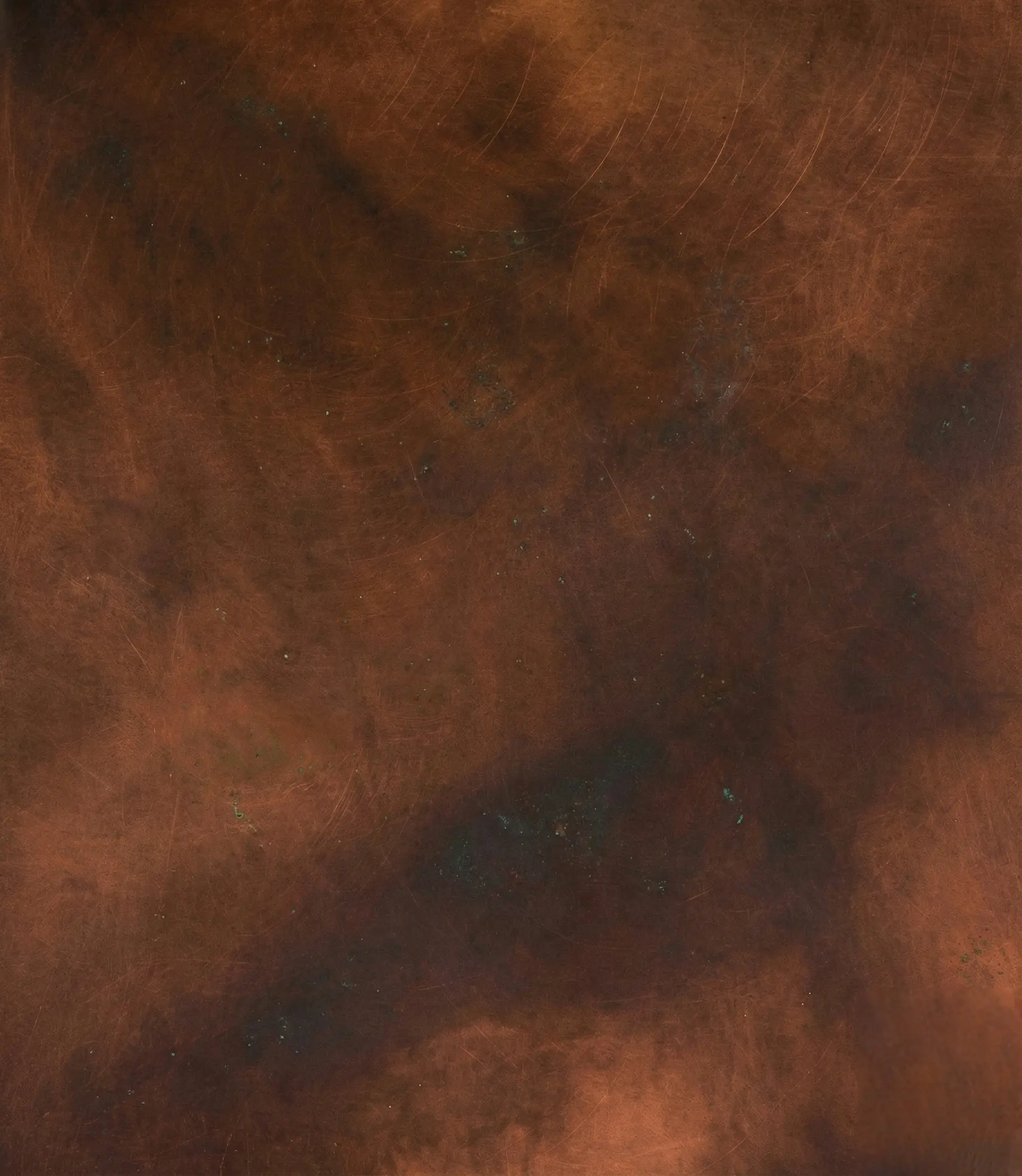
Blackened Copper is a study in restraint, where warmth is tempered by shadow and the surface reads quietly aged rather than newly made. The tone moves between deep umber and burnished copper, with soft clouding that shifts under grazing light and nearby color. Because the finish is built on real copper, it holds depth and a subtle mineral complexity, including occasional dark blooms that enrich the field while remaining composed. The same visual can be developed through more than one method within Modulux Services, allowing designers to specify an authentic copper language on joinery, panels, or existing metal while keeping fabrication practical. After the metal layer is established, the surface is refined through controlled finishing and blackening, then protected with a clear topcoat selected for the project conditions. In the space, the effect is tactile and architectural: reflections soften, edges read clean, and the copper undertone brings warmth to stone, timber, plaster, and matte colors without demanding attention. Use it for intimate interior elements and for larger architectural features that benefit from a quieter metal note. For process context and finish development references, the News and Blog is a useful starting point when coordinating adjacent materials and lighting.
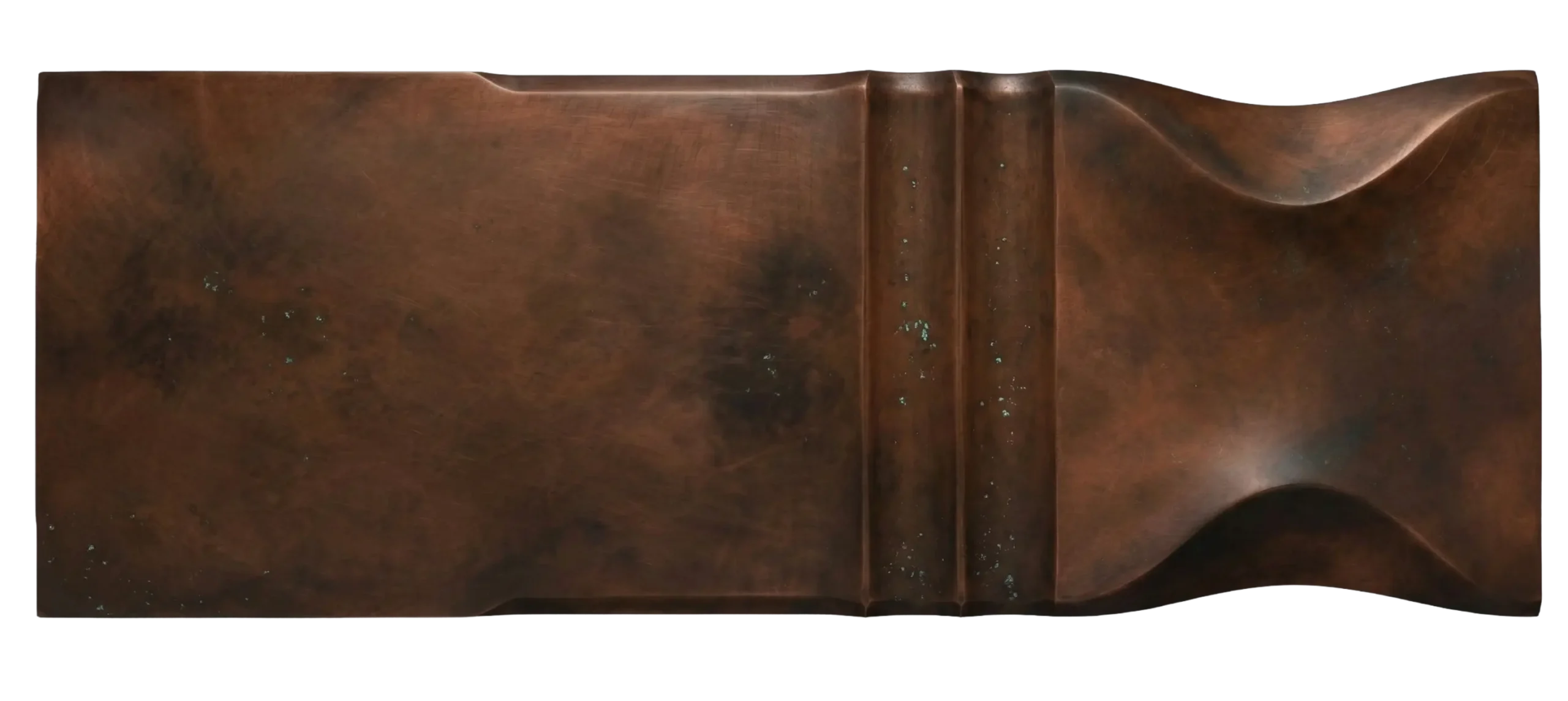
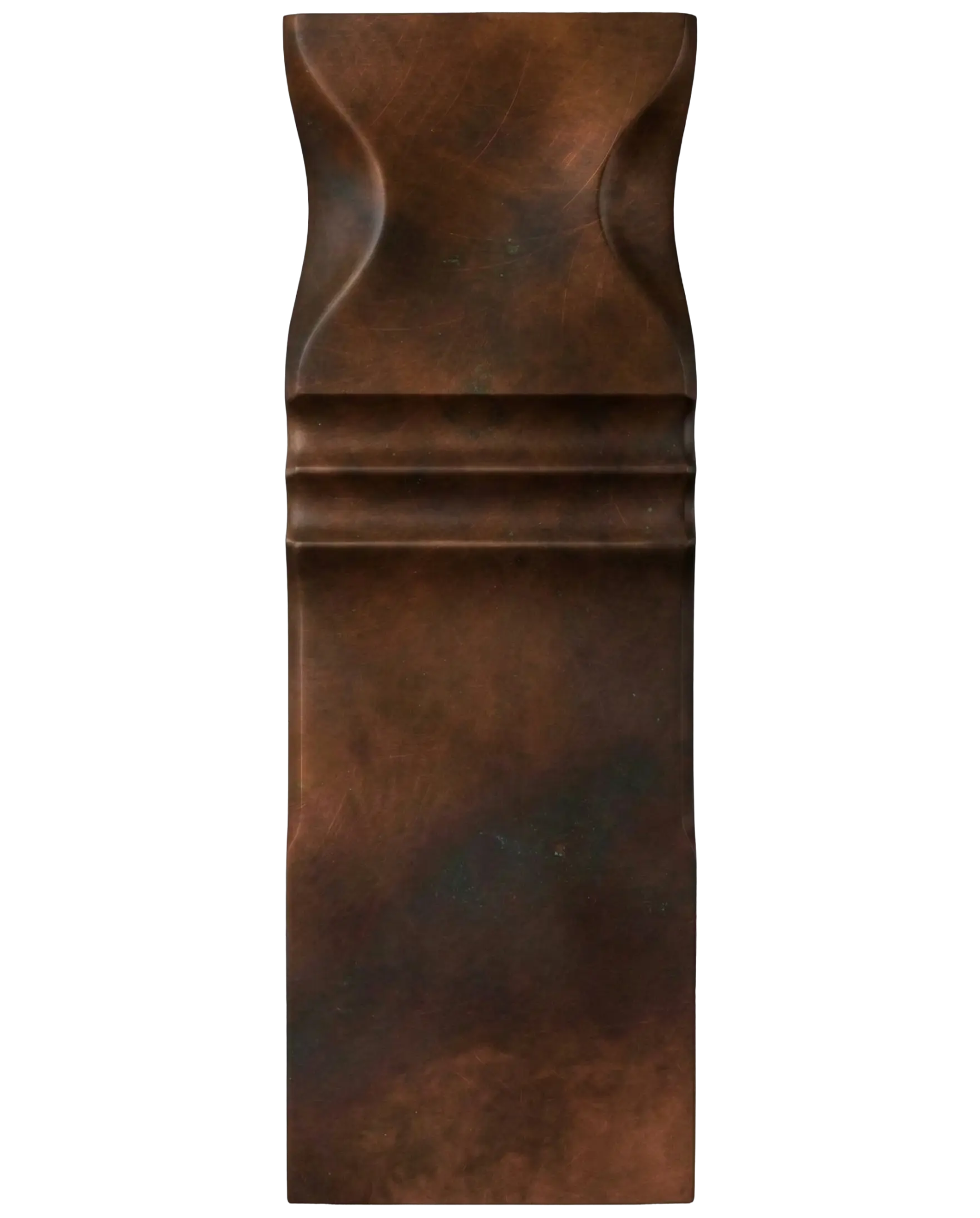
In interiors, Blackened Copper adds a grounded metal note that stays calm under warm lighting. It is often specified for cabinet fronts, kitchen islands, bar cladding, reception desks, shelving liners, display niches, retail fixtures, vanity panels, fireplace surrounds, art plinths, and feature wall surfaces where you want depth close to the hand and eye. The darker field reduces visual noise in busy programs, while the copper undertone keeps the atmosphere warm rather than graphic.
In architectural applications, it scales into entry portals, door frames, ceiling reveals, soffit accents, column wraps, canopy undersides, facade detail bands, exterior signage, wayfinding components, balustrade infill panels, and custom gate or fence inserts where a darker copper presence feels appropriate. The finish can also sit on protected exterior volumes that need a material that reads substantial without the weight of solid sheet. A single Blackened Copper target can be delivered through multiple Modulux technologies, helping you hold one finish language across different substrates and geometries, from flat panels to crisp edges and clean curved forms. This flexibility supports coordination across trades and phased fabrication without visible shifts in tone.
Blackened Copper should be treated as an architectural surface rather than a raw metal worktop. It is sealed with a clear protective topcoat selected for the project, which helps stabilize tone and makes routine cleaning straightforward. For day to day care, dust with a clean microfiber cloth and wash only when needed using mild soap and water. Rinse with clean water, then dry thoroughly so moisture does not linger along edges, corners, and joints. Where the finish is used on exterior elements, a periodic freshwater rinse can reduce environmental buildup and keep the surface reading consistent.
Avoid abrasive pads, scouring powders, metal polishes, solvent based cleaners, and acidic or bleach containing products, as these can dull the clear coat and imprint the surface. Do not use adhesive tapes directly on the face, and place felt pads under objects to prevent point wear. In high touch areas, a gentle wipe down after use will keep the finish even and reduce localized burnishing. If the surface is scratched or begins to look tired in a specific zone, pause aggressive cleaning and contact Modulux for a serviceable refresh plan based on the installed topcoat.
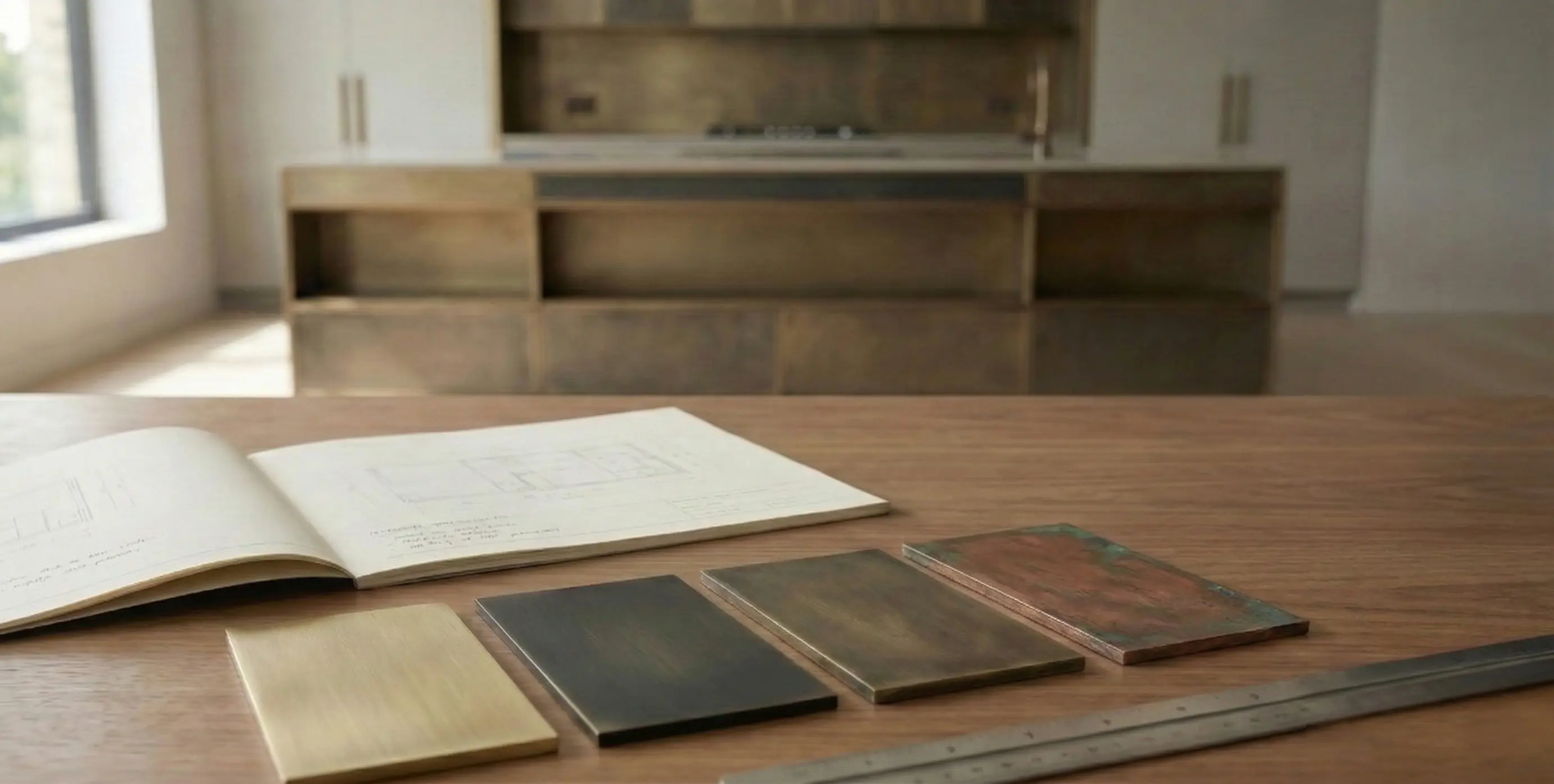
Request a physical sample or share your substrate and geometry, and we will help confirm suitability for interior or exterior use. We can also align Blackened Copper with adjacent materials so the finish reads intentional across the project.
שלח לנו וואטסאפ