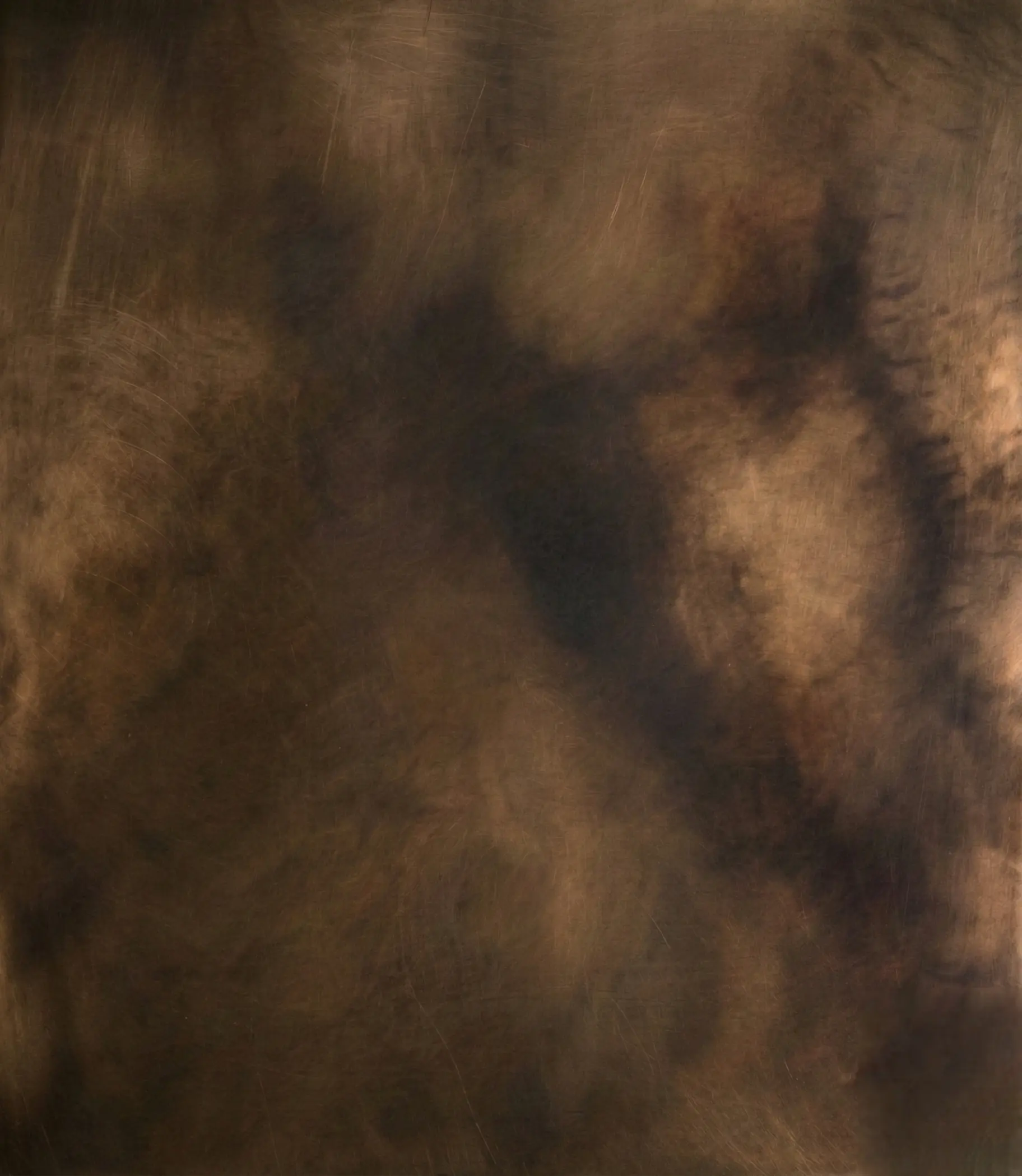
Smoked Patina Bronze is a study in restraint, where bronze reads less as a statement and more as atmosphere. The surface holds a warm, umber bronze base with softened, smoky shadows that drift across the panel, creating depth without visual noise. Crafted as a real metal finish, it is developed through a controlled patina process and refined by hand so tone and sheen remain aligned to an approved reference. The result is a bronze presence that feels tactile up close, yet composed from a distance, with a quiet satin reflectivity that responds gently to grazing light. In interiors, it brings warmth to joinery, wall elements, and focal details without competing with stone, timber, or textiles. In architectural use, it scales into larger planes and components where continuity and tonal stability matter, helping metal become a coherent language across a project. To understand the full range of ways this finish can be specified, explore Modulux Services, and for deeper process context and material guidance, visit חדשות.
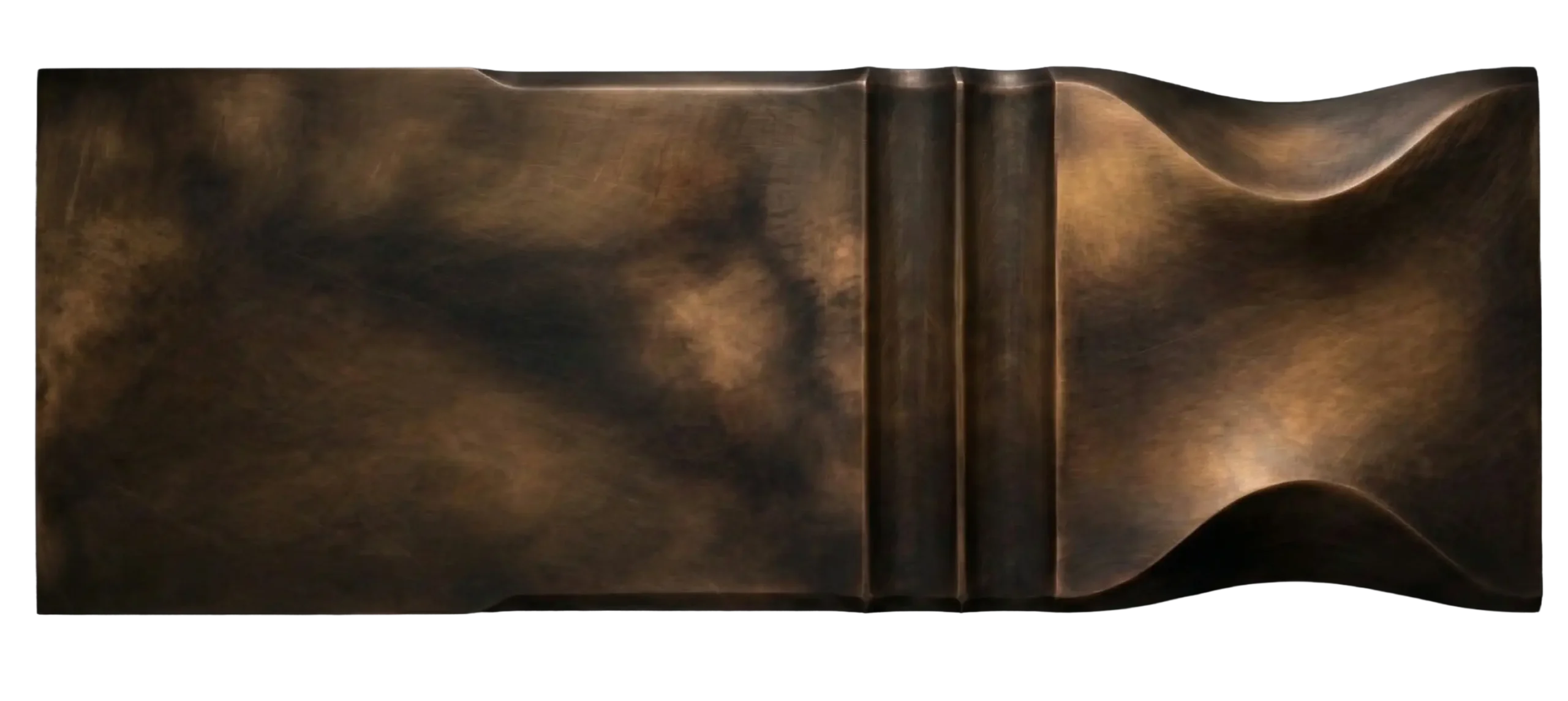
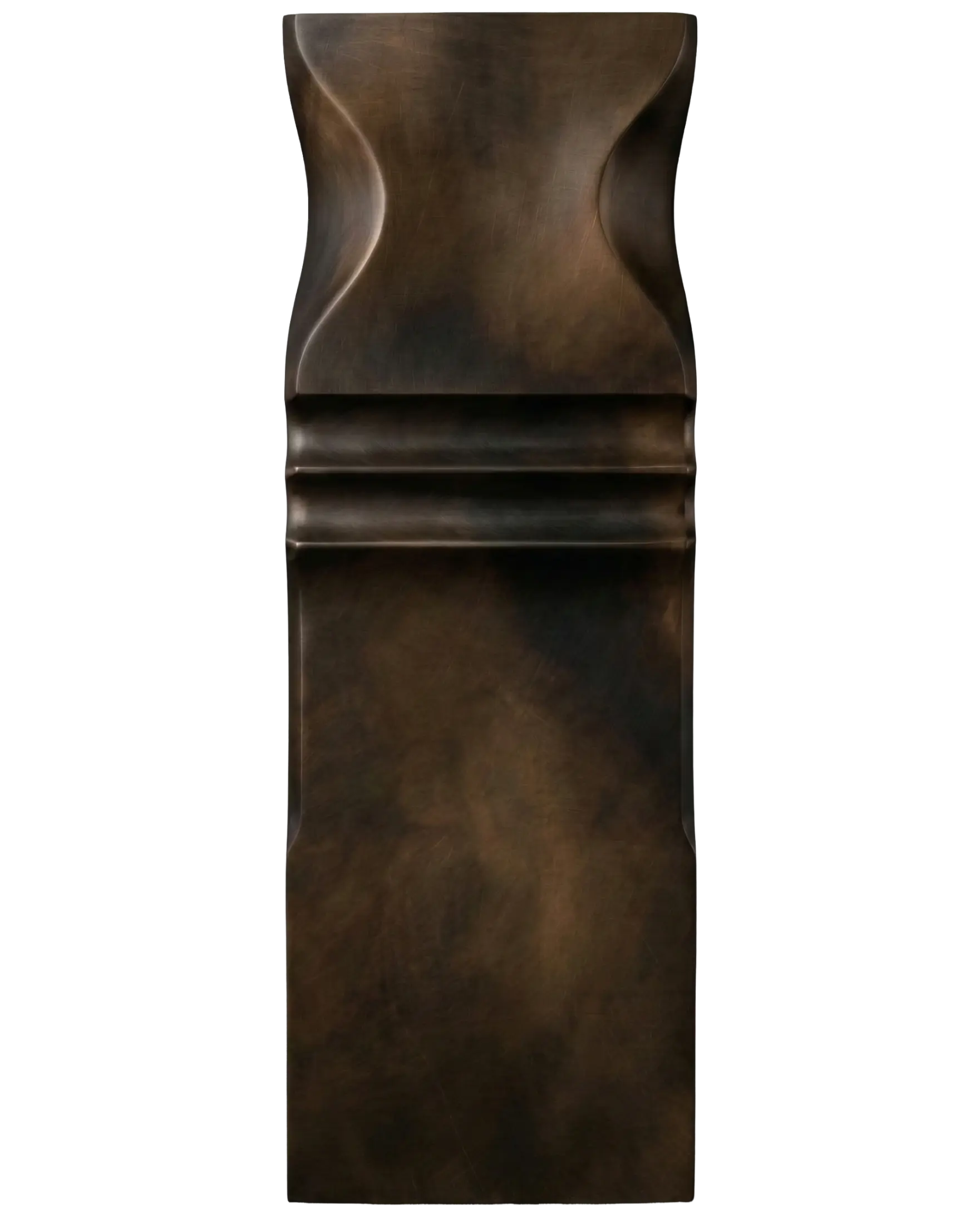
Smoked Patina Bronze is well suited to interiors where you want warmth with a grounded, mature character. It works beautifully on cabinet fronts, millwork panels, integrated shelving, niche back panels, bar and hospitality fronts, fireplace surrounds, feature inserts, display plinths, and custom furniture surfaces. The smoky patina movement reads refined under warm lighting, and it performs especially well in spaces where metal must sit close to the hand and eye without feeling overly reflective.
In architectural applications, the finish translates into door portals, elevator lobby details, column wraps, soffit accents, reception desk cladding, wayfinding and signage faces, storefront feature zones, partition frames, and select exterior elements where a deeper bronze note is desired. The same visual direction can be achieved through different Modulux methods, allowing designers to carry the finish across varied substrates and geometries, including flat panels, sharp edges, and curved forms, while maintaining one continuous metal language.
Smoked Patina Bronze is sealed with a clear protective topcoat selected for the project. For routine care, dust with a clean microfiber cloth and use mild soap with water as needed. Wipe gently, then dry thoroughly to prevent water marks and to keep the sheen even. For exterior locations, increase cleaning frequency based on exposure and airborne contamination, always using non abrasive methods.
Avoid abrasive pads, scouring powders, metal polishes, acidic cleaners, and solvent based products, as these can haze the topcoat and disturb the patina character beneath. In high touch areas, occasional soft wiping helps keep oils from building up and changing the way light reads on the surface. If the finish becomes dulled or scratched, do not attempt to polish it back; contact Modulux so the correct touch up or refinishing approach can be advised for the specific topcoat system.
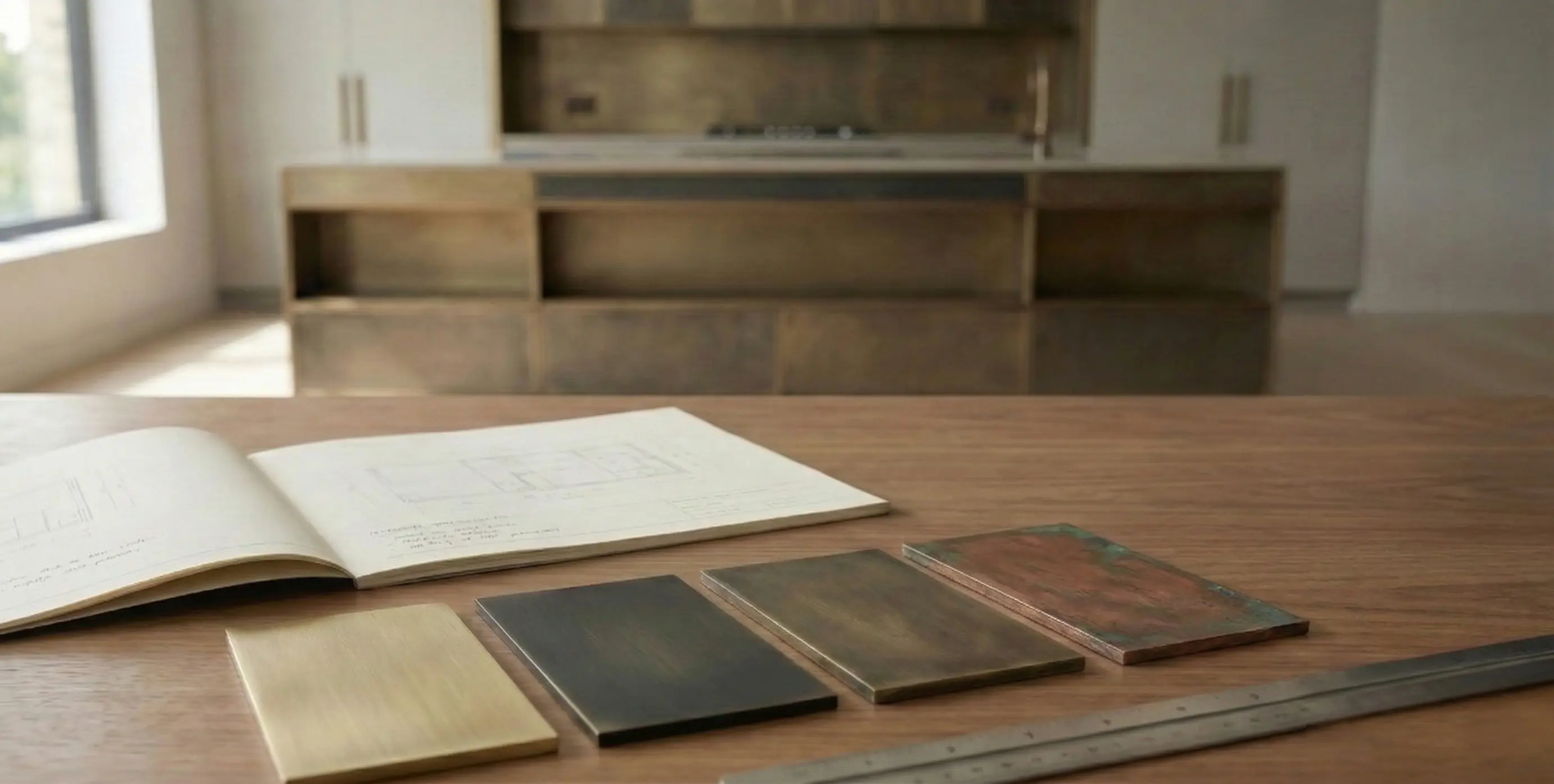
Share your substrate, geometry, and intended use zone, and we will advise on the most suitable method and protective topcoat. You can also request samples to confirm tone and sheen alongside adjacent materials and lighting conditions.
שלח לנו וואטסאפ