Idea → Material
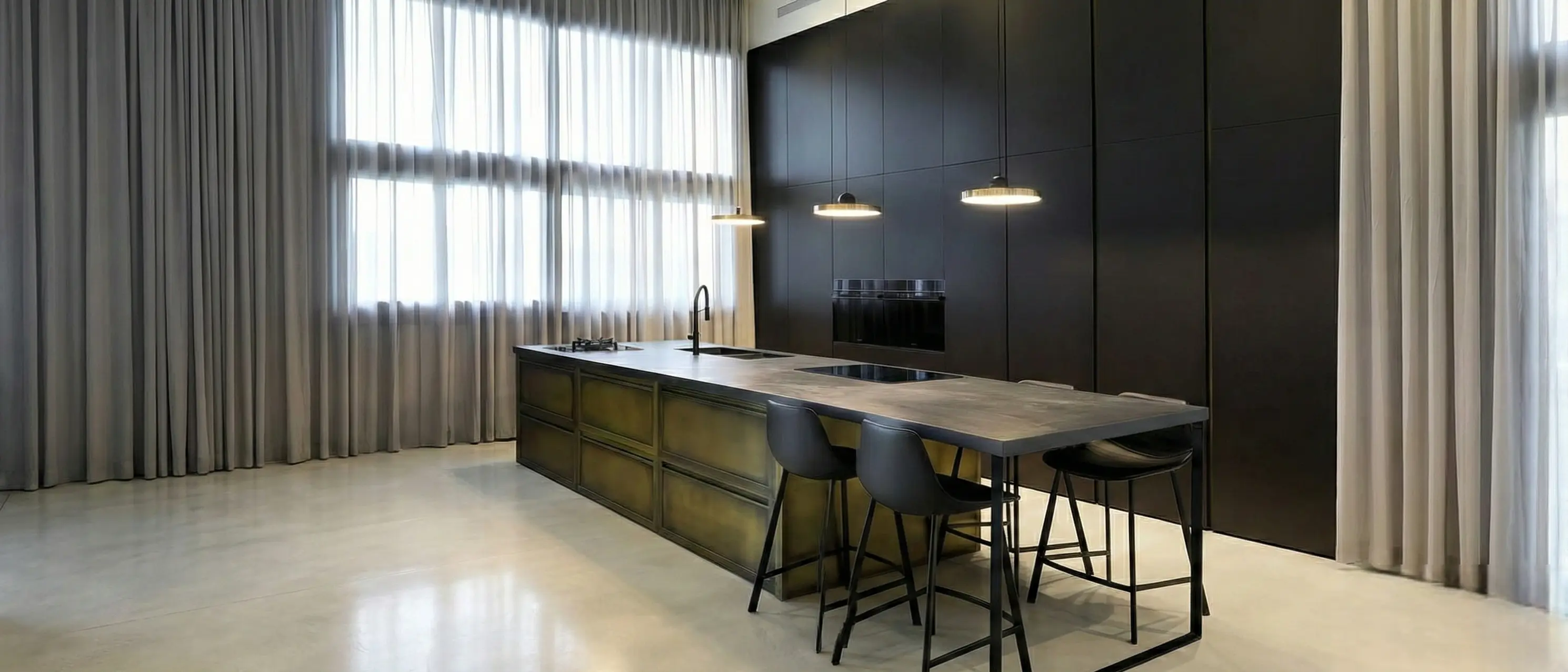
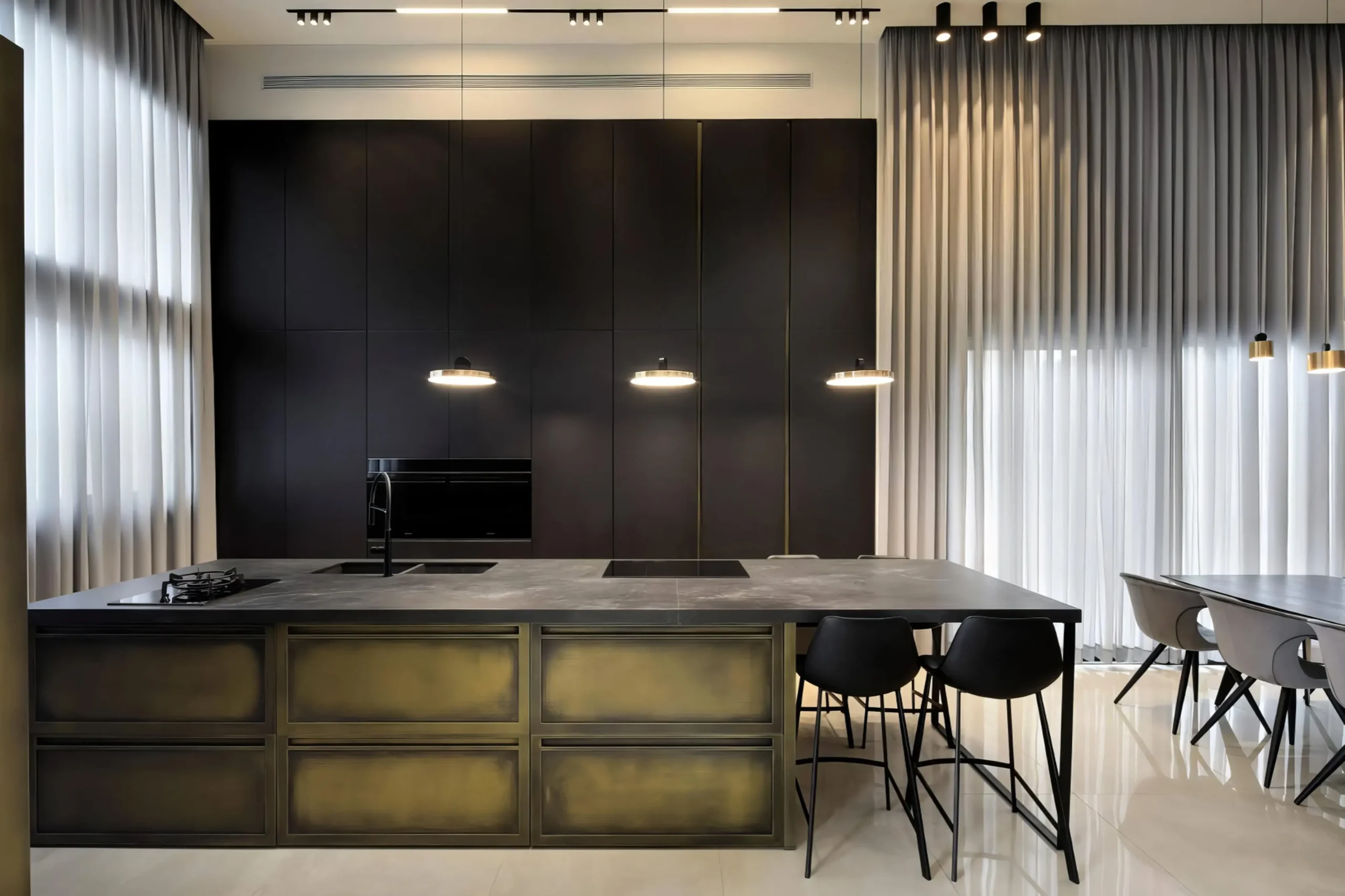
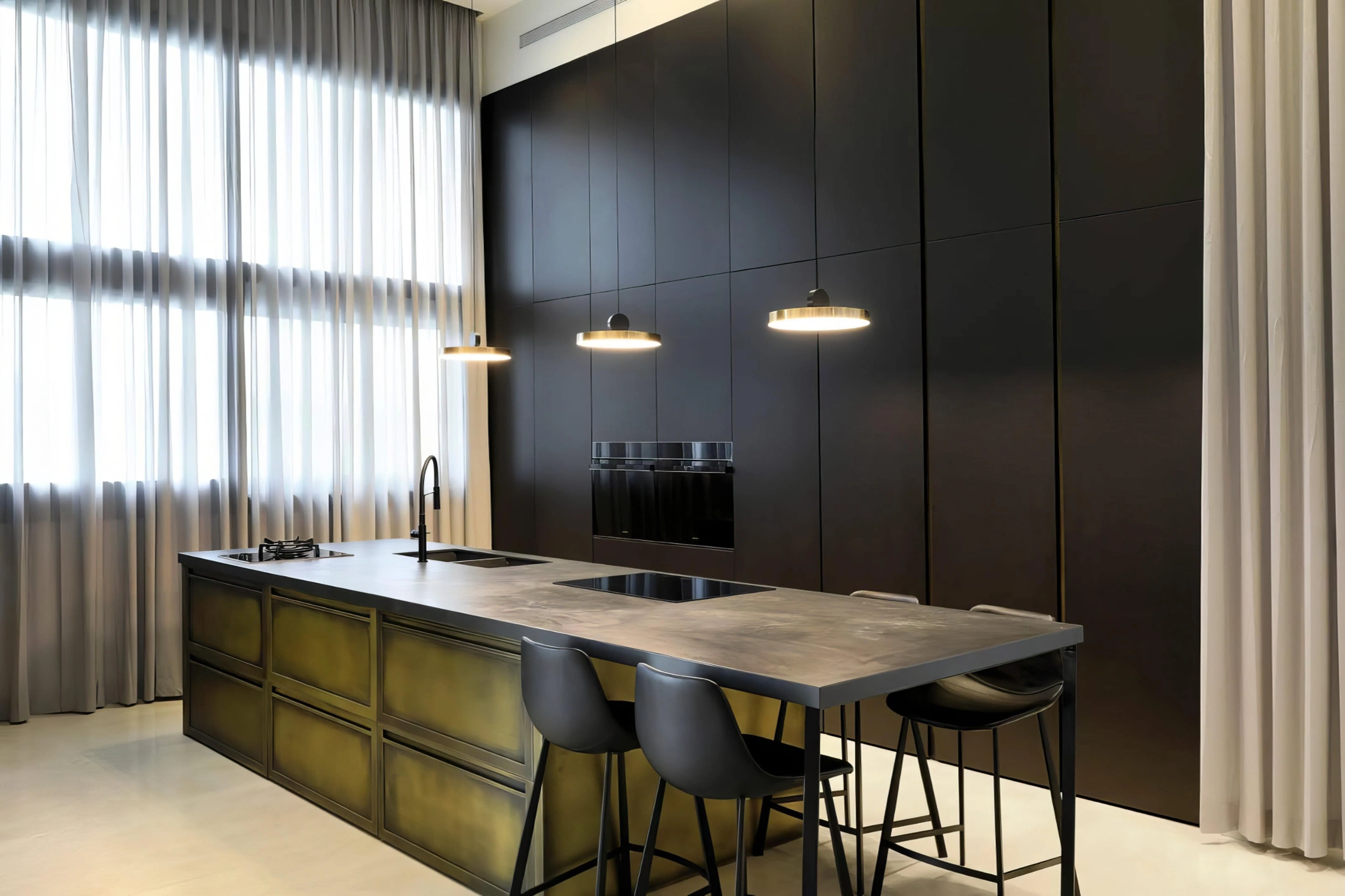
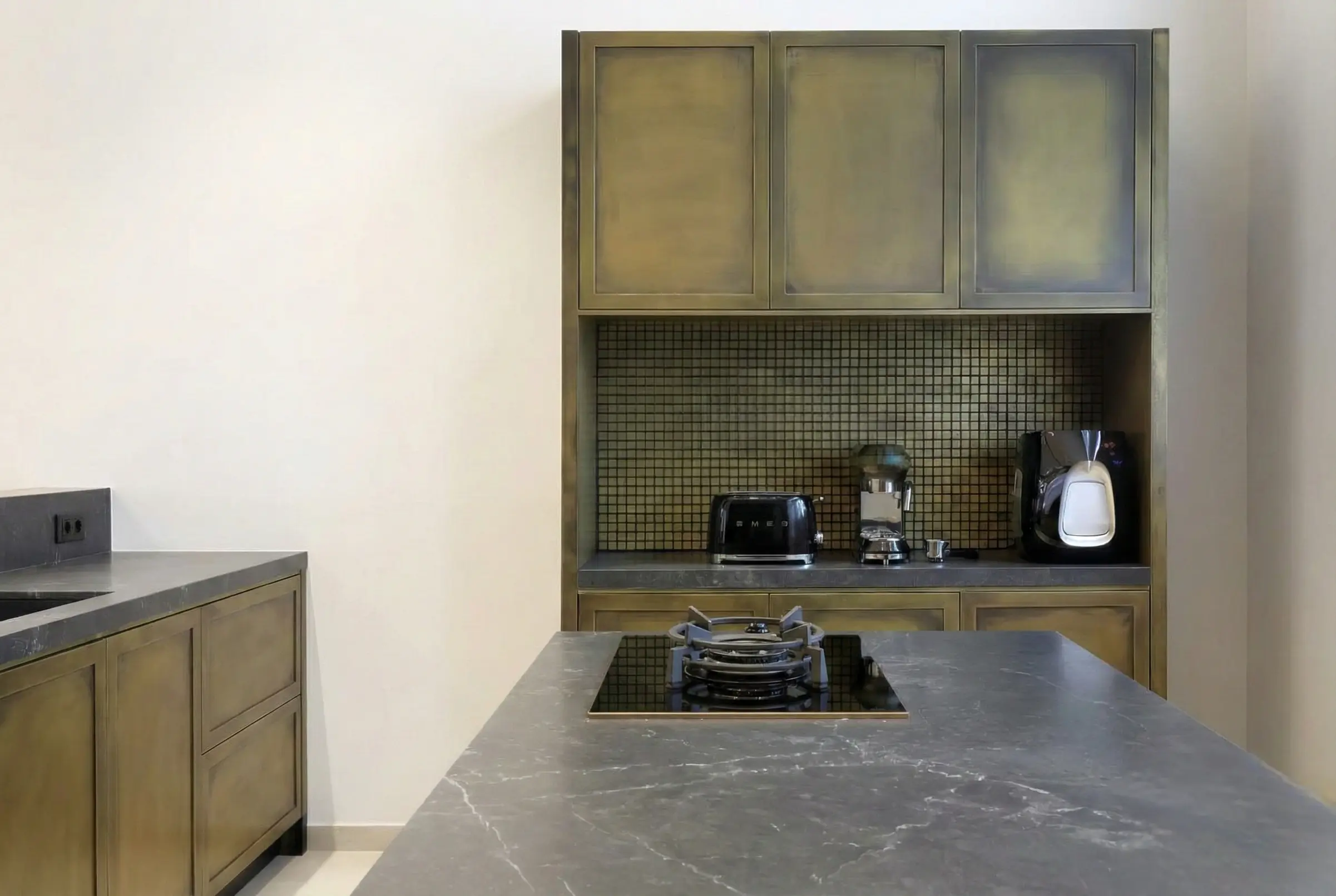
A kitchen island designed as a focal object, with a rural French reference that reads through warmth and restraint. The surface is brass, chosen for its ability to carry depth, brushing direction, and a measured darkening without losing clarity.
Process → Effect
The finish is built through a controlled blackening and brushing sequence, so the island holds one coherent tone across planes and edges. The intent is a calm, continuous read, with minimal visual interruption where seams or folds would normally appear.
French Brass Kitchen is located in Jerusalem. The project type is a kitchen, with the island treated as the central feature element. The design intent is a rural French reference expressed through brass, with a restrained darkened tone and a calm, continuous read across the volume. The finished scope includes MetaliQ Brass. The substrate is MDF. The technologies used are cloudy blackending.
The tone direction is darkened brass that remains warm and grounded. Reflectivity is disciplined through brushing, keeping highlights narrow and predictable under interior light. Edge and radius continuity is handled as part of the finish logic, carrying the surface across transitions so the island reads as one metal object rather than a set of assembled faces. Sample alignment is managed through reference panels and controlled light review, aligning tone depth and brushing direction across all visible planes.
The workflow begins with substrate preparation and edge detailing, with attention to corners and returns so the finish can stay continuous at close range. The metal layer is then applied, following the selected technology for this project: MetaliQ Brass. Finishing calibration follows, tuning tone depth and surface reflectivity through a controlled blackening and brushing sequence, aligned to the approved sample. A protection layer is applied next, selected to match the confirmed constraint profile of the project. Quality control closes the process under controlled light, verifying continuity across planes, edges, and transitions, and checking that seams do not interrupt the final read.
The island is treated as a single metal volume, not a set of assembled faces. Brushing direction is kept disciplined, so reflections stay consistent as you move around the piece. Under warm interior light, the surface reads quieter, with depth concentrated in the darker fields rather than in high sheen highlights.
Buildability matters here. The finish strategy is chosen to reduce the visual penalties of fabrication, especially at transitions where joints, folds, or bends would interrupt the grain. The result is a calmer composition, where the brass supports the architecture instead of competing with it.

Share your project scope, geometry, and the tone you want to achieve. We can prepare samples and support the specification workflow through production alignment.
WhatsApp us