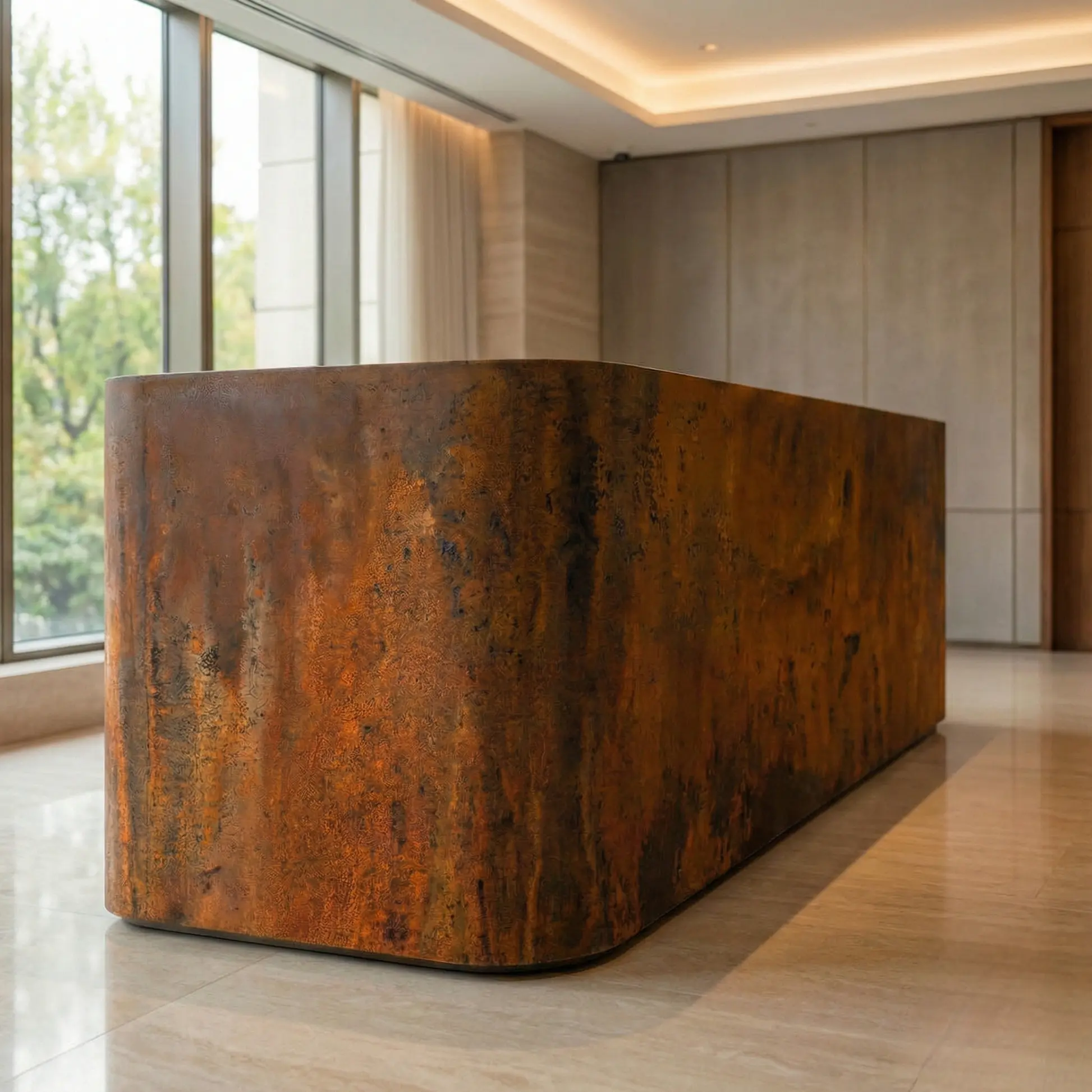
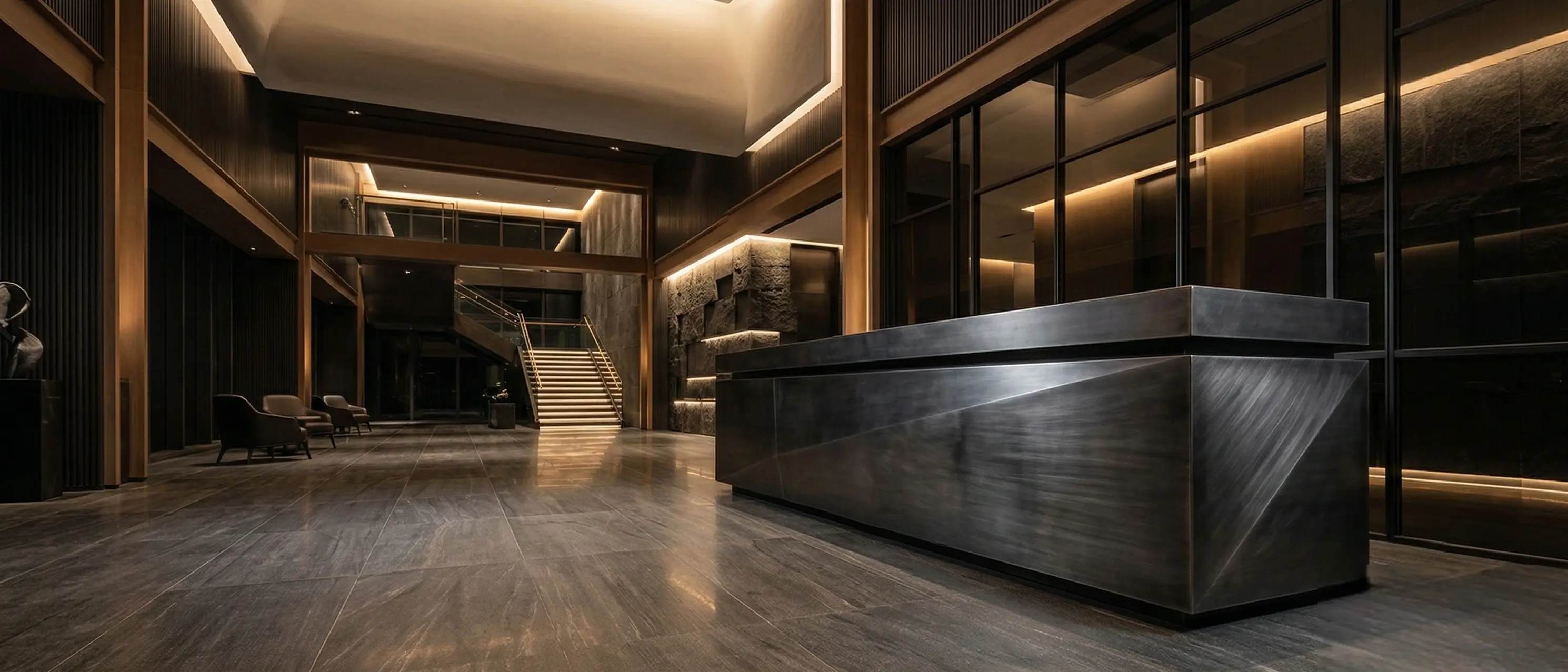
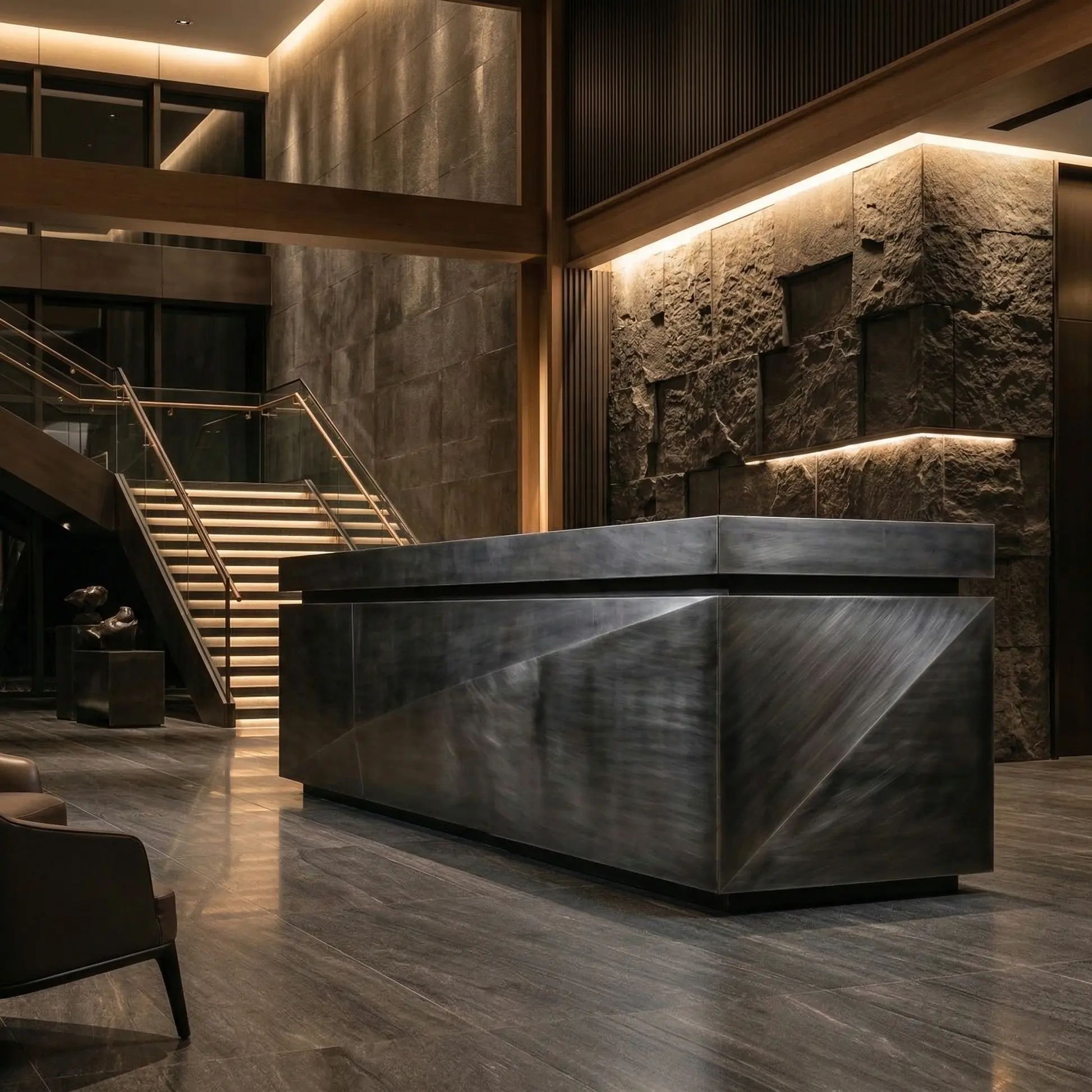
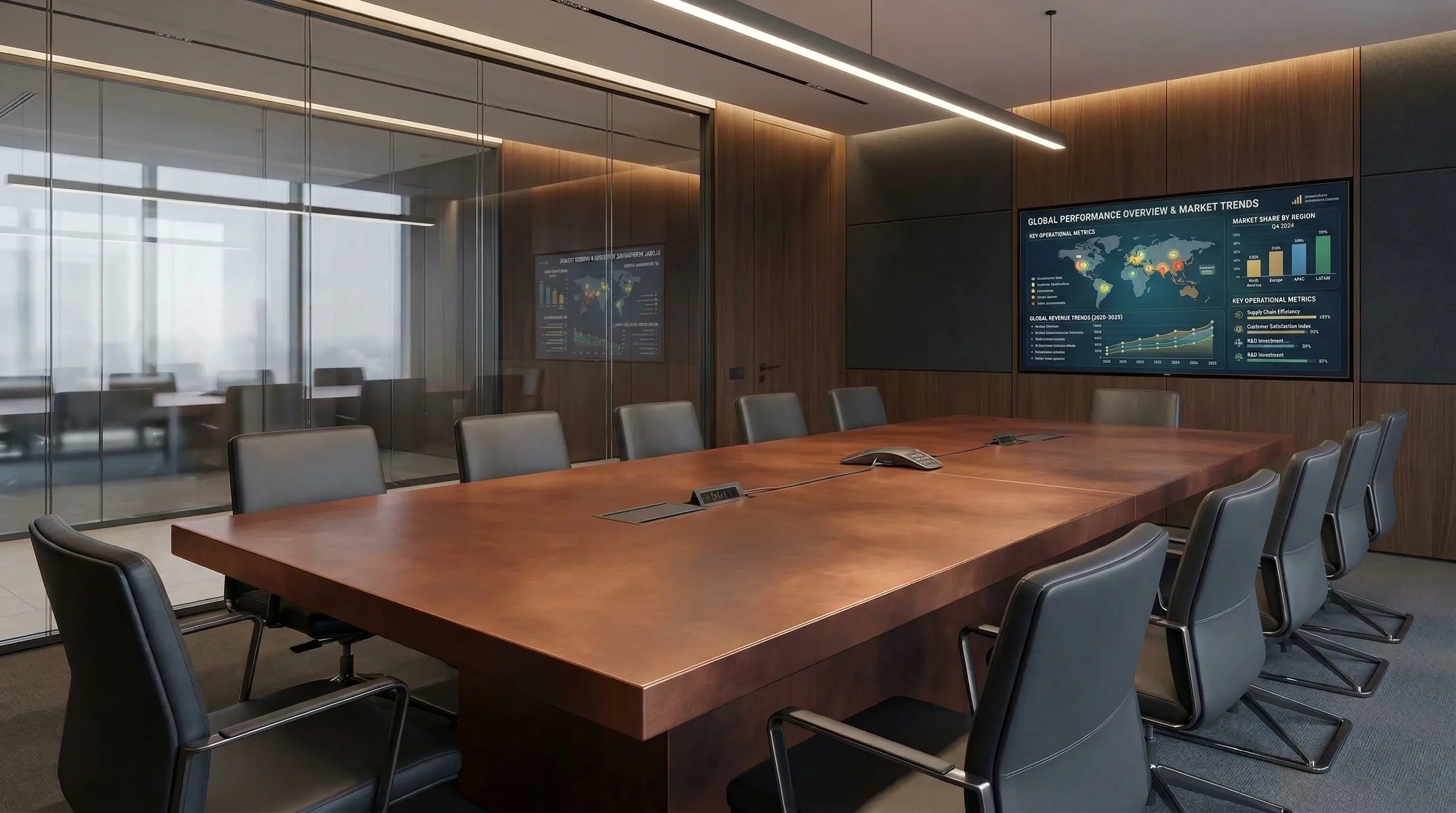
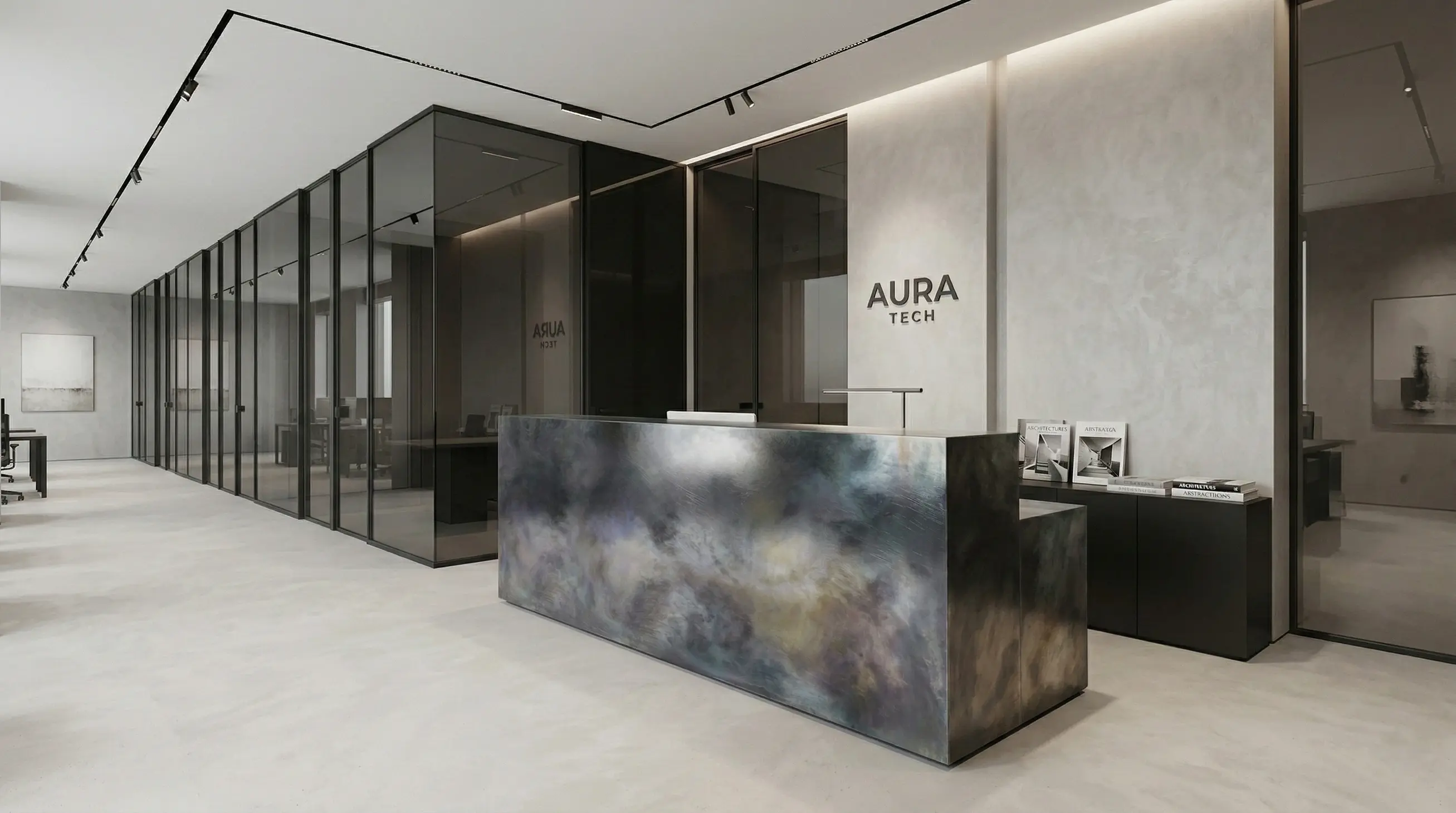
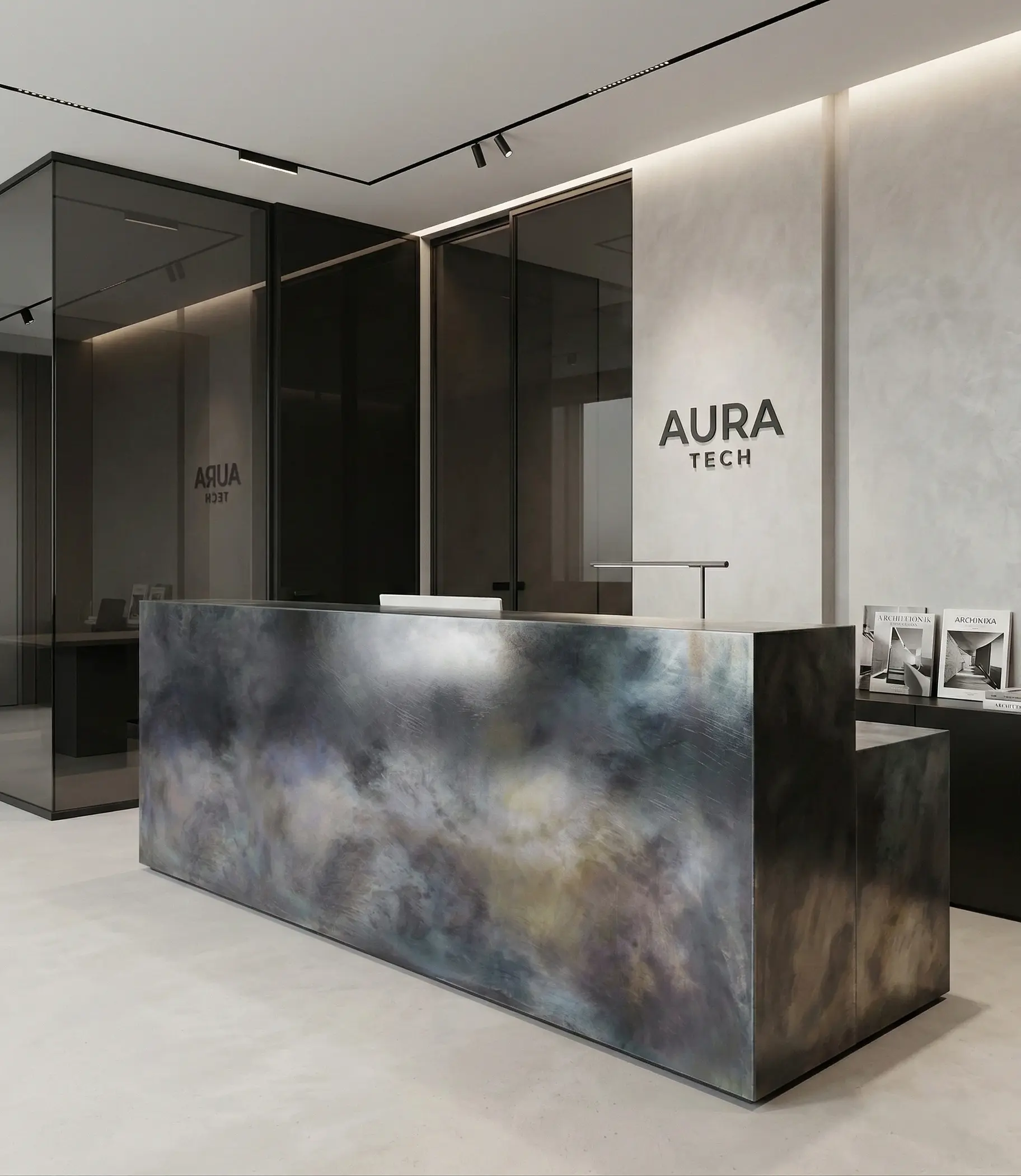
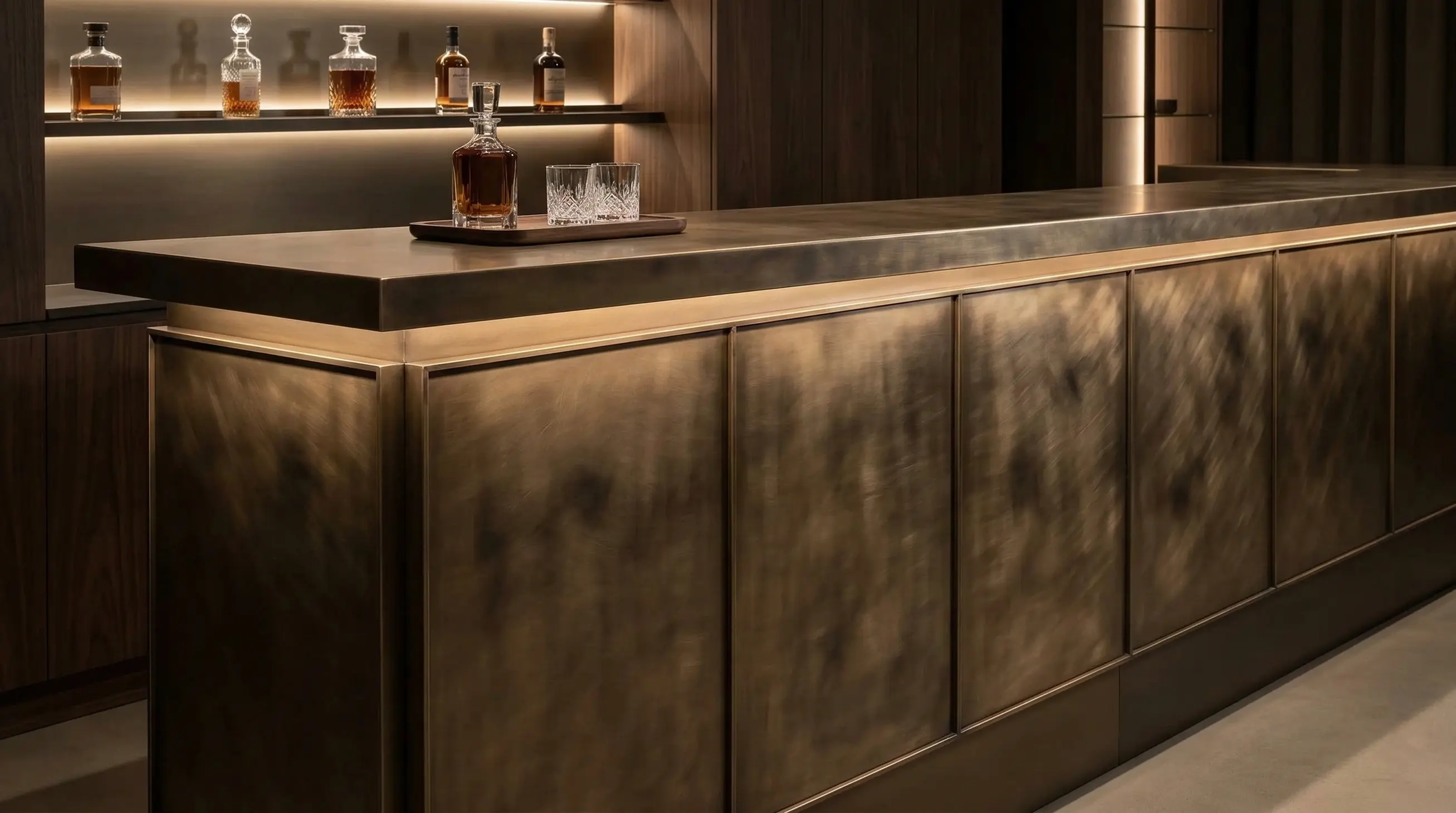
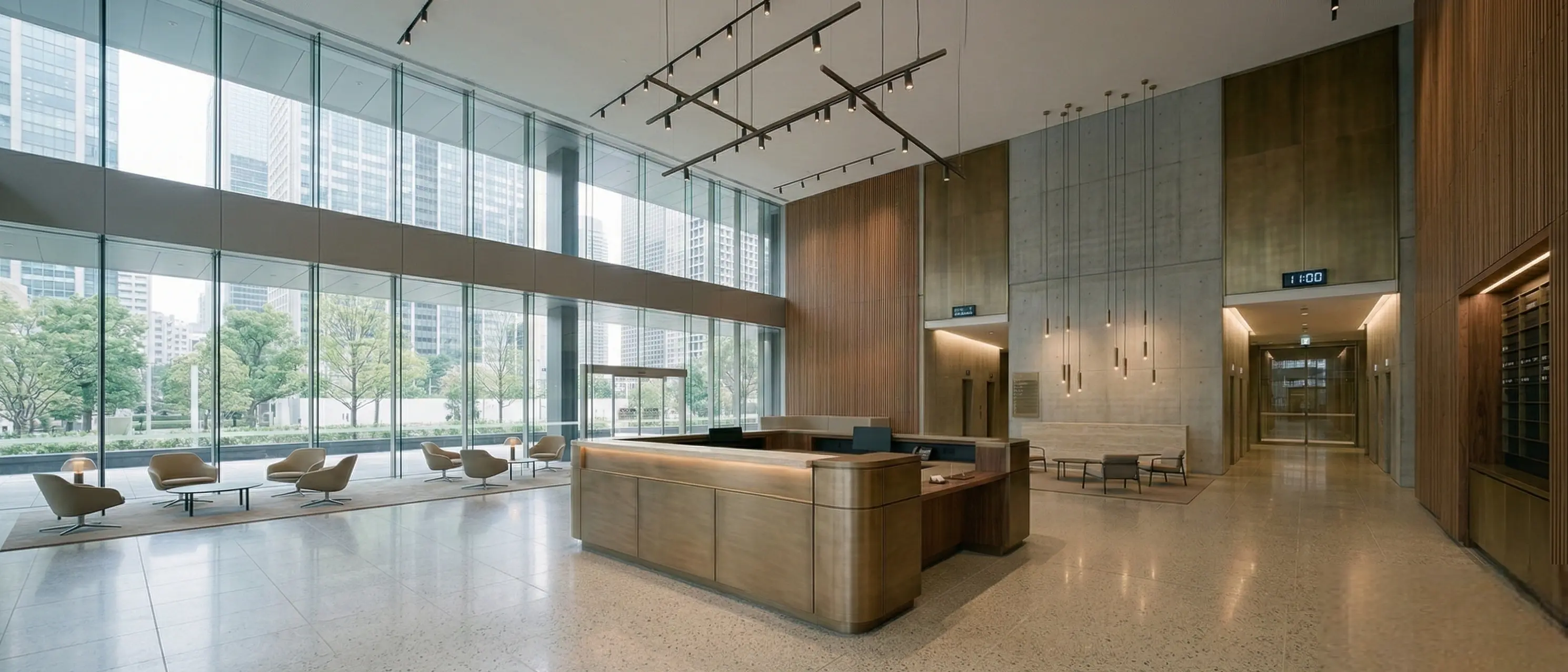
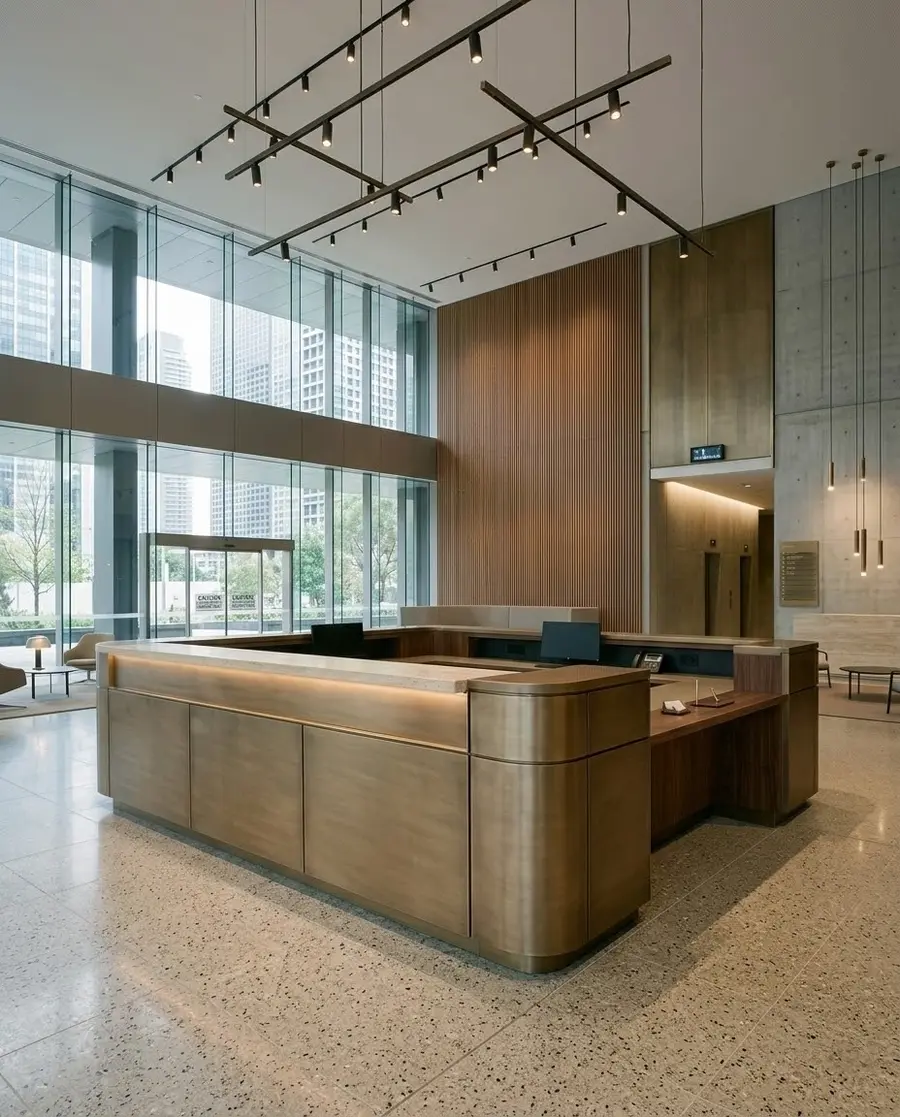
A reception desk is furniture, but it behaves like architecture. It holds the first line of sight, the first touch, and the first reflection. When metal is specified here, it becomes a quiet narrator, guiding light across a plane, tightening geometry at the corners, and anchoring the room with tactile weight.
Traditional sheet metal can make that intent harder to hold. Weight, seams, corrosion risk, complex geometry, and install complexity often force compromises right where the brief demands clarity. Modulux approaches reception desks as a finish strategy first, so the desk reads as one continuous material decision instead of a patchwork of parts.
A reception zone often mixes trades and substrates, yet the finish must read as one metal language. The specification logic starts with where the eye pauses and where hands land. It then sets a reference sample, a brushing direction or sheen target, and a sealing approach that matches the cleaning routine. This discipline keeps architectural metal finishes consistent across faces, wrapped edges, lighting reveals, and adjacent elements, even when the desk structure is engineered for buildability rather than fabricated from heavy sheet.
A reception desk is seen under mixed lighting, daylight spill, downlights, and grazing reflections. Begin by defining what the metal must do in that light. Decide whether the surface should soften reflections, sharpen them, or carry controlled patina depth. Establish one approved reference sample and one viewing condition for sign off. This single decision reduces late stage drift, especially when multiple trades deliver adjacent panels, trims, or wall elements that must share the same tone and sheen.
The desk can be engineered as a stable core, then treated as a finish surface, so geometry stays crisp without forcing heavy metal construction. This approach supports long spans and complex forms while keeping handling and installation practical. It also makes it easier to coordinate integrated details such as reveals, lighting pockets, and service access without breaking the metal story. The goal is one continuous reading across faces, corners, and returns, not a set of assembled fragments.
Surface quality begins before metal appears. Plan preparation as a sequence, cleaning, leveling, priming, and adhesion readiness, based on the actual substrate and geometry. Establish a consistent edge strategy, because corners and wrapped returns reveal every shortcut under light. Control dust and handling between stages, because contamination becomes texture. When the substrate is existing metal, preparation shifts toward consistency of grain, weld treatment, and uniform absorption before finishing.
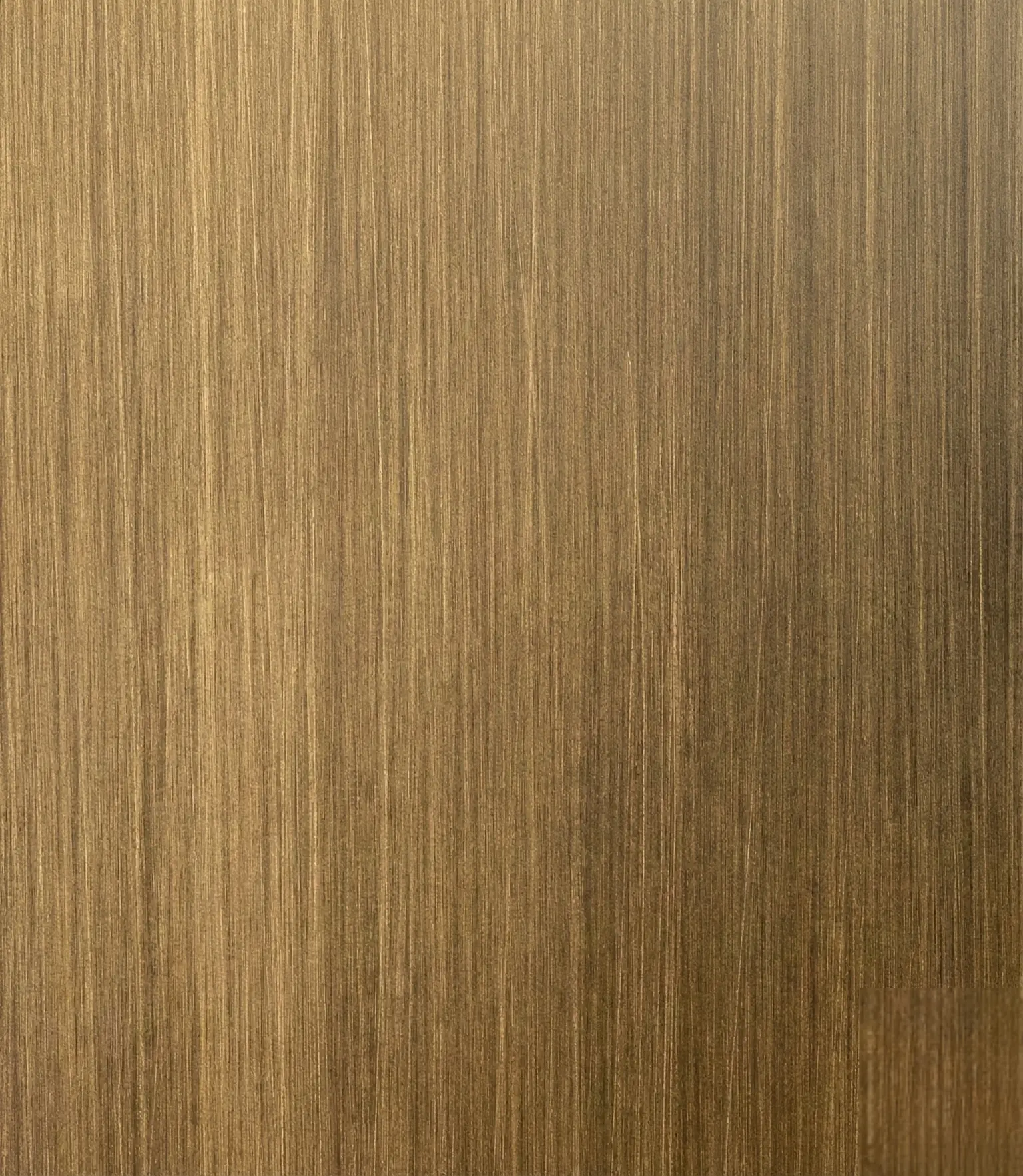
Reception desks demand finish control at arm’s length. After the metal layer is established, refinement techniques tune the surface, brushing direction, polishing balance, and patina restraint, until it matches the approved sample. Sealing is then selected as project specific, based on touch frequency and cleaning chemicals. This is where the finish becomes serviceable, not only beautiful on day one. The surface should keep its calm under routine wiping and periodic inspection, without chasing perfection through constant rework.
Custom reception desks are suitable for a wide range of applications:
Creating an impressive and luxurious first impression that defines the hospitality experience.
Define which planes are primary viewing surfaces, which edges are high contact, and which areas can remain quieter. Identify any integrated elements such as lighting, signage, or service cutouts so the finish sequence is not interrupted later. Confirm whether the finish must extend to side panels, plinth lines, and return faces. Document what will be coated on site versus in workshop, and set handling rules so the surface is protected during transport and installation.
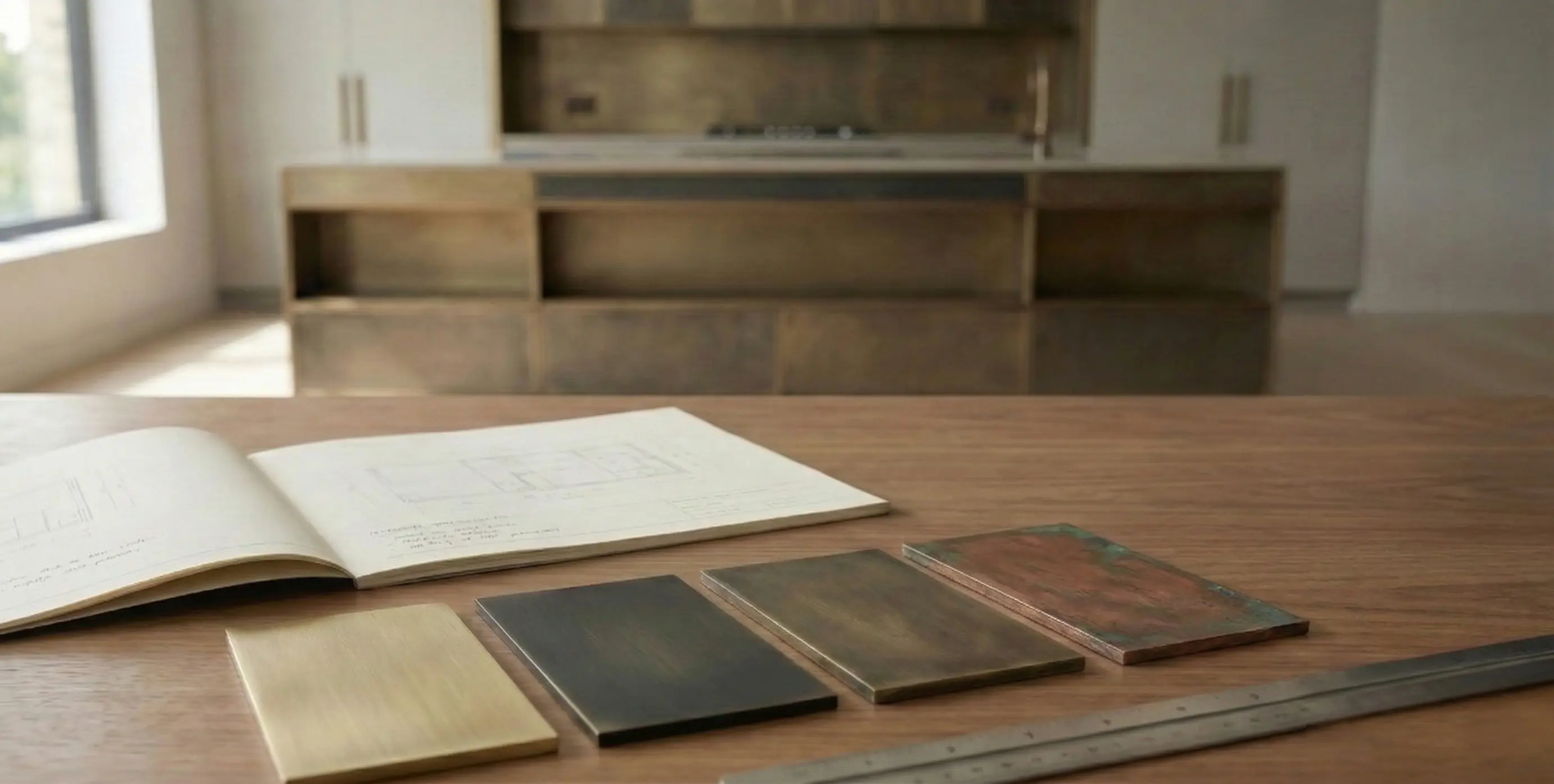
Develop an approval sample that reflects the final geometry, including at least one edge and one corner condition. Review the sample under the real lighting context where possible. Confirm brushing direction, patina character where relevant, and target sheen. Lock the sample as the production reference, then use it for batch alignment and for coordination across any adjacent metal elements. This is the simplest way to protect consistency across phased delivery.
Confirm the substrate type and core construction early. Validate that surfaces are stable, clean, and compatible with the selected system. For existing desks, assess the current finish and adhesion risks, then define the preparation approach before quoting or scheduling. Complex forms require extra attention at sharp edges and wrapped corners, where leveling and sealing must be controlled to avoid telegraphing the substrate.
Select the protective topcoat as project specific, based on touch frequency, cleaning agents, and the desired sheen. Define acceptable cleaners and daily routines, typically a damp cloth and non abrasive products, and avoid strong or abrasive agents that can degrade clarity over time. Plan periodic inspection and preventive maintenance, so small issues are addressed early. For touch ups, keep the reference sample and finish notes on file to support matching and localized repair.
A reception desk finish is chosen by intent, then proven by sample. Where seamless metal must wrap corners and complex geometry, MetaliQ Liquid Metal Coatings allow the surface to read as real metal while staying buildable on prepared substrates. Where higher durability and a robust metal layer are the priority, TruMetal Arc Wire Coatings establish a performance driven base that is then refined to the agreed texture and sheen. When the desk is fabricated from real brass, bronze, copper, steel, or stainless, Finishes on Traditional Metals bring brushing, polishing, and patina work into controlled alignment. Where the scheme calls for calibrated color and repeatable sheen on adjacent elements, LuxCoat Wet Coatings provide a disciplined paint finish workflow. Across all paths, surface preparation, sample alignment, sheen control, and sealing remain project specific and coordinated to maintenance expectations.
The right approach depends on the desk construction and where the desk will be installed. Share the substrate list and drawings and we will confirm preparation requirements and the most appropriate path. Substrates for this use case.
Edges are planned as first class surfaces. We align corner build, sanding strategy, and sheen control to the approved sample, so wrapped corners and sharp returns read continuous under light. For complex geometry, the sample should include an edge condition for approval before production.
This page focuses on interior reception desks. If the desk is exposed to exterior conditions, share the exposure and cleaning routine. We will define the appropriate coating path, sealing strategy, and maintenance plan as project specific.
Plan simple daily care, typically wiping with a damp cloth and avoiding strong or abrasive agents. For tougher marks, use an approved cleaning product and test on an inconspicuous area first. Align the cleaning routine to the selected topcoat and sheen target so the finish stays consistent over time.
Localized repair is possible in many cases, but the method depends on the finish type and topcoat. Keep the approved sample and finish notes available. For small damage, we typically assess whether a localized refinement can blend without shifting sheen, or whether a broader panel level correction is required.
Timeline depends on scope, geometry complexity, and the sampling cycle. The application process described for reception desks can take three to four weeks for a new desk, including planning and construction, with schedule confirmed after drawings and sample approvals.
Project references and photo case studies are available upon request. Share your intended application zone, substrates, geometry notes, and finish direction, and we will propose relevant examples and a sampling path aligned to your specification.
Share your drawings, substrate notes, and the atmosphere you want the desk to hold. We will propose a finish path, develop an approval sample, and align sheen and sealing to the real conditions of touch, light, and maintenance.
WhatsApp us