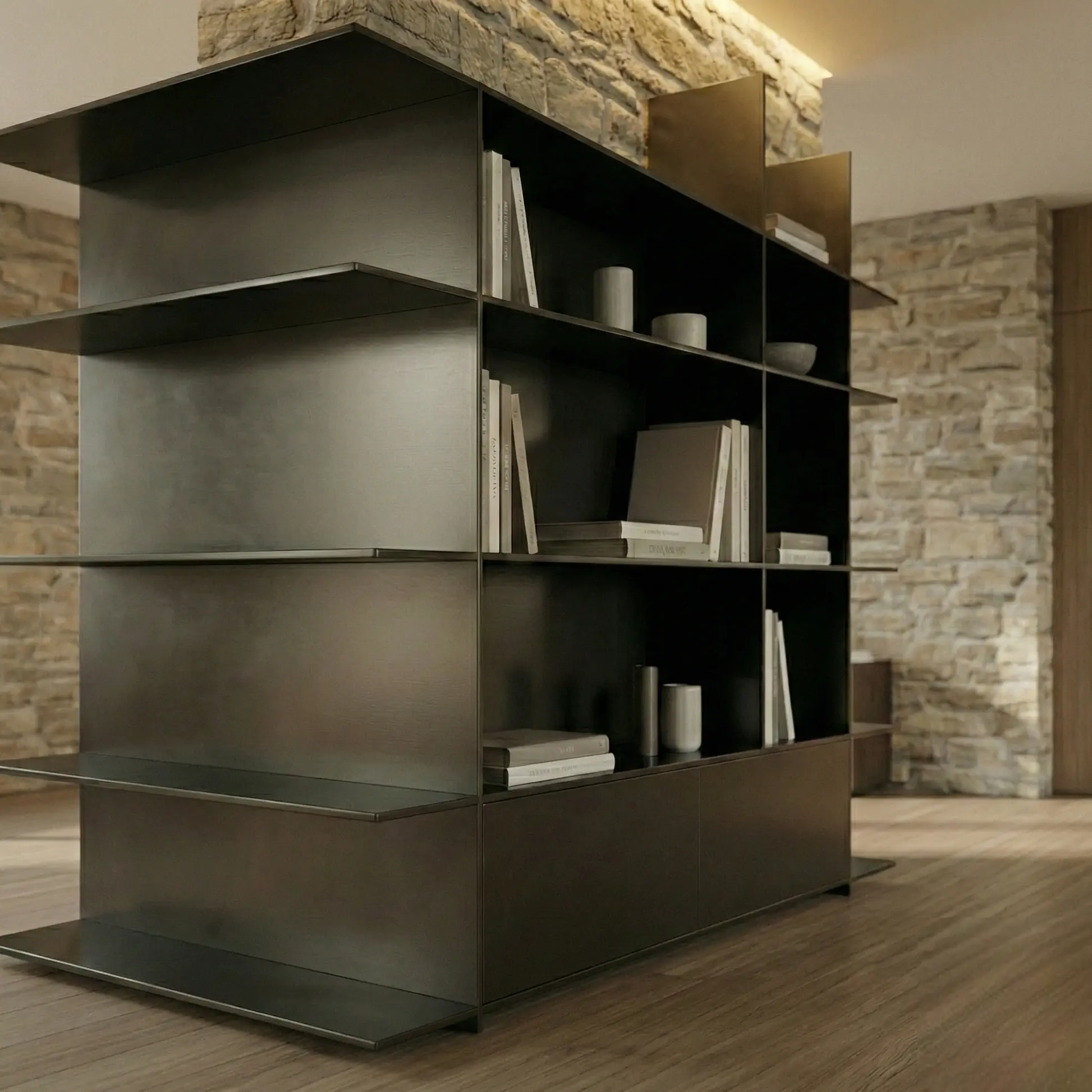
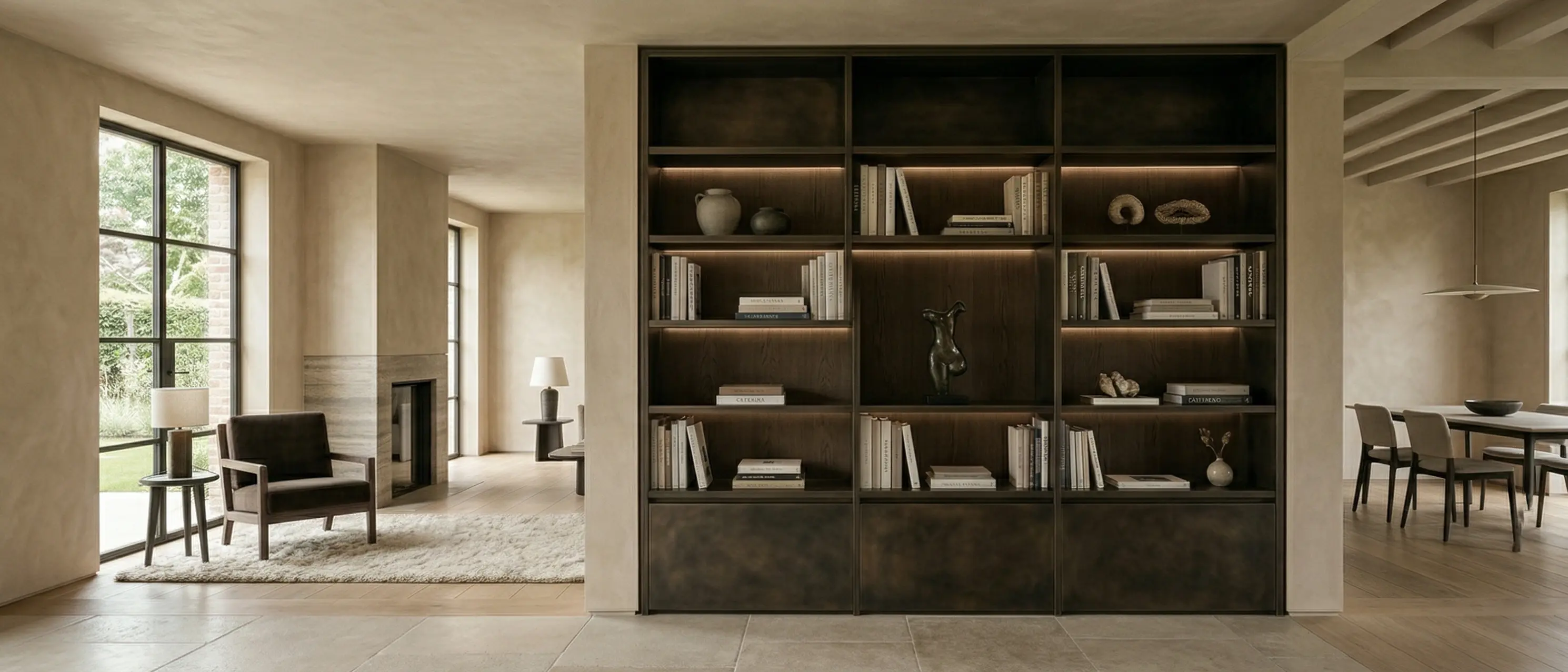
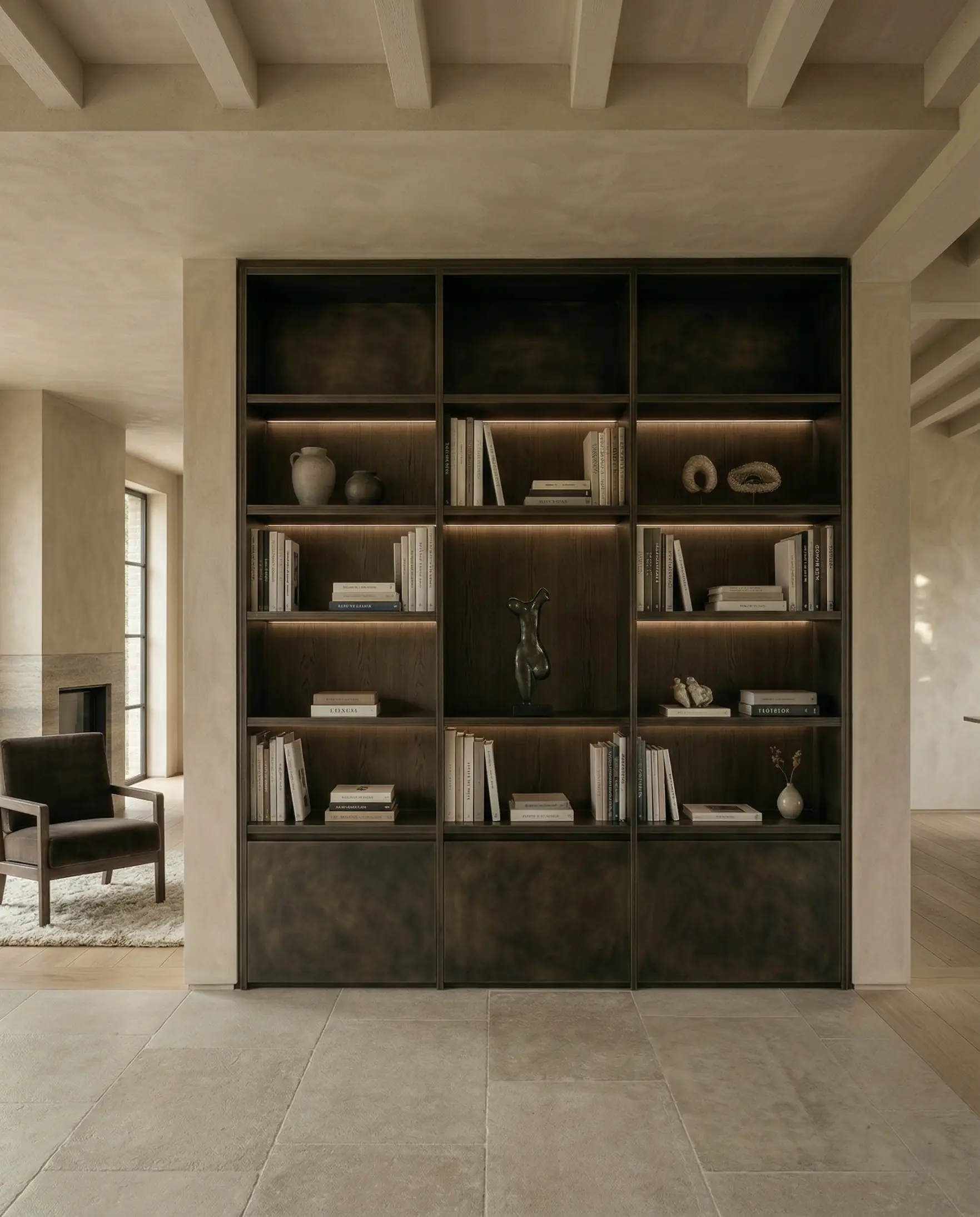
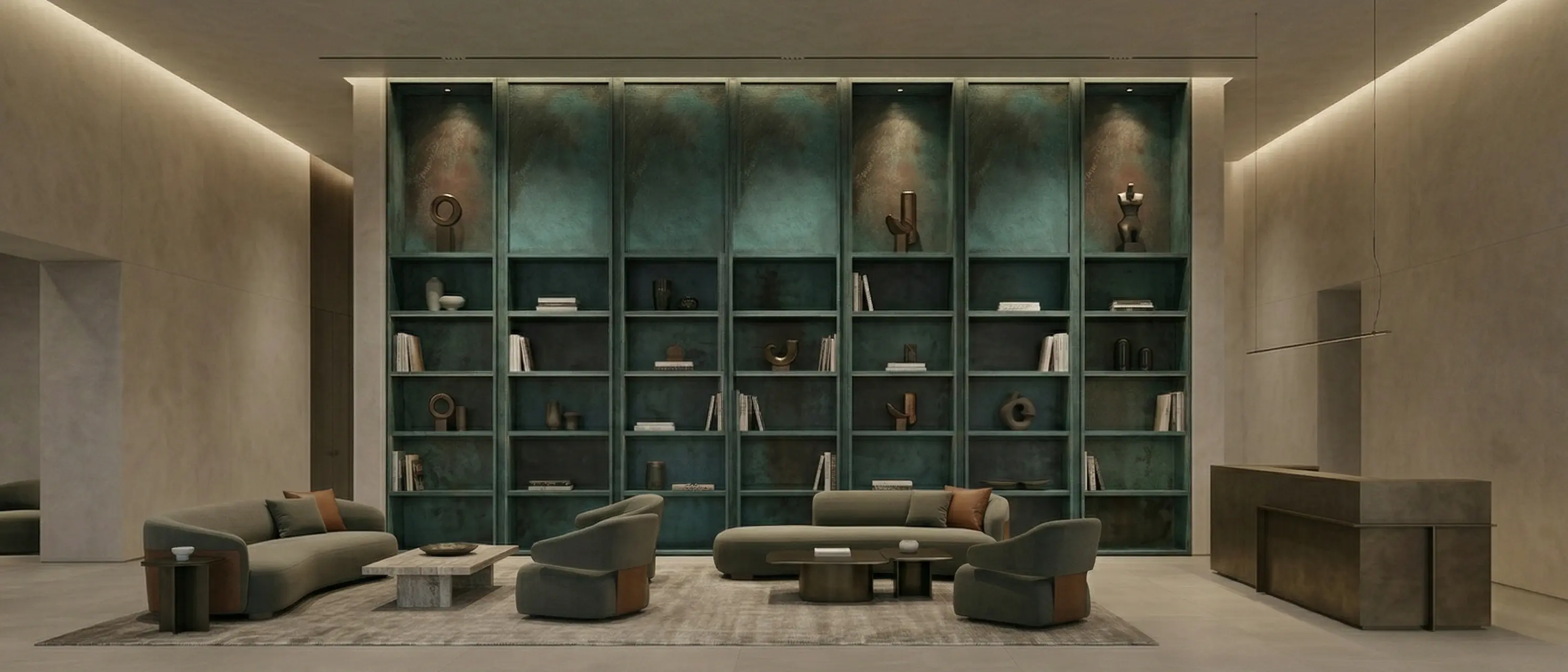
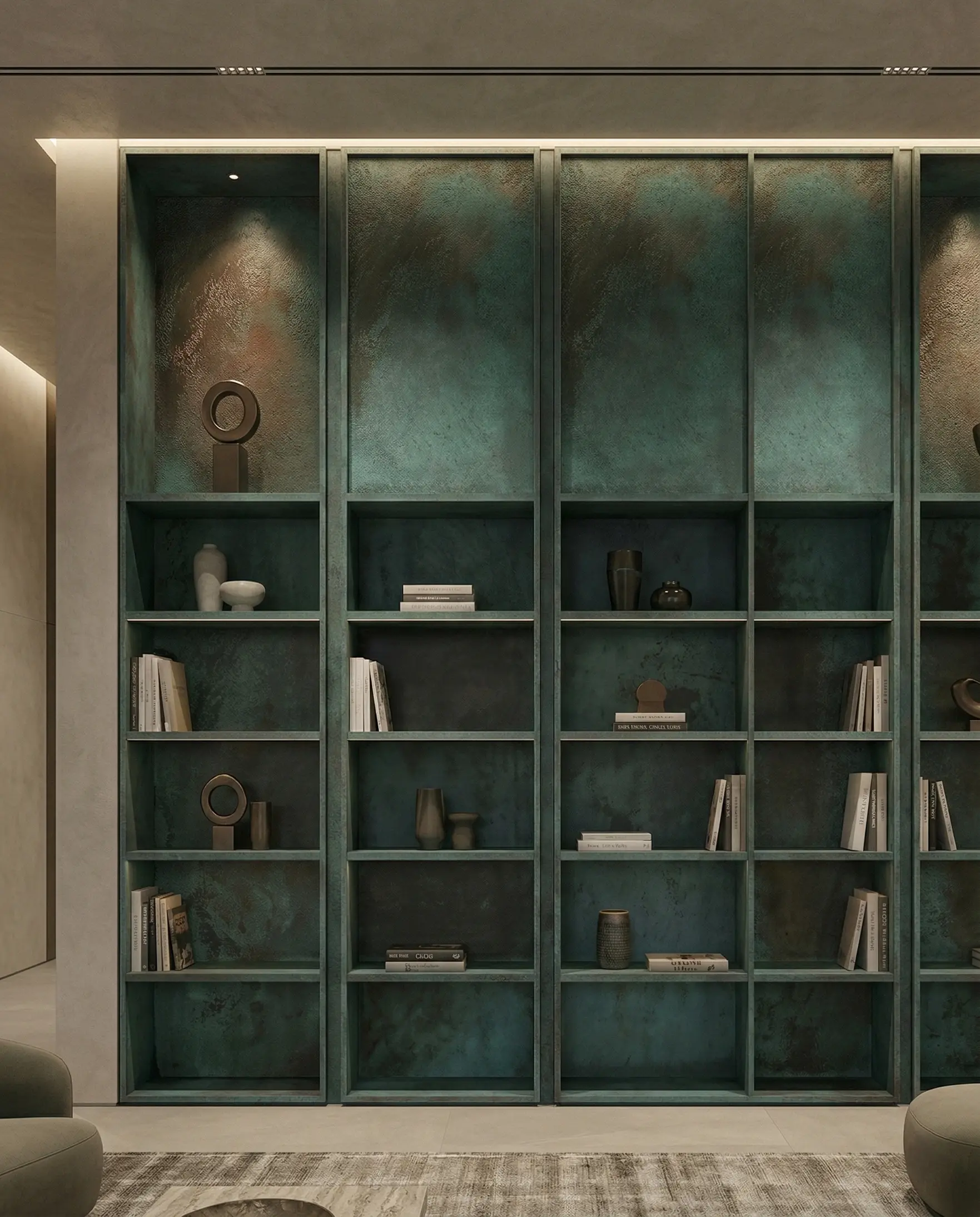
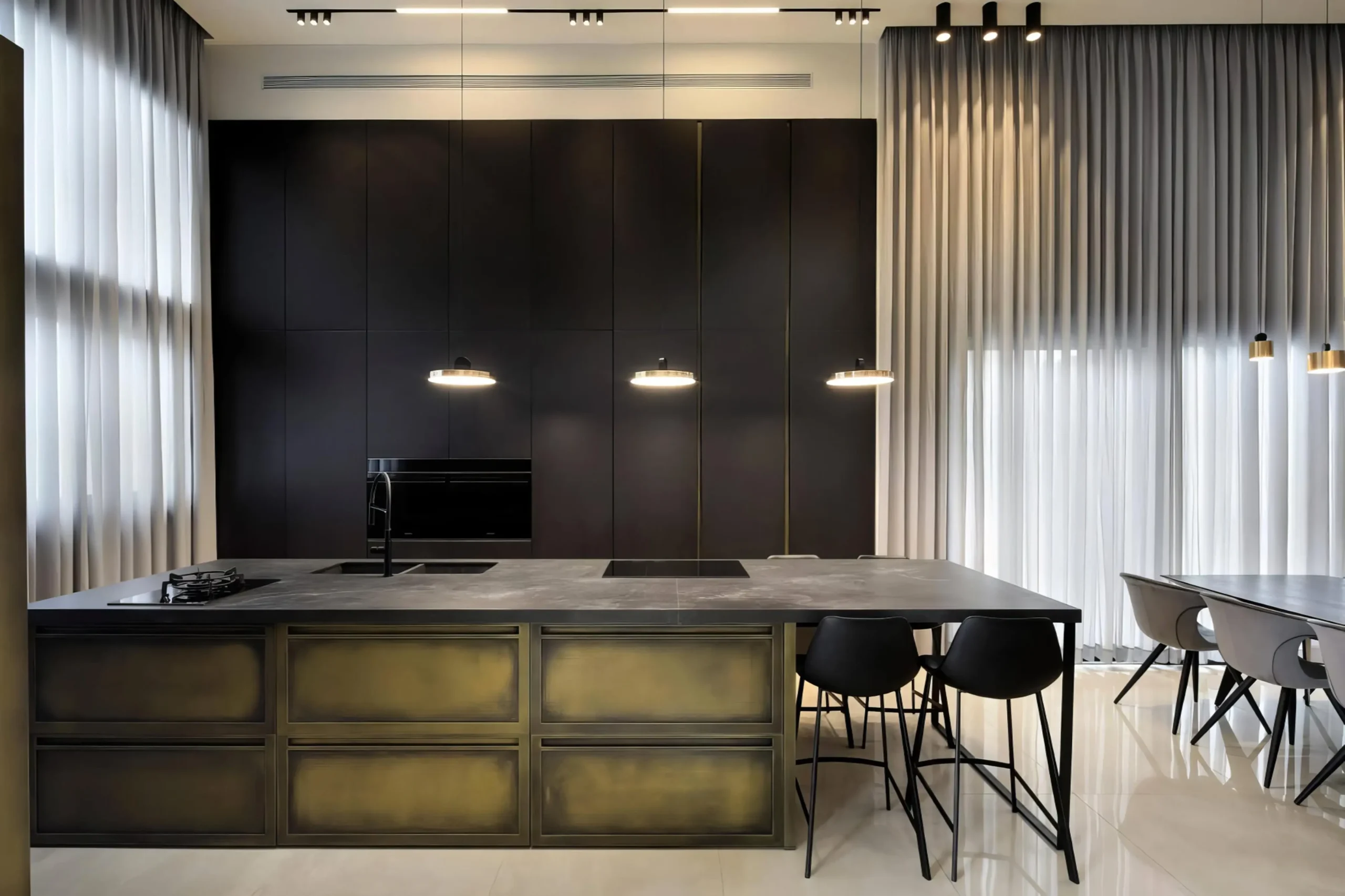
A bookcase is often the most continuous surface in a room. It frames circulation, anchors a wall, and becomes a focal plane where texture and reflectivity are read up close. In residential, workplace, and public interiors, metal shifts this element from storage to architectural presence.
Traditional metal bookcase construction can introduce weight, visible seams, corrosion risk, and fabrication limits around tight geometry and clean installation. Modulux approaches the bookcase as a surface language, so the form stays buildable while the metal remains materially honest.
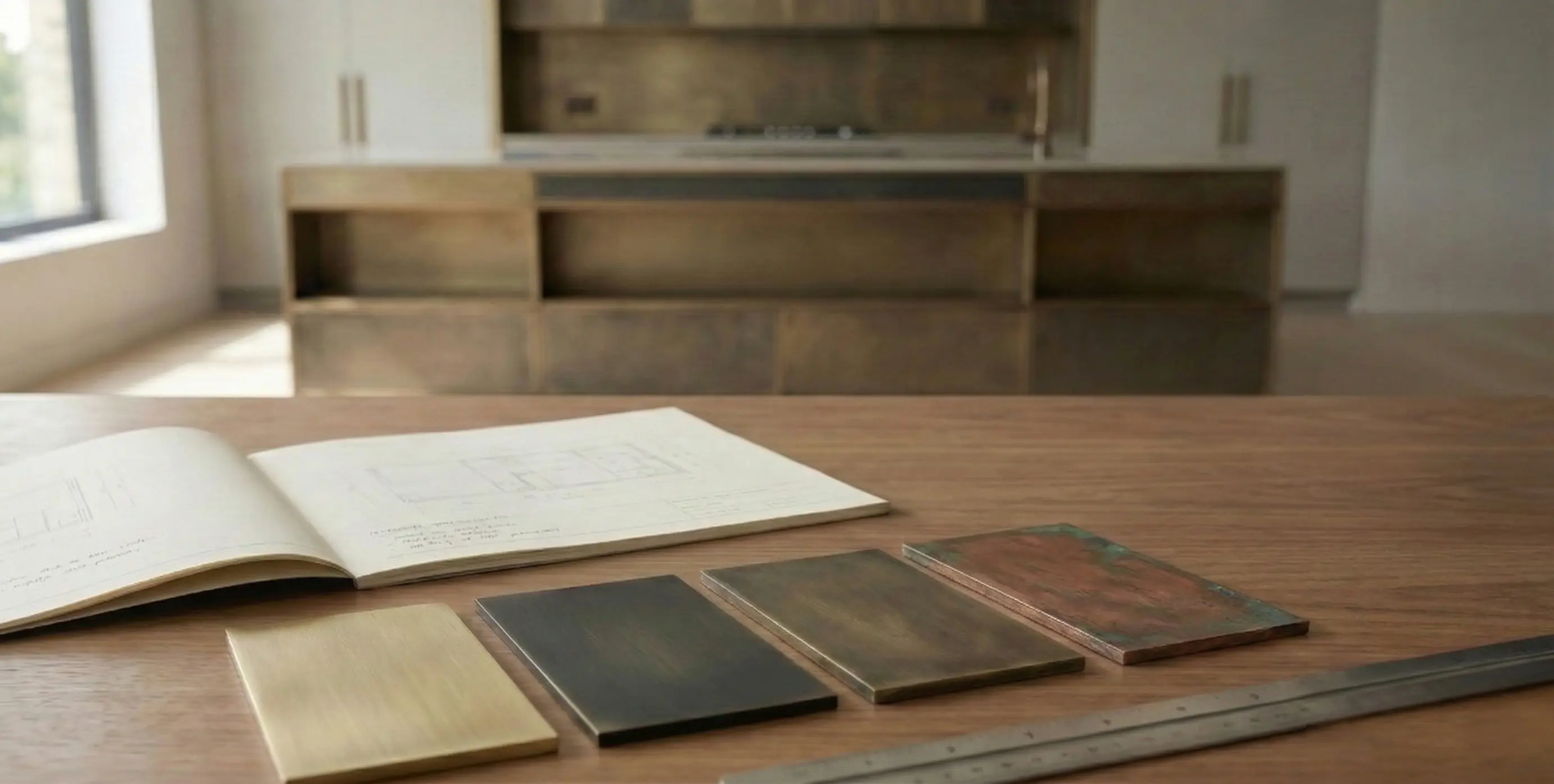
A specifier friendly bookcase starts with one decision: how to keep finish consistency across shelves, verticals, edges, and adjacent elements. Modulux supports this through a sample led workflow and controlled finishing discipline, so the same tone and sheen can be carried across mixed parts and surfaces. The intent is continuity, fewer surprises under grazing light, and a finish that stays coherent from first delivery to final installation.
Begin by defining what the metal must do in the space. Is it meant to brighten a wall plane, soften reflections, or add a darker, grounded note. Map the finish intent to sight lines, lighting angles, and touch points such as outer uprights and primary shelves. Early alignment reduces late stage compromises, especially when metal must match adjacent hardware, trims, or nearby architectural metal finishes. Confirm what must be seamless, what can be jointed, and where reveals can be used as deliberate geometry.
Treat the structure and the finish as two coordinated layers. The core can be engineered for stiffness, tolerances, and installation logic, while the metal is developed as the visible skin. This approach is useful when solid metal fabrication would add weight and complexity. It also supports crisp shelf lines, controlled reveals, and consistent alignment across repeating bays. Where performance demands rise, TruMetal Arc Wire Coatings can provide a robust metal layer that is then refined into the agreed finish direction.
Preparation sets the ceiling for finish quality. Define the substrate type, edge construction, and any joint strategy before sampling. Identify where pores, adhesives, fasteners, and fillers may telegraph through a reflective surface. Confirm handling and protection requirements between prep, coating, and installation. For LuxCoat Wet Coatings, the discipline is the same: controlled cleaning, sanding, and a stable application environment so the final sheen reads even, not accidental. Substrate requirements should be documented as [Insert data] for tender clarity.
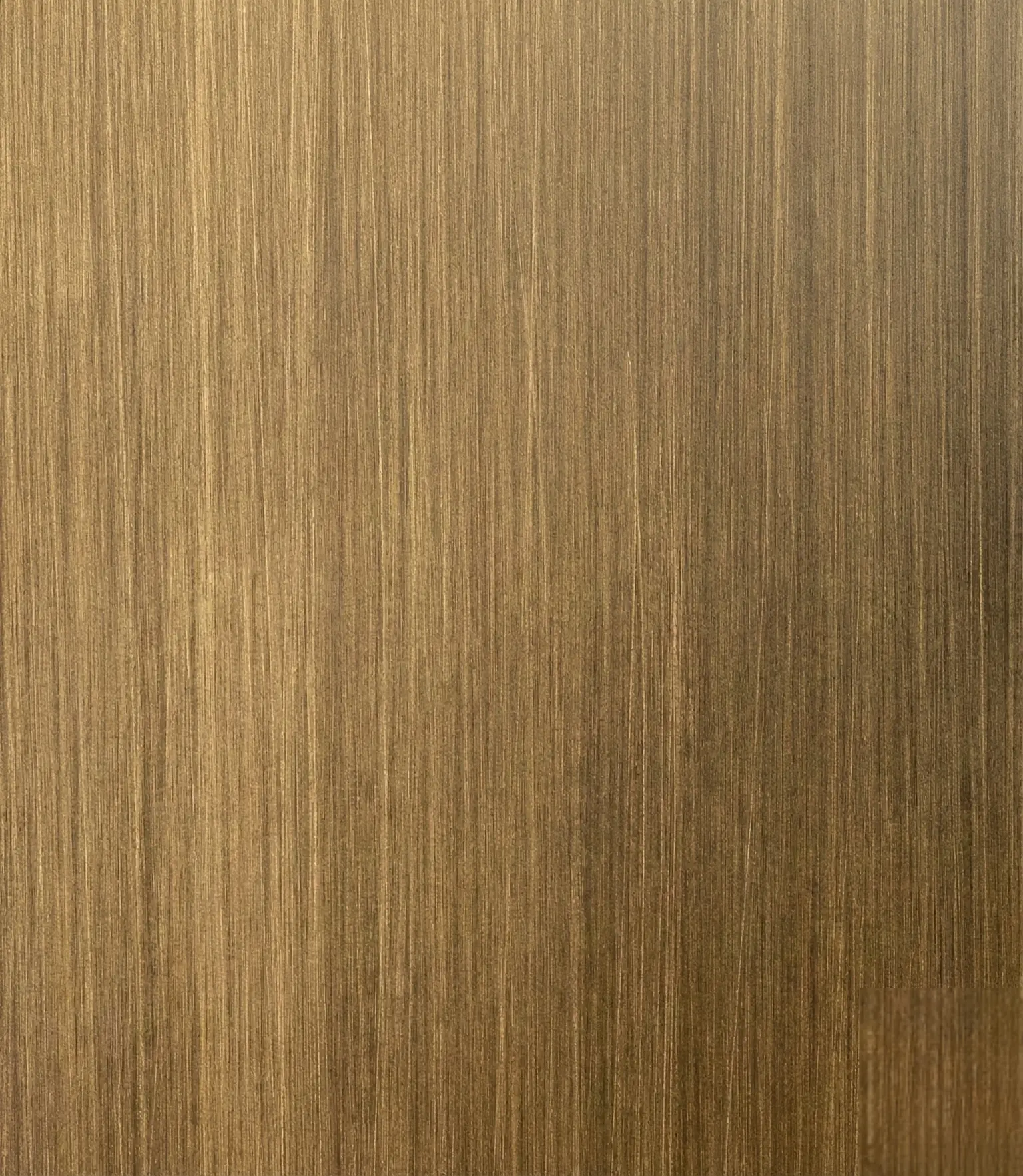
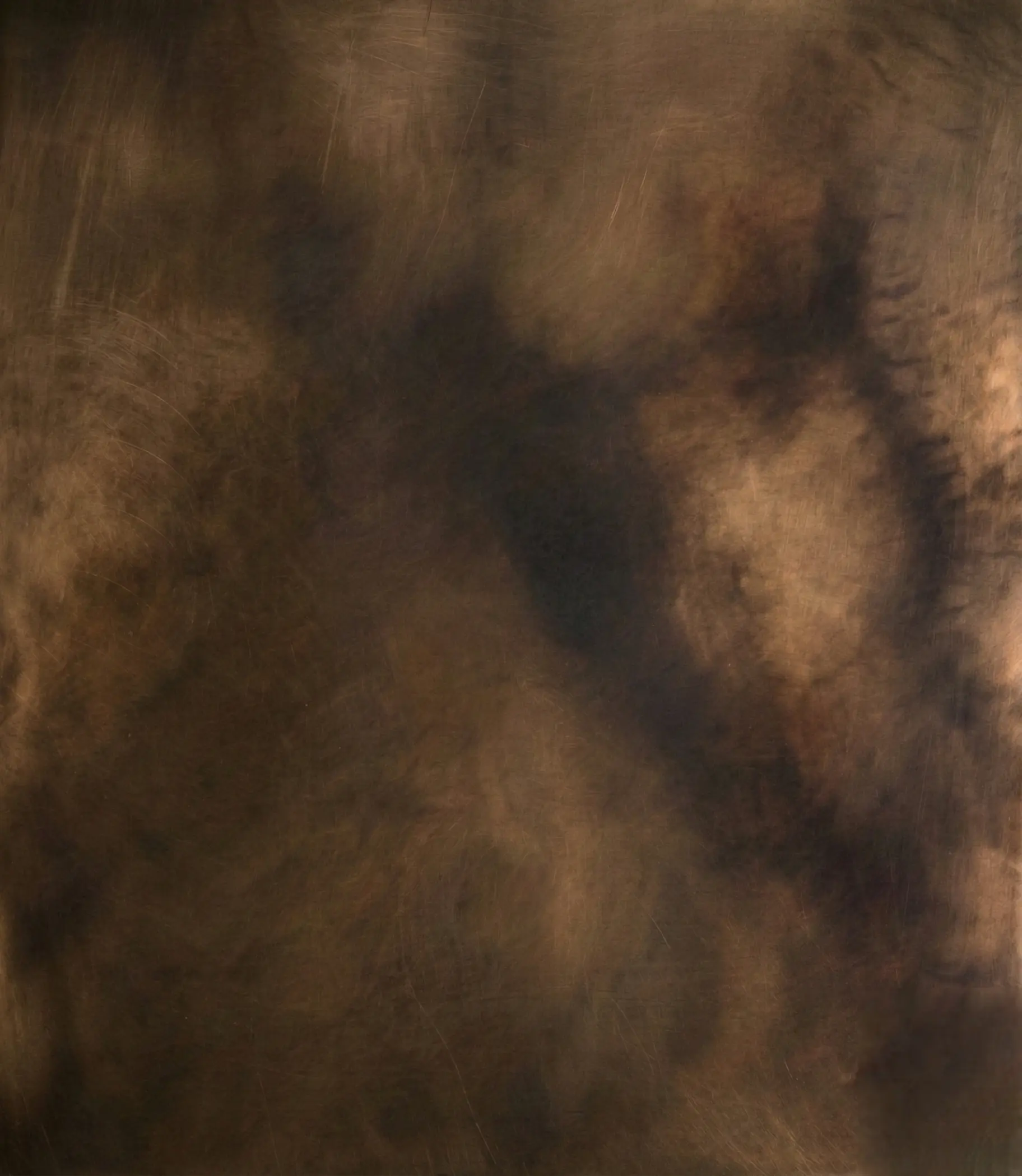
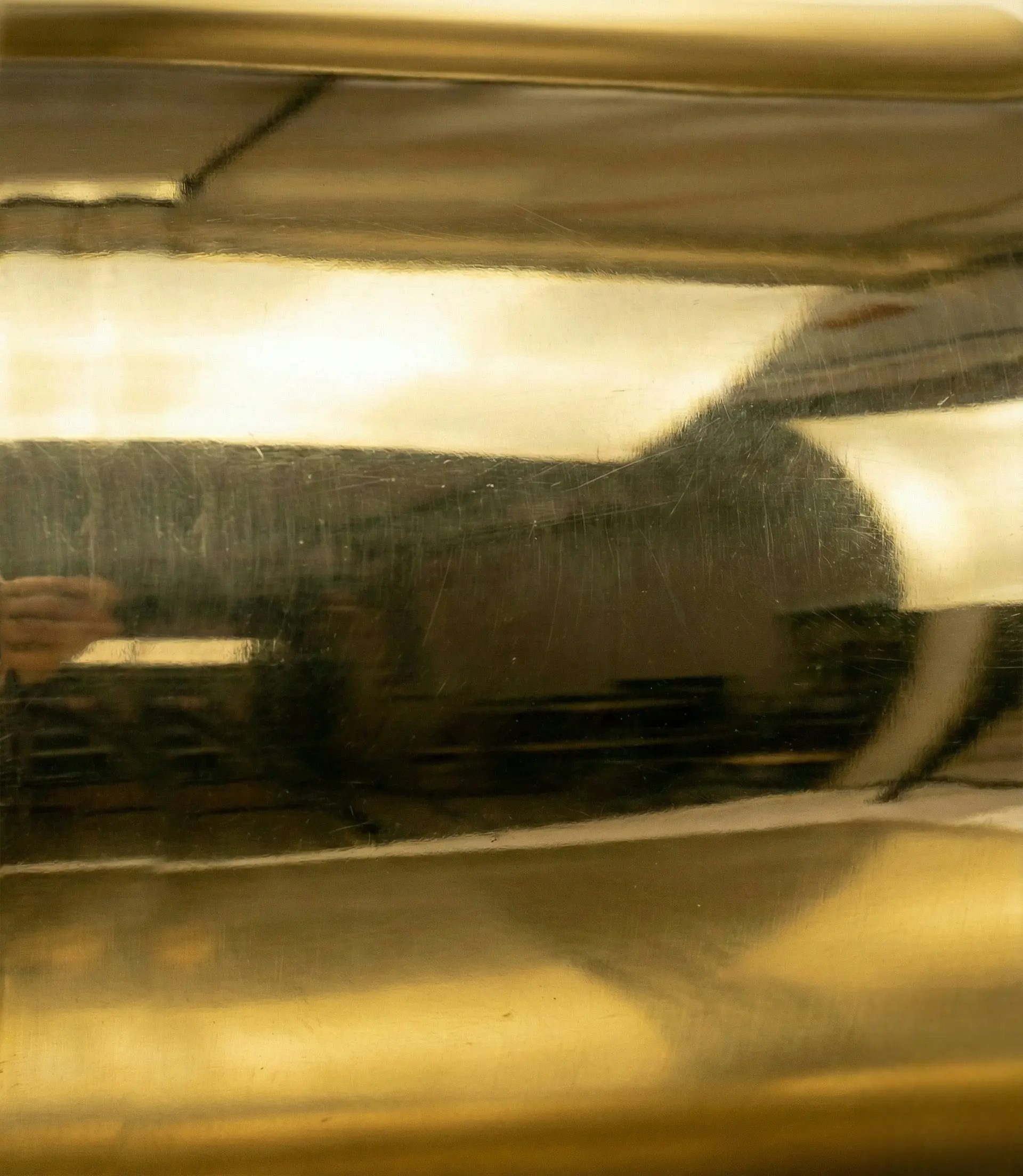
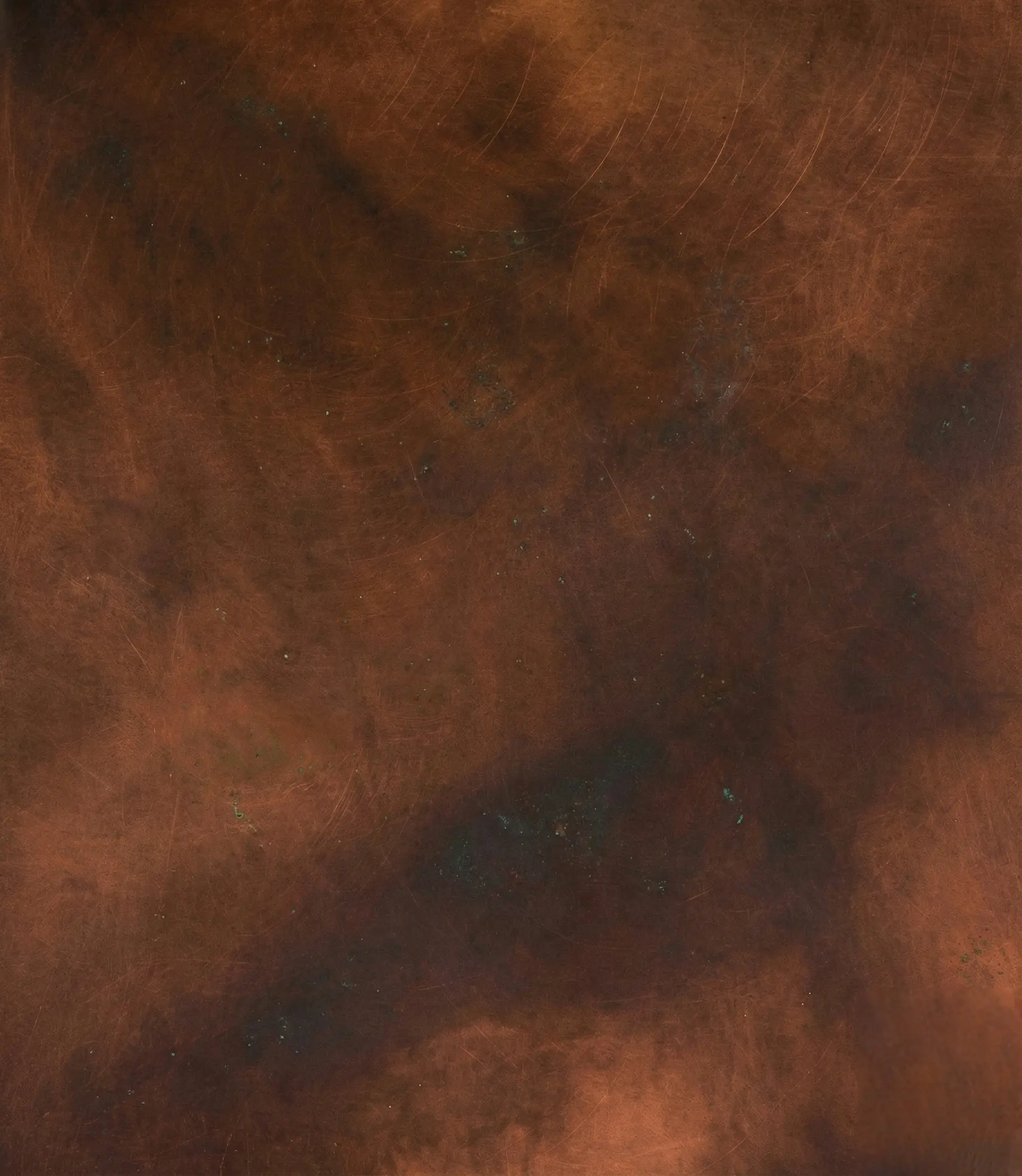
Finish is refined after application to match the reference sample. Brushing direction guides reflectivity, polishing introduces clarity in measured zones, and patina work adds depth when required. Sealing remains project specific and should be chosen according to application zone and touch frequency. For Finishes on Traditional Metals, this same discipline is applied directly to brass, bronze, copper, steel, or stainless substrates, using controlled brushing, polishing, patina work, and protective sealing for repeatable results.
Custom reception desks are suitable for a wide range of applications:
Creating an impressive and luxurious first impression that defines the hospitality experience.
Define which faces are metal and which remain secondary surfaces. Identify high touch zones such as outer uprights, shelf fronts, and door edges if present. Confirm whether the bookcase is a freestanding object, a recessed architectural element, or part of a continuous wall system. Note the application zone as interior, exterior, or both, and document performance notes such as abrasion, wet cleaning, or UV exposure. This scope becomes the basis for sampling and for protection planning.
Sampling should represent the real geometry. Include edges, corners, shelf returns, and any wrapped surfaces. Approve tone, texture, and sheen under the project lighting conditions, then lock one reference as the control target. For MetaliQ Liquid Metal Coatings, this is where seamless continuity across complex geometry is confirmed. For TruMetal Arc Wire Coatings, this is where the refined finish direction is confirmed after the metal layer is established.
Confirm the substrate family and preparation requirements before production. MetaliQ is applied to carefully prepared substrates such as MDF, wood, composite panels, stone, and existing metal elements where appropriate. Finishes on Traditional Metals require real metal substrates such as brass, bronze, copper, steel, or stainless. LuxCoat Wet Coatings depend on preparation discipline, including controlled cleaning and sanding, and a stable spray and cure environment. Record final substrate requirements as [Insert data] for coordination.
Define how the bookcase will be cleaned and handled once installed. Plan protection during transport, staging, and installation so edges and shelf fronts remain intact. The maintenance approach should match the finish and sealing system. For daily care, use gentle cleaning methods and avoid abrasive agents.
A bookcase finish is selected by intent, then proven by sample. Surfaces are prepared to a defined standard, edges are tuned so light breaks cleanly, and the finish direction is aligned to one approved reference. MetaliQ Liquid Metal Coatings are often chosen when complex geometry, wrapped corners, or seamless continuity are central. TruMetal Arc Wire Coatings are selected when a stronger performance profile is required, then refined into an architectural finish. Finishes on Traditional Metals apply the same discipline directly to real metal parts through brushing, polishing, patina work, and sealing. LuxCoat Wet Coatings support painted elements that must match a controlled sheen language across adjacent joinery. Final sealing remains project specific.
MetaliQ can be applied to carefully prepared substrates such as MDF, wood, composite panels, stone, and existing metal where appropriate. Finishes on Traditional Metals require real metal substrates. For a specific project, confirm substrate requirements during sampling.
Edges are planned as part of the visual language. MetaliQ can wrap edges and complex geometry in a seamless real metal skin when the substrate and preparation are correct. For traditional metal parts, edges are refined through controlled brushing or polishing, then sealed as project specific.
Suitability depends on the application zone, substrate, and sealing system, all of which should be defined. TruMetal is commonly specified when durability and demanding conditions are part of the brief. For exterior use, confirm exposure conditions and maintenance expectations during specification.
Use gentle, non abrasive cleaning methods. Regular wiping with a damp cloth is typically sufficient, and strong or abrasive agents should be avoided. If stubborn staining occurs, treat it as a finish coordination issue and consult the finishing team so the solution matches the sealing system.
Repair depends on the selected finish path and the site conditions. In general, keep an approved reference sample and record the finishing direction. Touch up procedures and materials should be confirmed as [Insert data] so repairs blend into the surrounding sheen and tone rather than creating a visible patch.
Timeline depends on size and complexity. A practical range for manufacturing and installation is often two weeks to a month, but it should be confirmed against scope, sampling approvals, and substrate readiness. Plan early if lighting integration or phased delivery is required.
Project references and photo case studies are available upon request. Share your intended application zone, substrates, geometry notes, and finish direction, and we will propose relevant examples and a sampling path aligned to your specification.
Share your drawings, substrate notes, and finish intent. We will advise on the most suitable path across MetaliQ, TruMetal, traditional metal finishing, or LuxCoat, then align a reference sample for approval and coordination across trades.
WhatsApp us