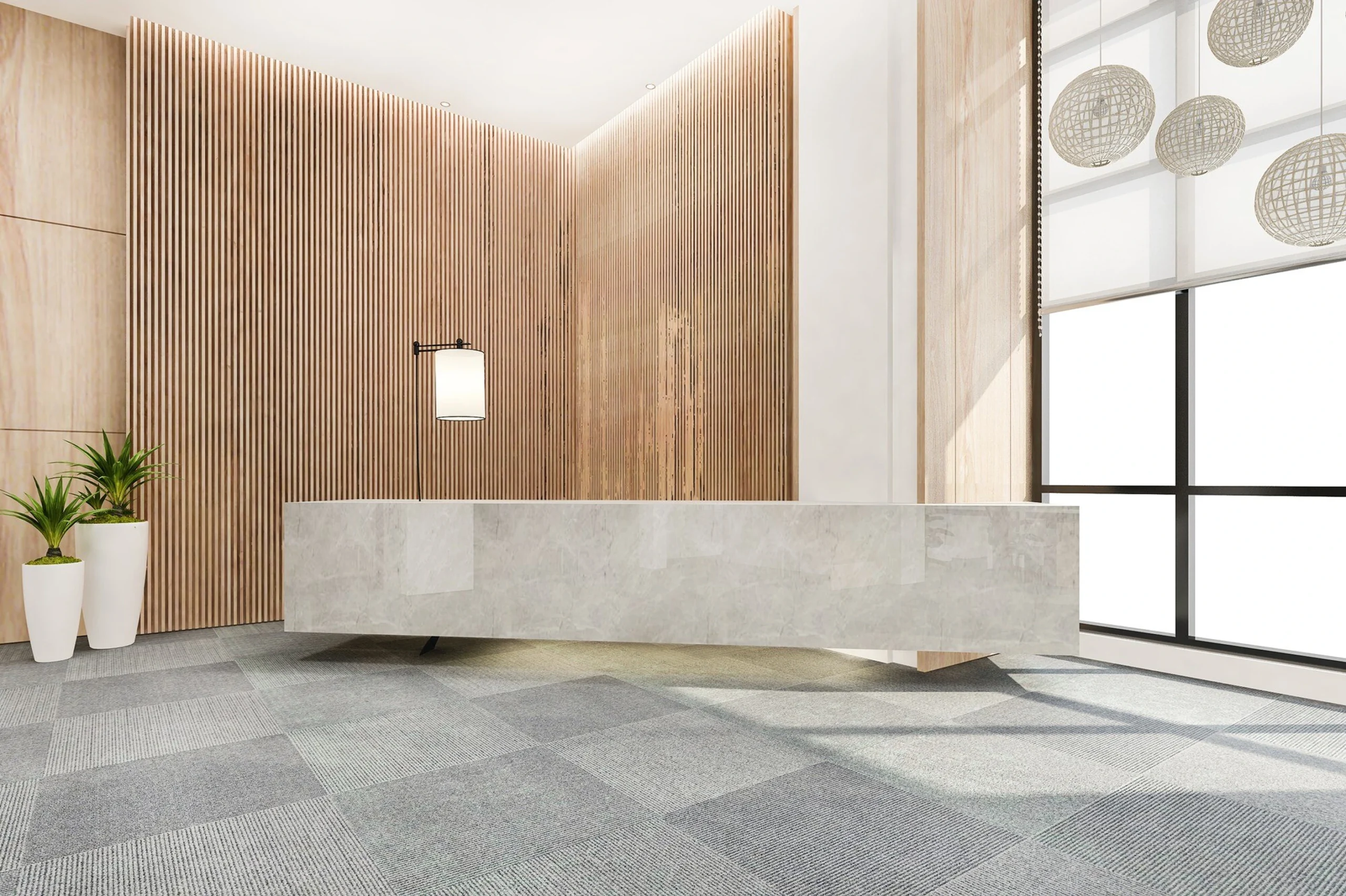
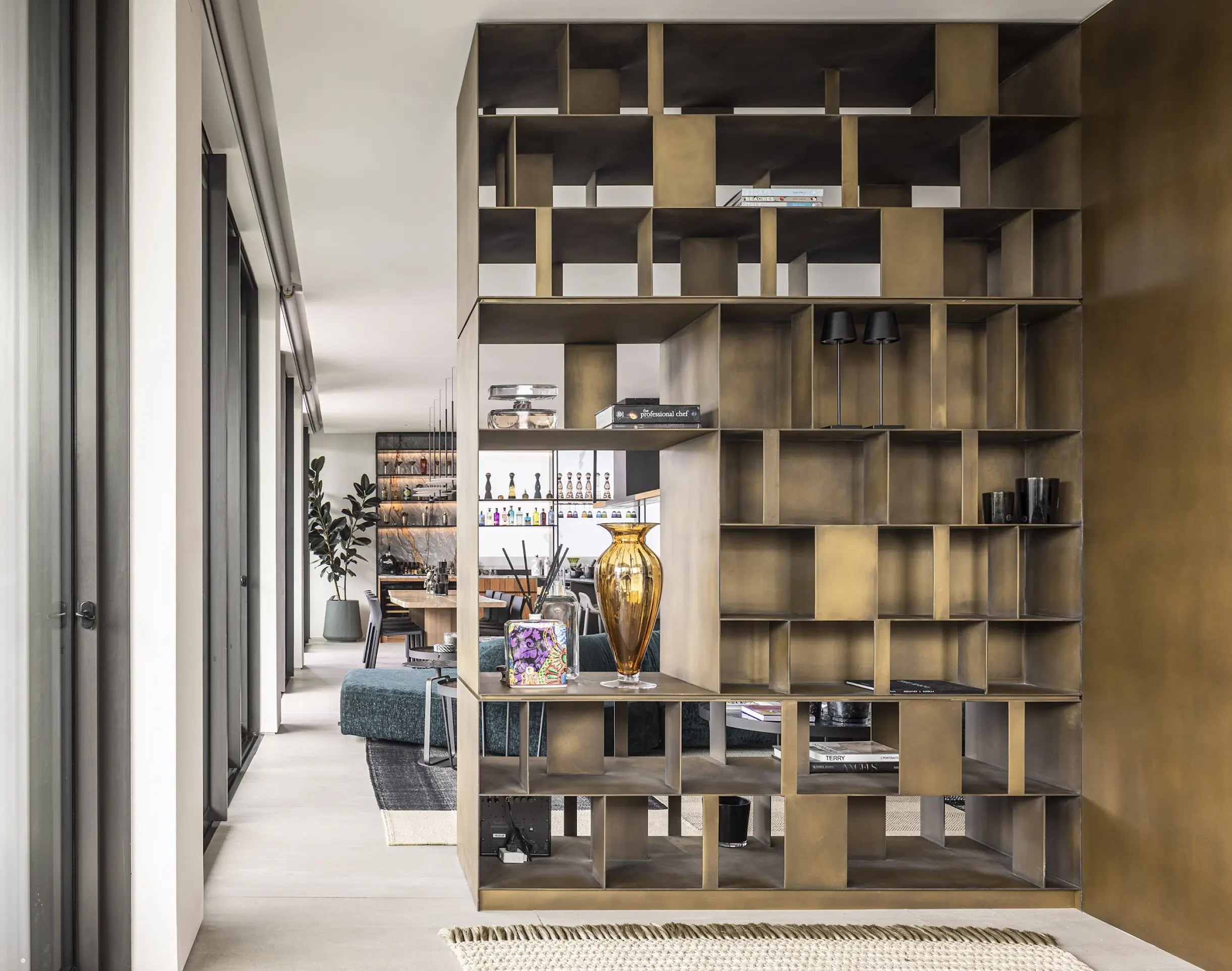
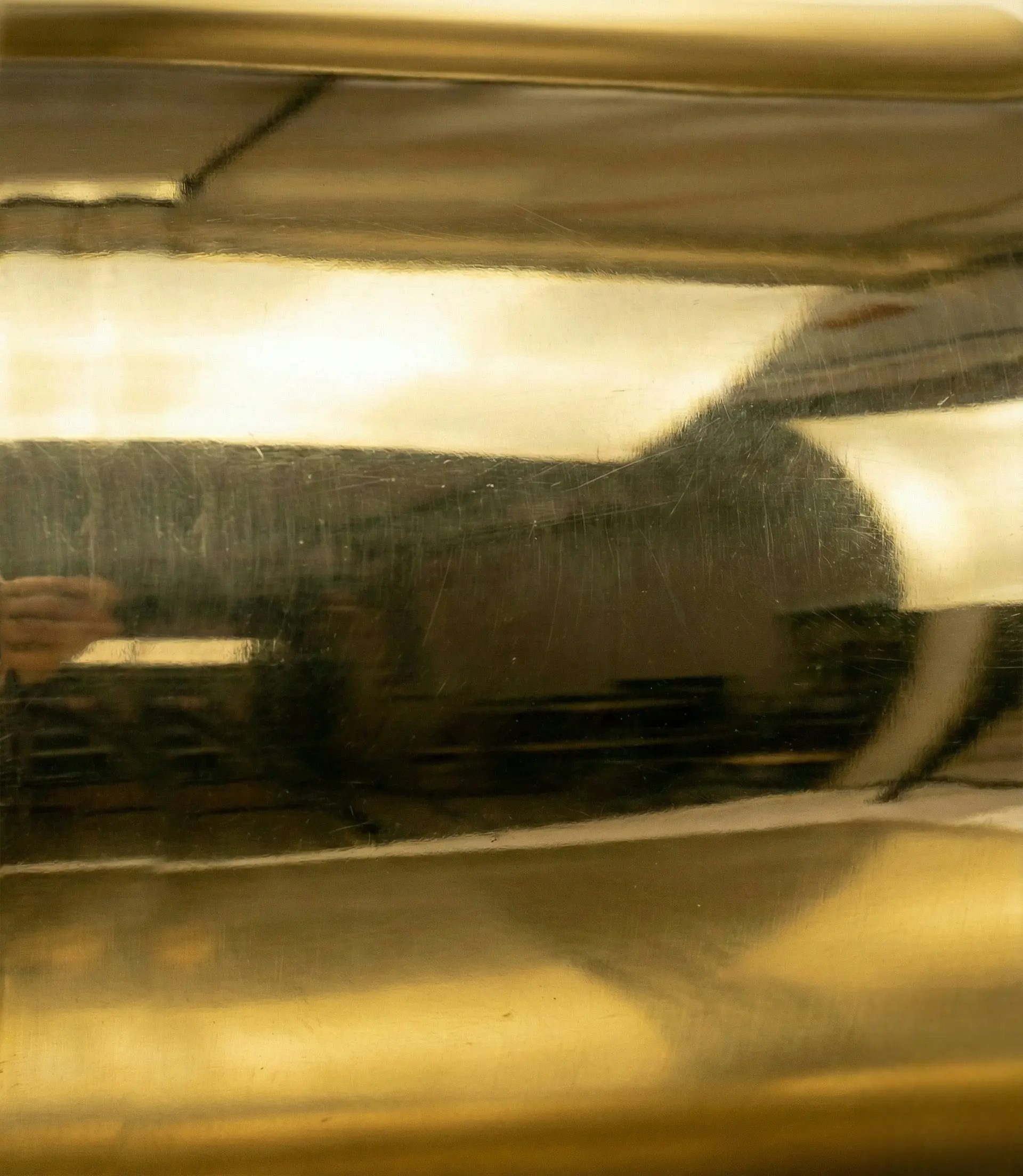
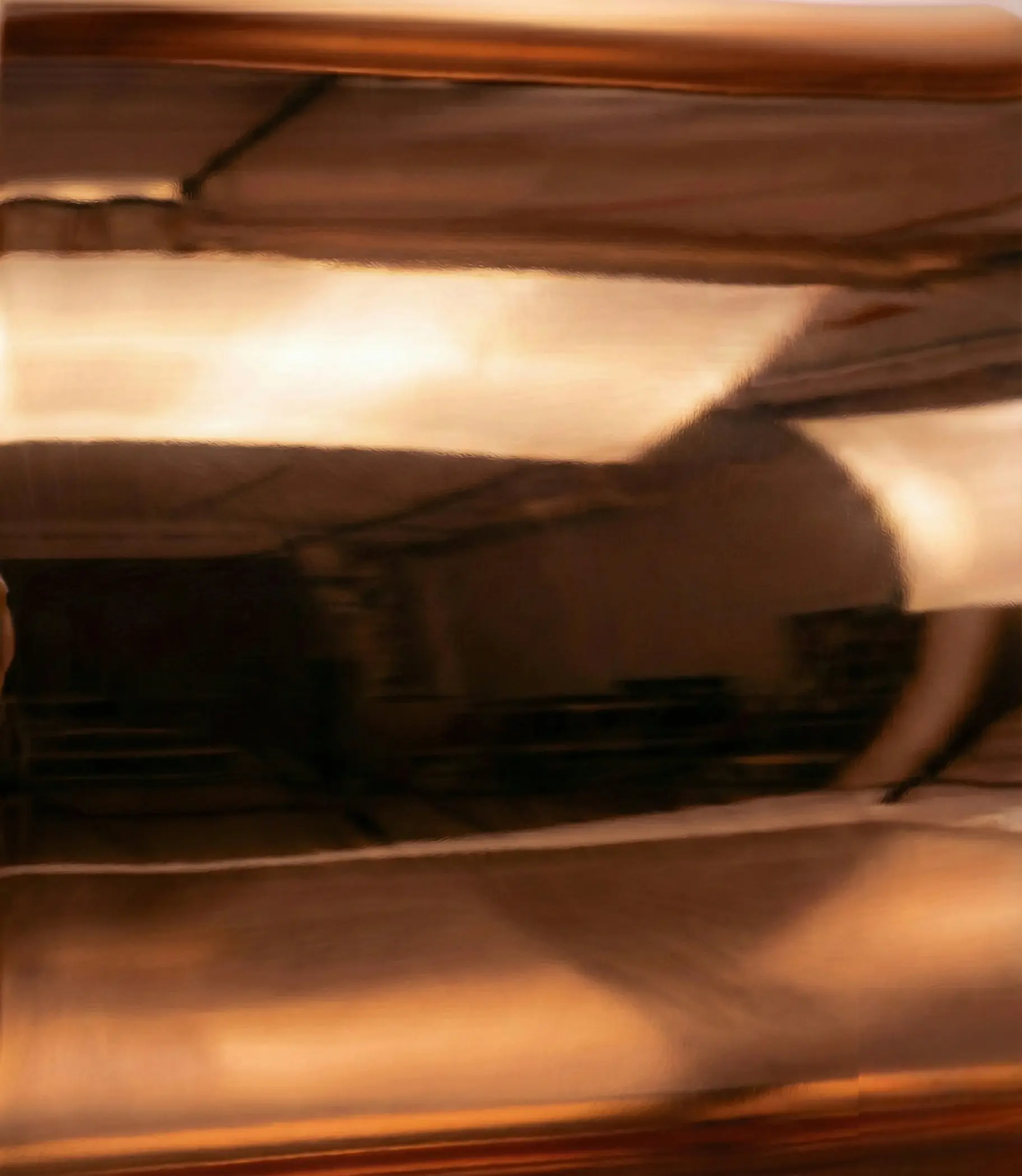
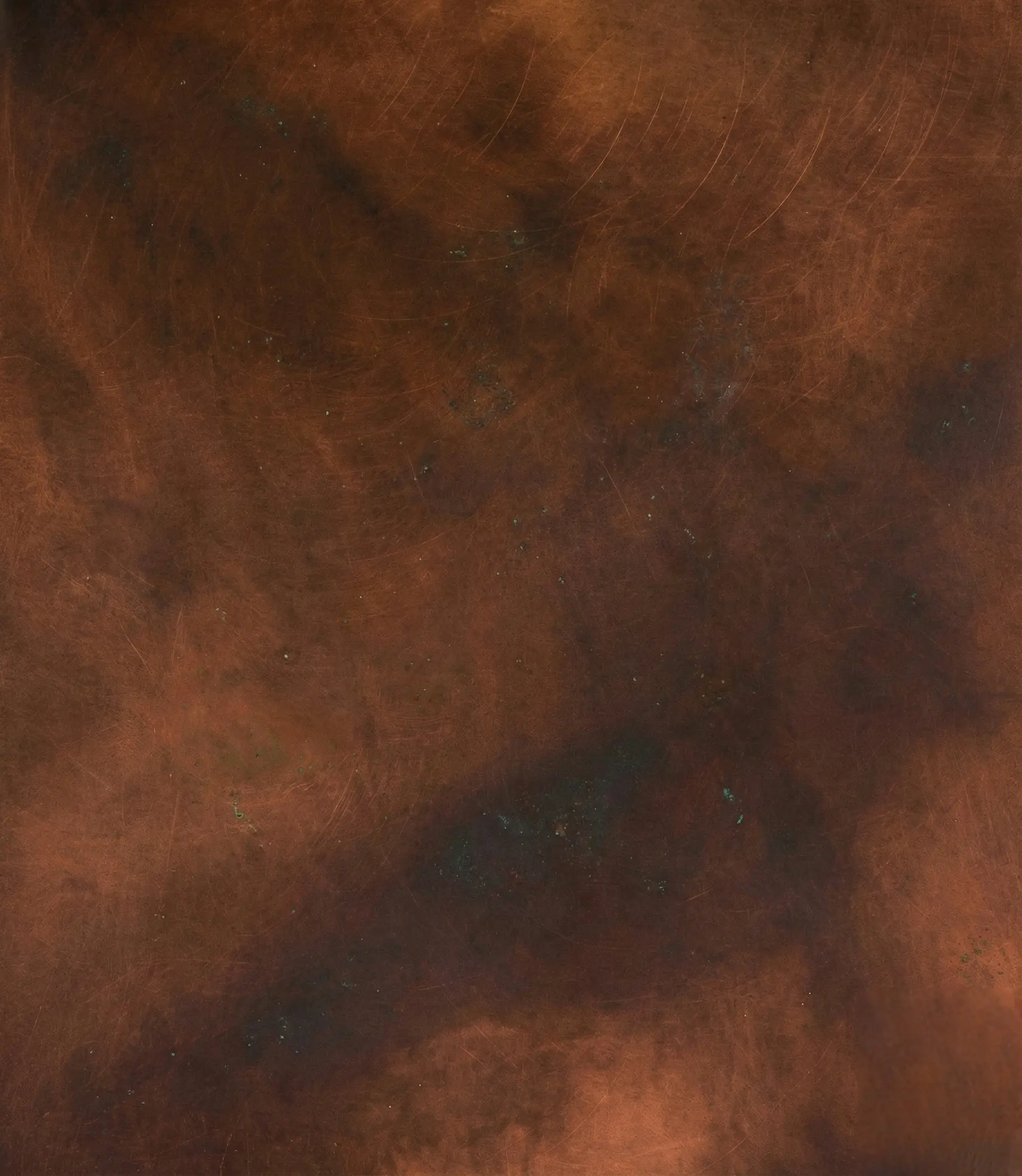
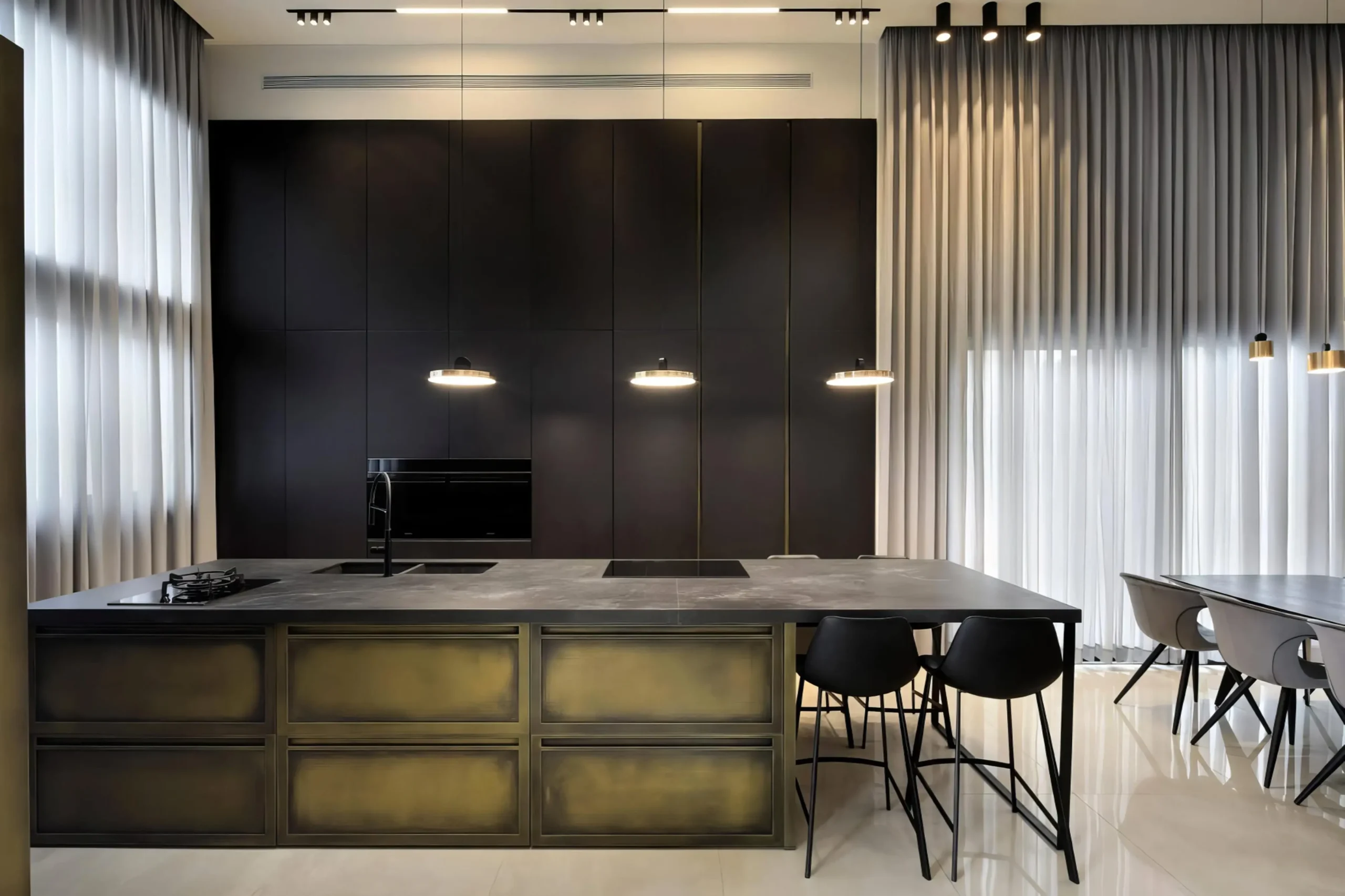
Reception desks and front counters are rarely read as isolated furniture pieces. In most projects, they sit at the intersection of architecture, interior detailing, lighting, circulation, and first impression. They are often the first surfaces people see closely, and often the first ones they touch.
When specifying metal finishes for reception desks, reception counters, meeting tables, restaurant tables, bar tops, or service counters, the decision should go beyond appearance alone. The surface has to work in the real geometry of the project: across edges, corners, radiuses, junctions, integrated lighting details, and high-contact areas exposed to regular cleaning and daily use.
At MODULUX, we approach these elements as architectural metal surfaces, not as decorative add-ons applied at the end. The process begins with the intended material direction, the type of use, the substrate, and the maintenance logic of the project. From there, we help define the right finish system, the right metal finish character, and the right level of protection.
The goal is not just to create a metallic effect.
The goal is to develop a metal surface that feels precise, credible, and fully integrated into the architectural language of the reception area or public-facing interior.
In reception areas, hospitality settings, office interiors, restaurants, and commercial environments, metal surfaces have to do several things at once. They need to read correctly from a distance, hold up visually at close range, respond well to daylight and artificial lighting, and remain suitable for daily use and regular cleaning.
That is why metal finishes for reception desks and counters should not be judged only by color, tone, or the first visual impact. They should be evaluated by how consistently the surface performs across fronts, sides, edges, corners, returns, radiuses, service ledges, worktops, and transitions to wood, stone, glass, or other architectural materials.
At the planning stage, we usually begin with three practical questions:
what should be seen, what will be touched, and what the surface will realistically need to withstand over time.
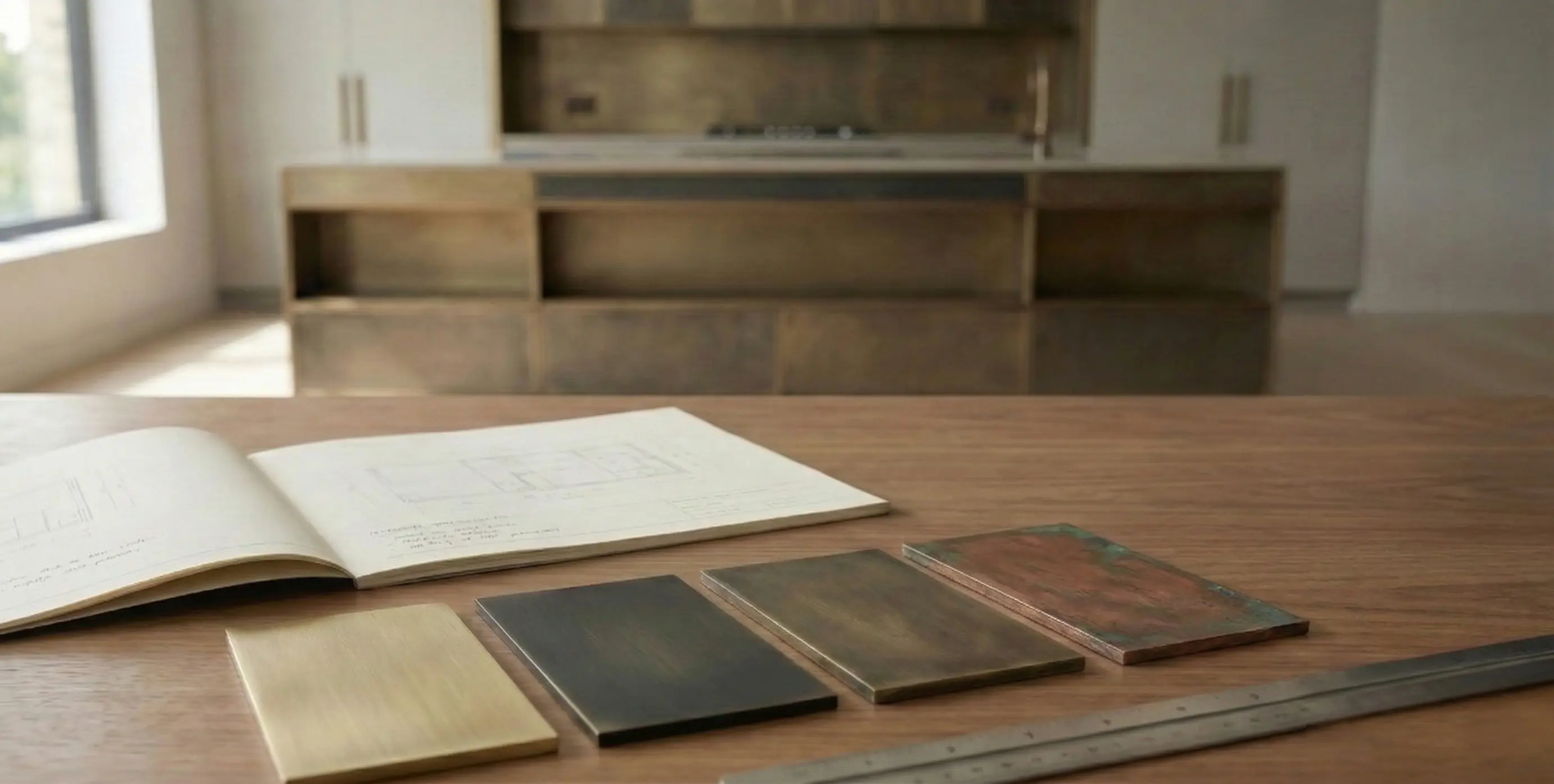
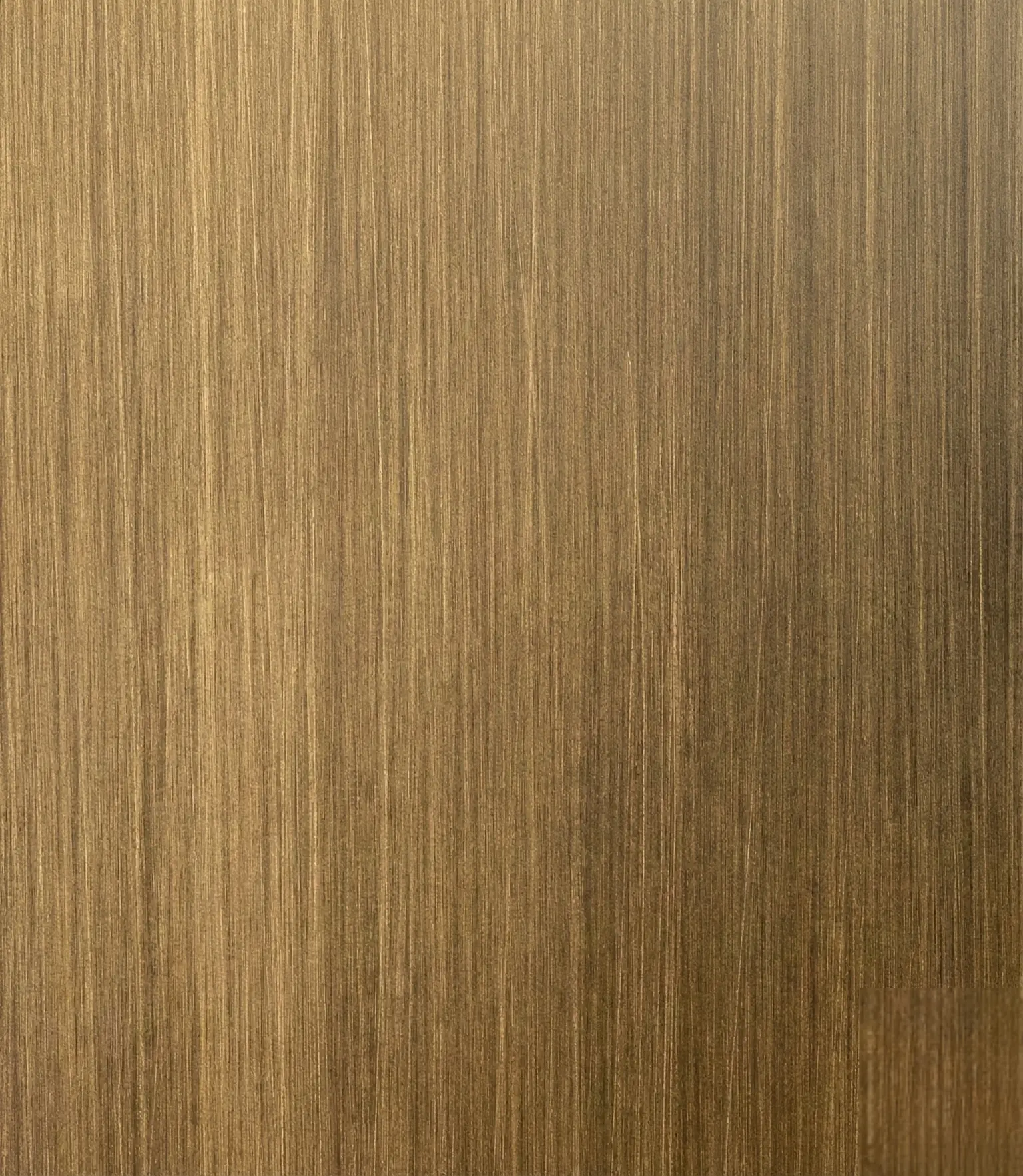
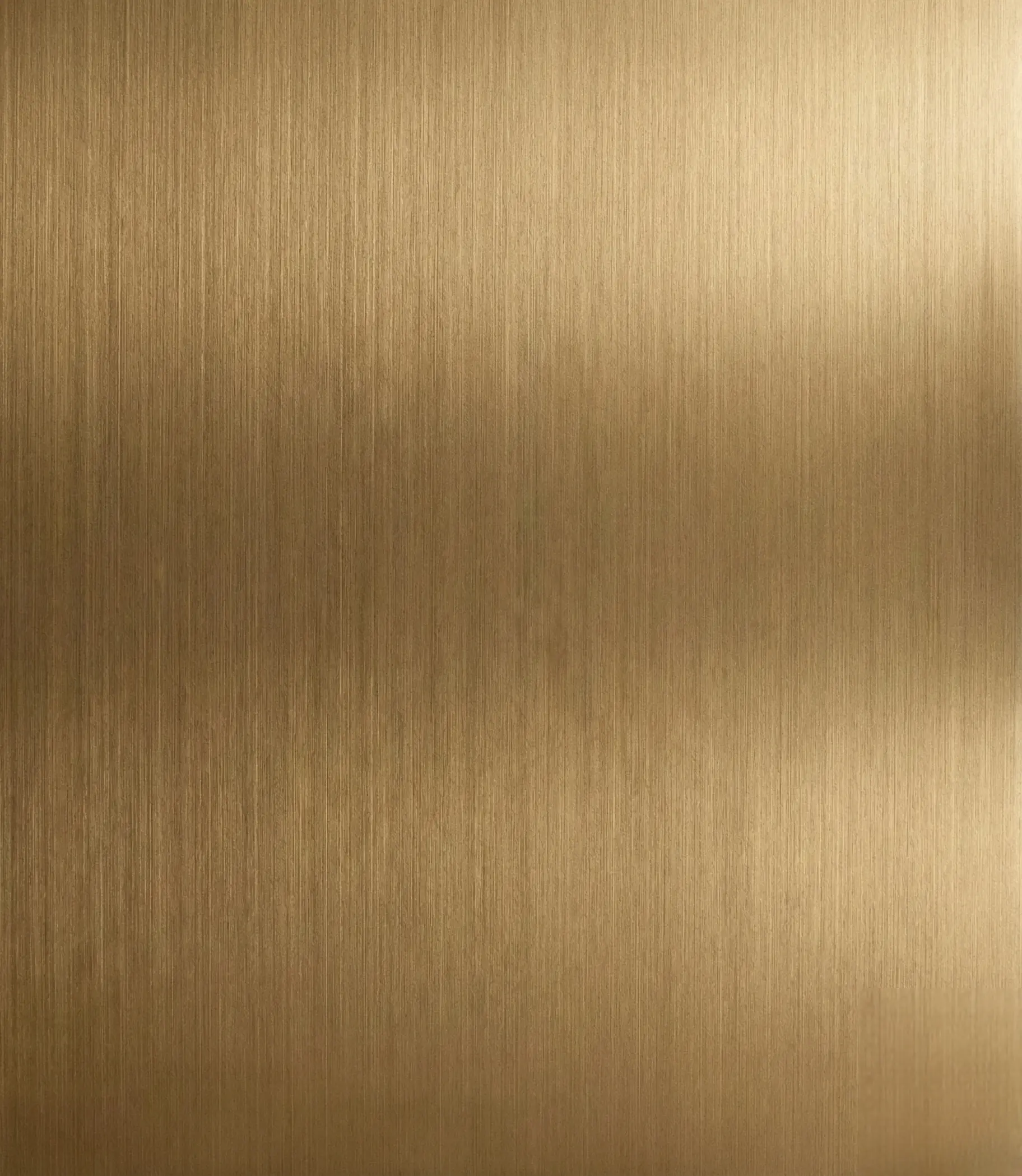
From there, the approved sample helps define brushing direction, sheen level, surface texture, patina direction if relevant, and the suitable protection system. This helps reduce the gap between design intent, sampling, fabrication, installation, and the final reading of the project.

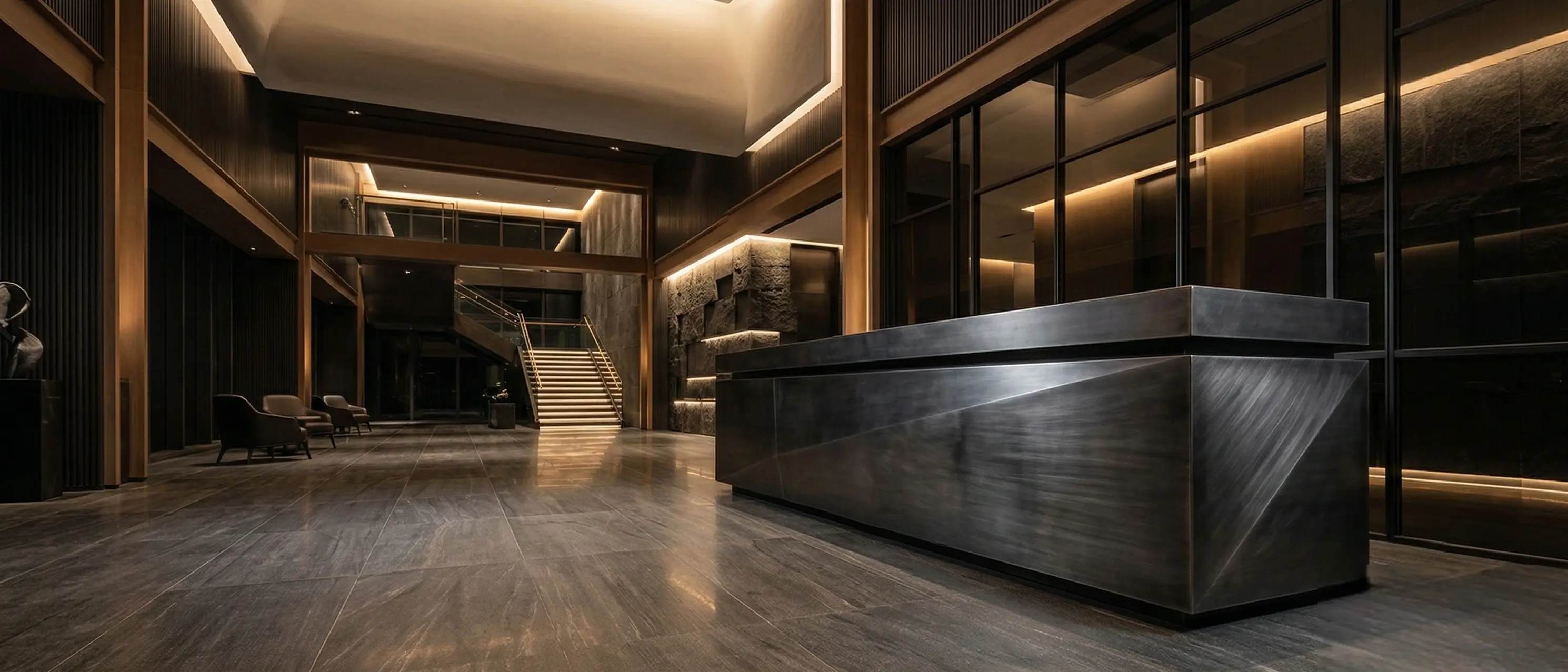
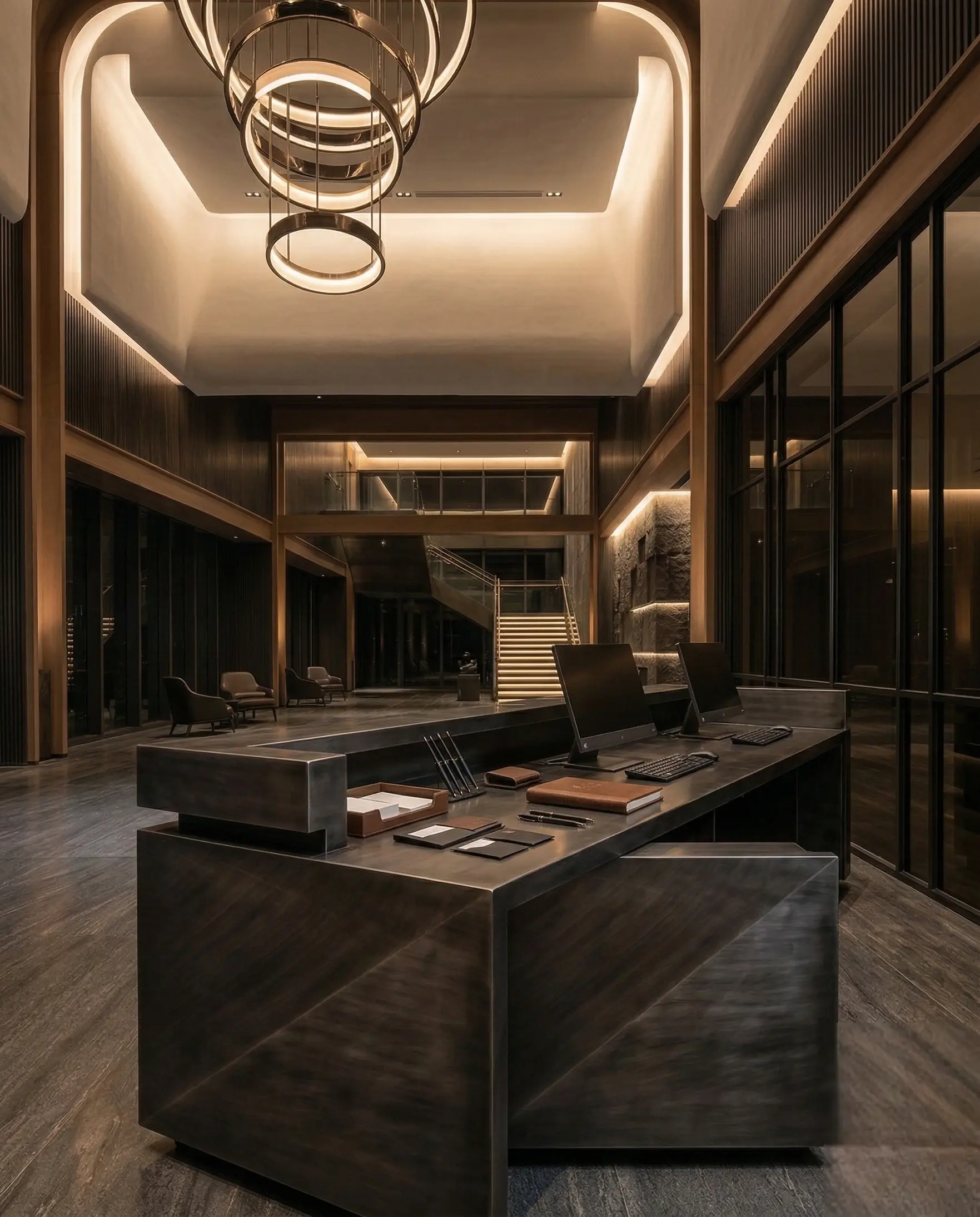
Reception desks, front counters, meeting tables, restaurant tables, and bar surfaces are almost always experienced under layered lighting conditions. Daylight, recessed ceiling light, wall wash, side light, and integrated lighting inside the desk or counter all influence how the metal finish will be perceived.
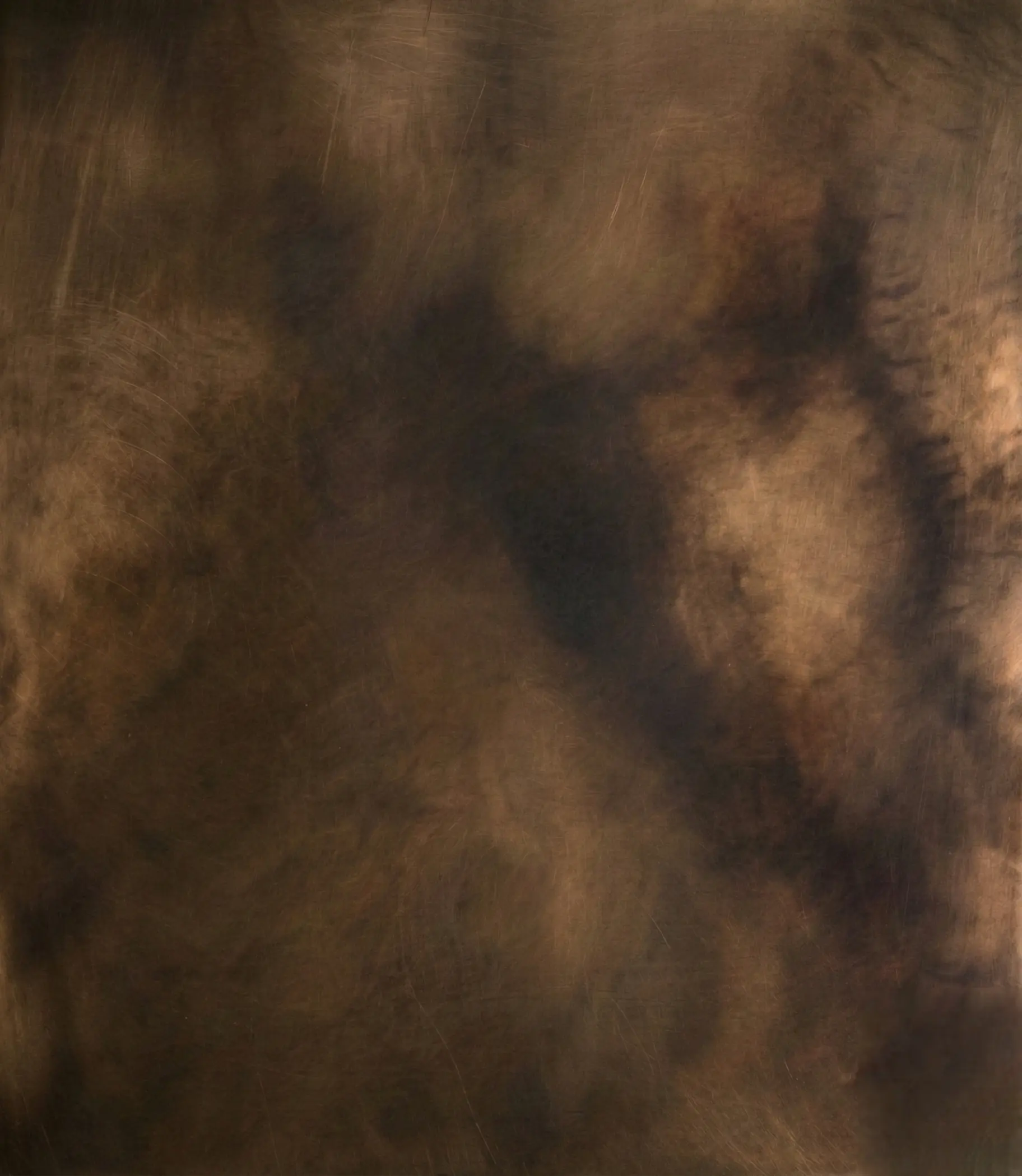
For that reason, the decision should not begin only with which finish looks attractive in isolation, but with how the surface is expected to behave in the space. Some projects need a quieter metal finish with a softer reflection. Others need a more defined brushed metal direction, a deeper tone, or a more expressive surface movement. When the reference sample, sheen, and directional character are defined correctly, it becomes much easier to maintain a coherent material language across fronts, sides, service shelves, edges, and related design elements.
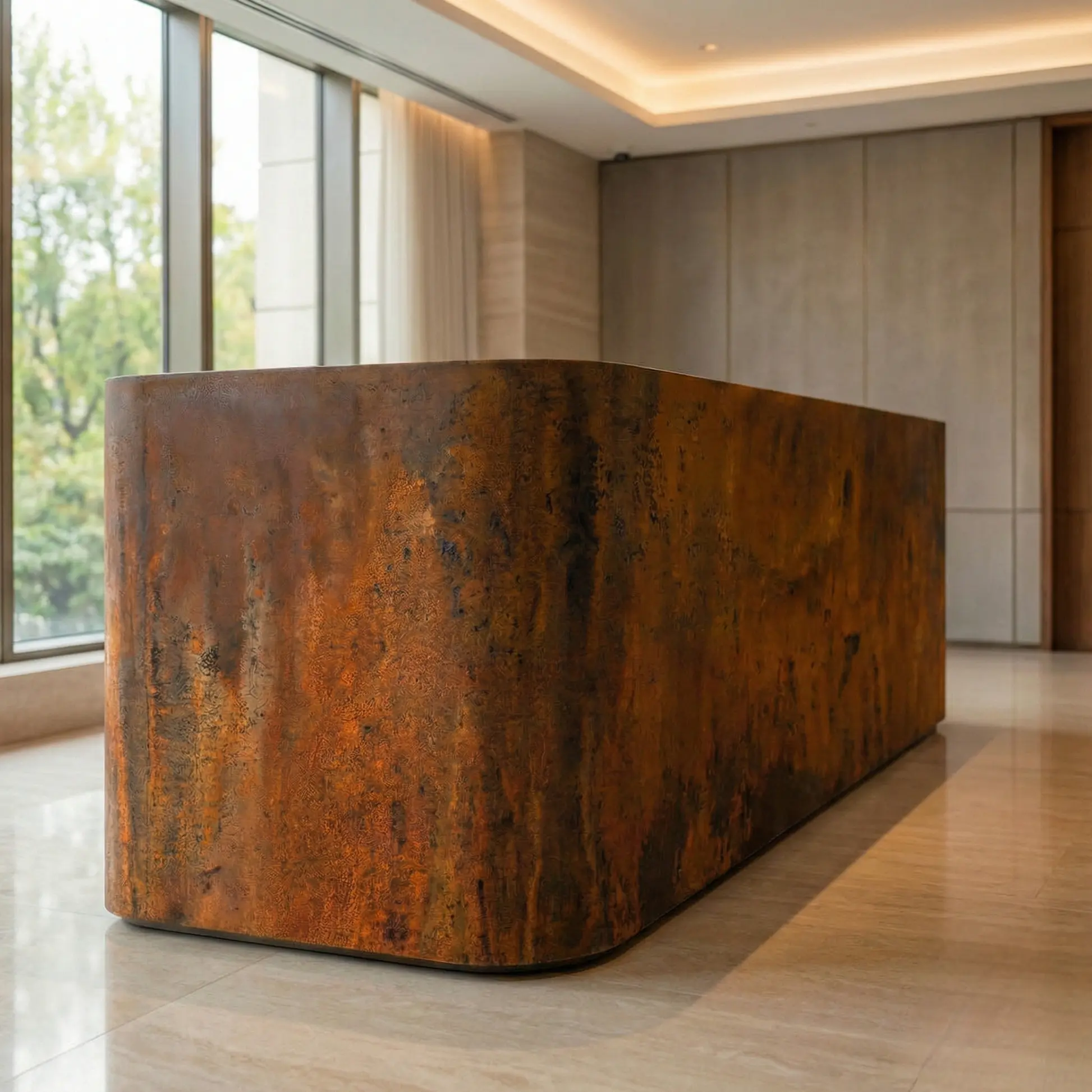
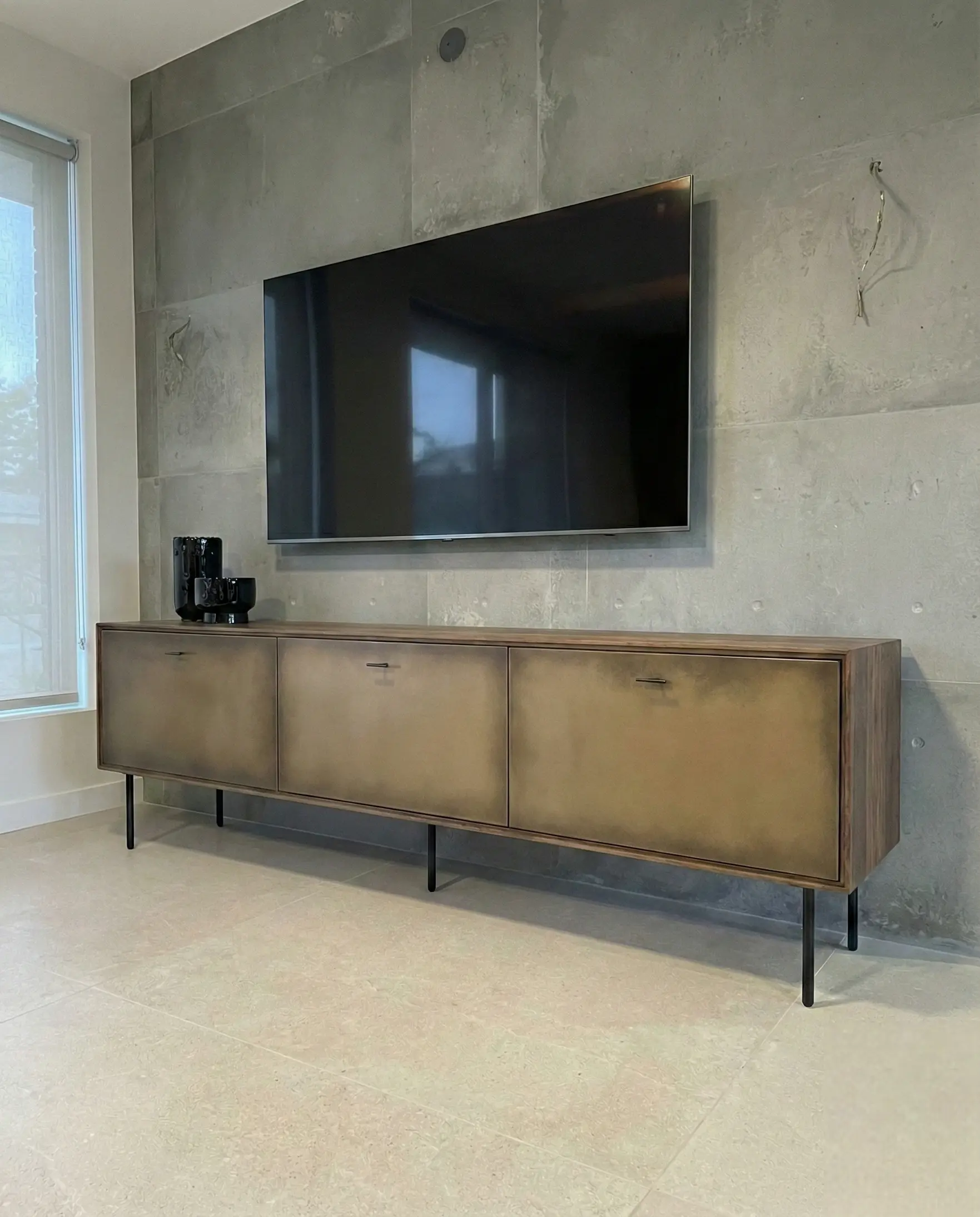
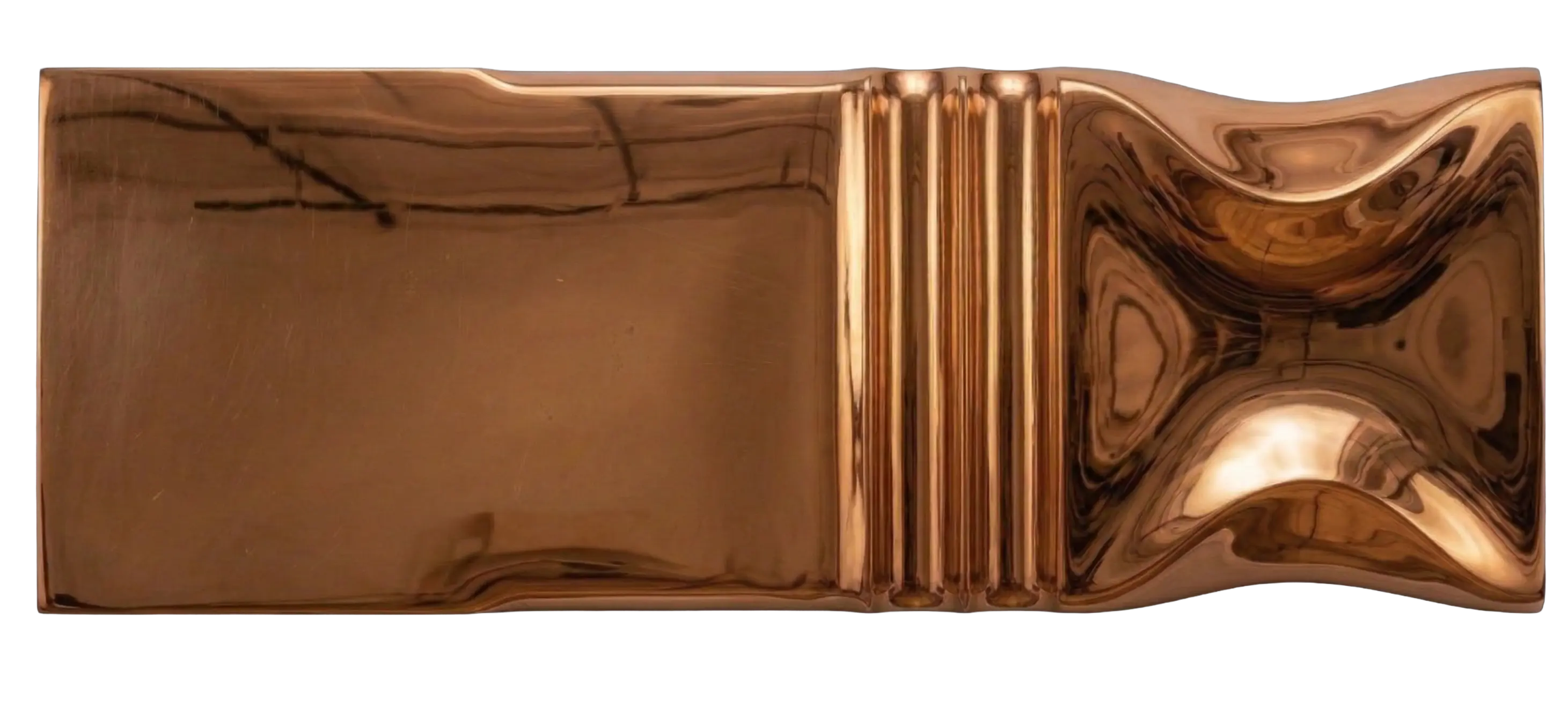
Many architectural projects do not require the entire reception desk or counter to be made from solid metal in order to achieve an authentic metal presence. In many cases, a more effective path is to fabricate the form correctly, then apply a finish system that allows the metal surface to follow the geometry, wrap edges, move across planes, and maintain visual continuity.
This creates more design freedom. It allows the project to focus first on proportion, geometry, detail resolution, and the desired reading of the surface, instead of forcing the design to follow only the limitations of conventional sheet metal construction. For architects and interior designers, this opens a more flexible way to work with metal finishes on reception desks, counters, tables, bar fronts, and related custom elements.
The quality of the final metal finish is determined well before the finished surface is visible. In reception desks, counters, and custom hospitality surfaces, substrate quality, edge sharpness, radius control, and transition detailing all directly affect the final result.
Even a minor inconsistency can become visible under raking light or on a large front-facing plane. That is why the process should begin with a clear review of the substrate, the build-up, the junctions, and any locations where the base may telegraph through the finish. Good finish development is not only about selecting the right metal tone. It is also about controlling the surface beneath it.
For architectural surfaces in reception and hospitality settings, the critical stage is not only application, but the refinement that follows. This is where brushing direction, surface depth, tactile quality, and visual consistency are developed. It is also where the balance is set between material richness and day-to-day practicality.
The protection system is then selected according to the expected touch level, cleaning frequency, project type, and intended use. This is what turns a metal finish from a visual idea into a usable specification for reception desks, service counters, table surfaces, and bar tops.
This finish approach is relevant to a broad range of architectural and interior applications where the surface needs to combine visual presence, design control, and practical buildability.
Creating an impressive and luxurious first impression that defines the hospitality experience.
The first step is to define which areas are primary visual surfaces, which are high-touch zones, which will be cleaned frequently, and which details require a higher degree of finish precision.
This is also the stage for reviewing integration with lighting, signage, service openings, ledges, recessed bases, joinery interfaces, stone details, glass elements, and surrounding materials. It helps ensure that the metal finish works not only on the main front face, but across the full reality of the built element.
The approval sample is central to the process. In many cases, a flat sample alone is not enough. It is often more useful to review a piece that also includes an edge, a corner, a return, or even a radius, so the finish can be evaluated in conditions closer to the real application.
This makes it possible to approve not only the metal tone, but also the brushing direction, sheen level, texture character, and surface behaviour in light.
Once the finish direction is approved, the next step is to define substrate requirements, preparation logic, edge quality, corner precision, fabrication constraints, and handling conditions. These decisions help keep the final built result aligned with the approved sample and reduce unnecessary variation during production.
At the final stage, the protection system is matched to the expected use condition of the element. A representative front-facing desk, an active service counter, a restaurant table, and a bar surface do not all require the same maintenance logic. Defining this clearly in advance creates better alignment between appearance, durability expectations, and long-term serviceability.
Reception desks, counters, meeting tables, and hospitality surfaces require more than a finish selection. They require a coordinated process that connects design intent, substrate preparation, geometry, sample approval, finish development, and real project conditions.
At MODULUX, the process is structured around an approved finish direction and a controlled path toward execution. In practice, this includes application review, substrate assessment, sample development, metal finish selection, production coordination, final protection, and quality control.
This allows the project to develop a coherent metal surface language across reception desks, front counters, bar areas, table surfaces, and related custom interior elements, without treating each part as a separate visual decision.
That depends on the substrate, the level of use, the amount of touch, the design direction, and how the surface is expected to behave in light. The right decision starts from the project conditions, not from appearance alone.
The main considerations usually include geometry, substrate type, edge and corner conditions, touch level, cleaning frequency, lighting, and the desired material reading. These factors help determine the most suitable finish direction and protection system.
This is usually clarified through sampling. The sheen level, brushing direction, texture depth, and response to light should be reviewed under conditions that are as close as possible to the real project.
In most interior applications, gentle cleaning with a soft cloth and suitable cleaning products is recommended. The exact maintenance logic depends on the selected finish system and protection layer.
Yes. One of the main advantages of a sample-led process is the ability to develop a coherent material direction across reception desks, counters, wall elements, joinery details, cladding features, and other related surfaces, even when substrates or geometries differ.
The earlier the finish discussion begins, the easier it becomes to define the right material direction, sample logic, substrate requirements, and protection approach, and to reduce revisions later.
Relevant references can be proposed according to the element type, the intended metal character, the substrate, and the expected use level. When drawings, inspiration images, dimensions, and substrate information are shared early, it becomes easier to recommend an appropriate finish path and a more accurate approval sample.
If you are planning a reception desk, reception counter, front counter, meeting table, restaurant table, bar top, service counter, or another custom surface with a metal finish, send us your drawings, inspiration images, substrate information, and expected use conditions.
That allows us to recommend a suitable finish direction, a relevant technology path, and an approval sample aligned with the project from early design through execution.
WhatsApp us