Rust is a finish that treats metal as a living register of time, where warmth, shadow, and irregularity become part of the composition. In this sample, the surface reads as deep amber brown with darker umber veining, a soft matte sheen, and vertical patina movement that gathers into subtle drips and speckled fields. The character can be developed as a controlled patina on real metal, or reproduced as a metal look coating when a lighter build or a non metal substrate is required, as outlined within Modulux Services. The process is guided by reference control, layering, and final sealing, so the surface remains architectural rather than theatrical. In interiors, Rust brings grounded depth to joinery, wall moments, and touchpoints that sit close to the hand and eye. In architectural applications, it scales into portals, cladding accents, and exterior elements where the finish needs to feel intentional under changing daylight. The effect is a restrained, tactile metal presence that absorbs glare, supports material pairing with stone, timber, and plaster, and gives geometry a quieter weight. For a deeper look at how these surfaces are made, visit חדשות.
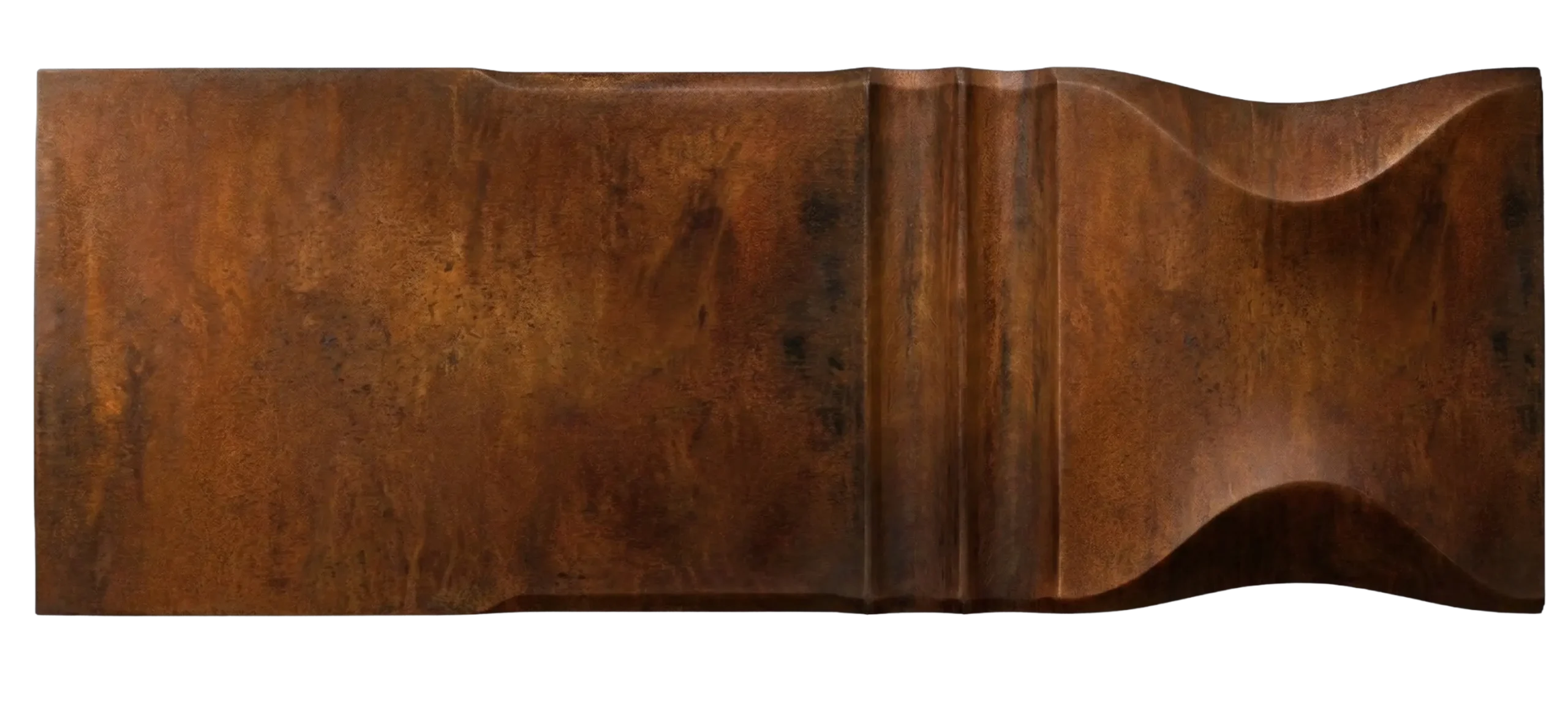
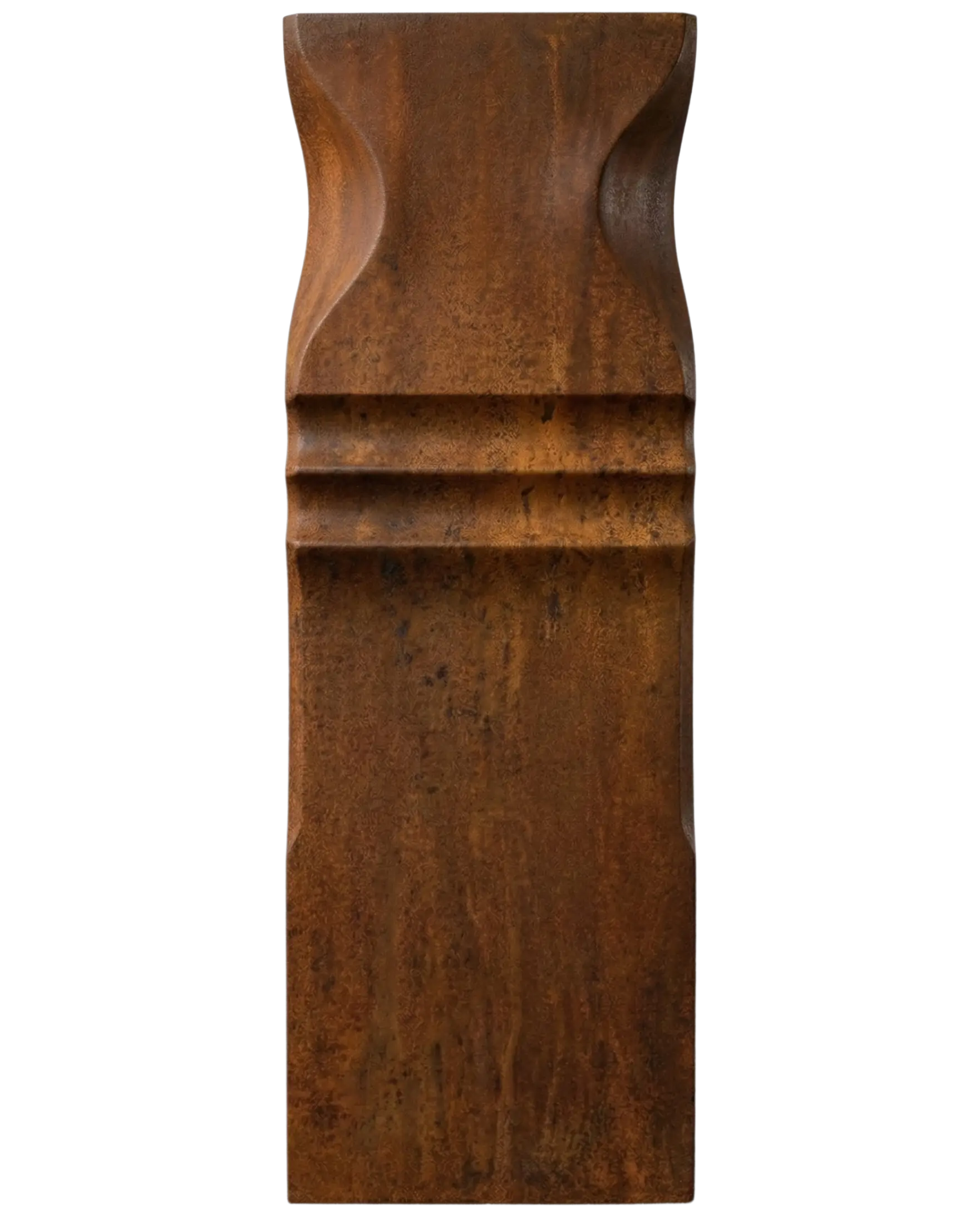
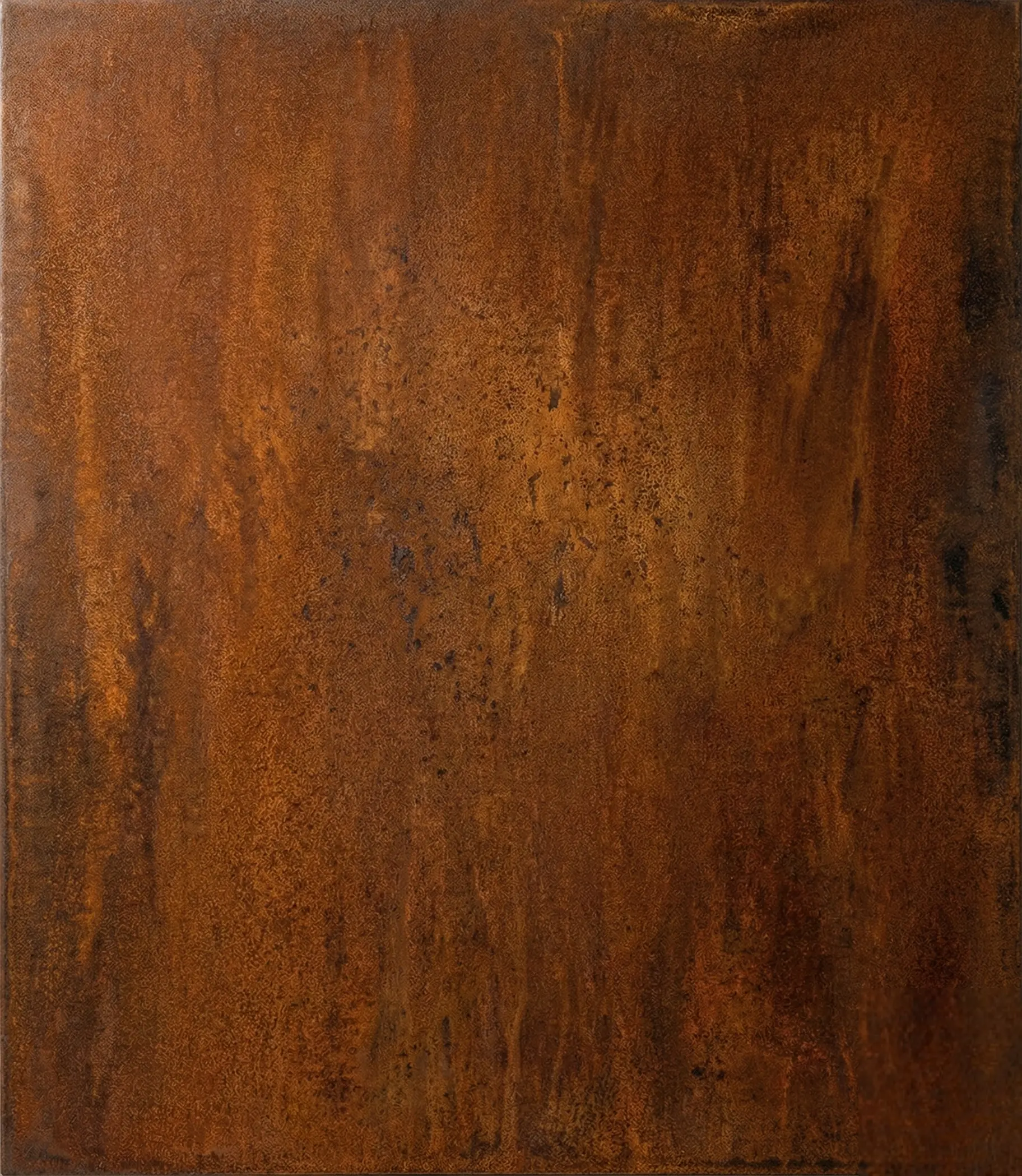
Rust is well suited to interiors that need warmth without shine, and texture without noise. It works naturally on cabinet fronts, kitchen islands, bar surrounds, vanity panels, media walls, shelving back panels, fireplace features, interior doors, trim details, reception desks, and display plinths, especially where lighting grazes the surface and reveals its tonal layering.
In architecture, the same finish can carry across elevator lobbies, entry portals, column wraps, ceiling coffers, stair enclosures, wall cladding accents, soffit planes, signage panels, facade details, and outdoor feature elements where a calm, weathered tone belongs to the wider palette. The Rust look can be specified through different Modulux technologies, allowing the same visual language across MDF, composites, stone, and metal, including flat panels, sharp edges, and curved forms. This flexibility helps designers keep one patina story consistent across multiple trades and geometries, from intimate interior components to larger envelope gestures.
Rust is sealed with a clear protective topcoat selected for the project. For routine care, dust with a clean microfiber cloth and clean as needed using mild soap and water. Wipe gently, then dry thoroughly to prevent water marks and residue buildup, especially along edges and in recessed detailing where moisture can linger.
Avoid abrasive pads, scouring powders, metal polishes, and aggressive cleaners, including acids, bleach, ammonia based products, and solvent degreasers, as they can scratch the topcoat or shift the finish character. In high touch zones such as pulls, push plates, and counter edges, treat the surface as a protected architectural finish and clean more frequently with a soft cloth to maintain an even sheen. If a scratch, dull patch, or impact mark appears, do not attempt to buff it out with polish. Contact Modulux so the team can advise on the appropriate touch up approach for the specific topcoat and installation conditions.
Share your substrate, geometry, and intended zone, and we will confirm the right process and protective build. You can also request samples to review tone, variation, and sheen under your lighting.
שלח לנו וואטסאפ