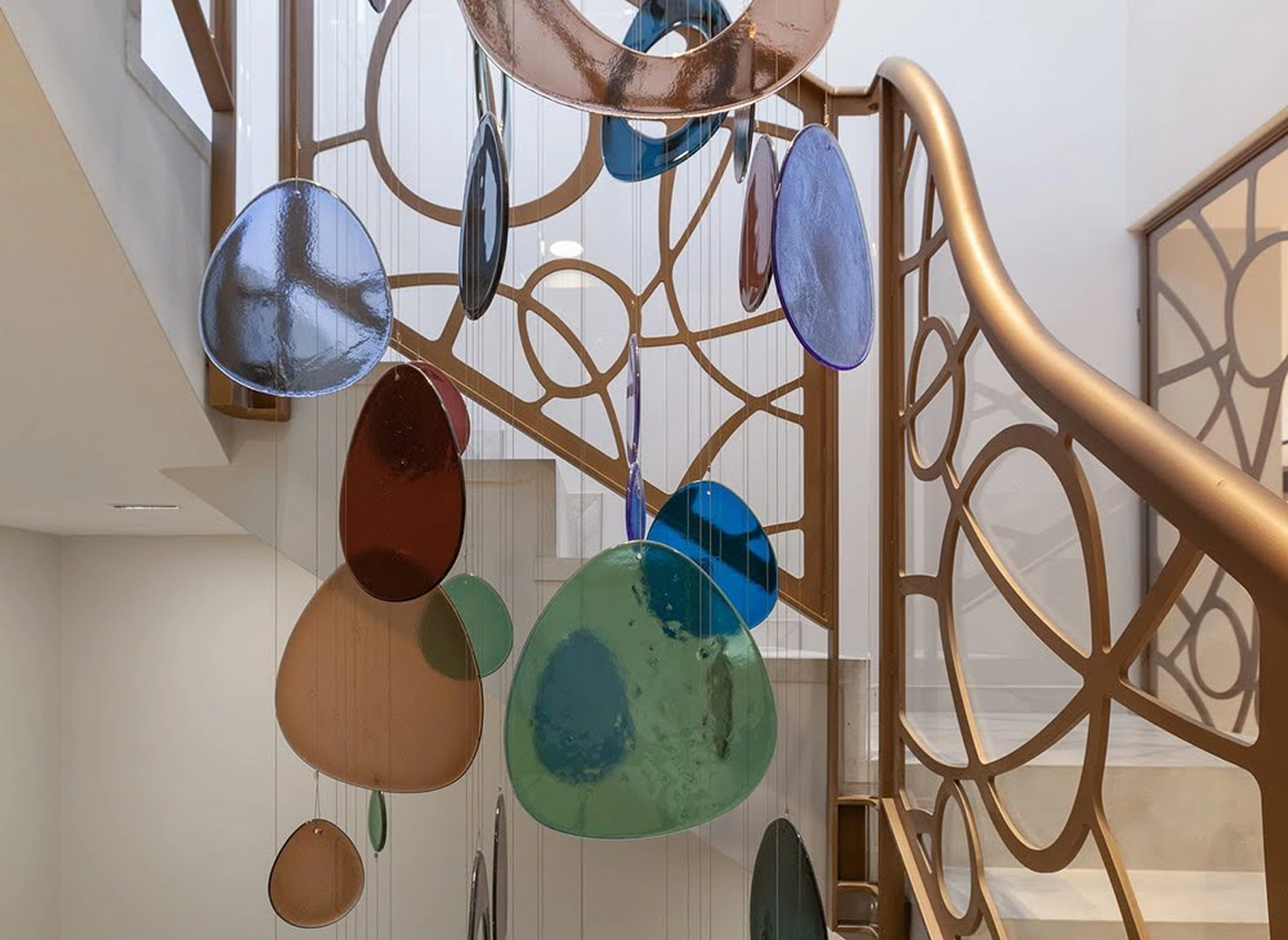
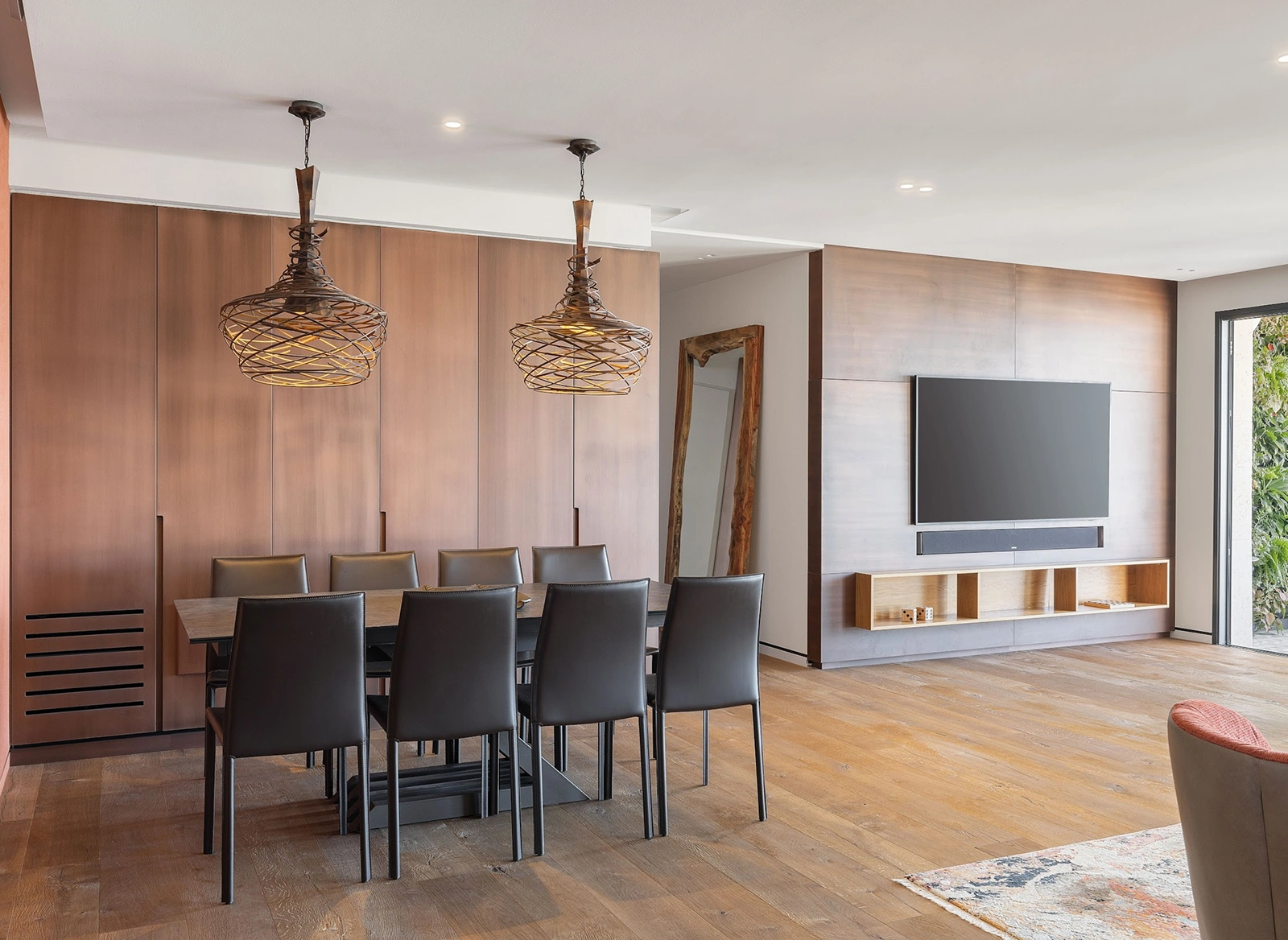
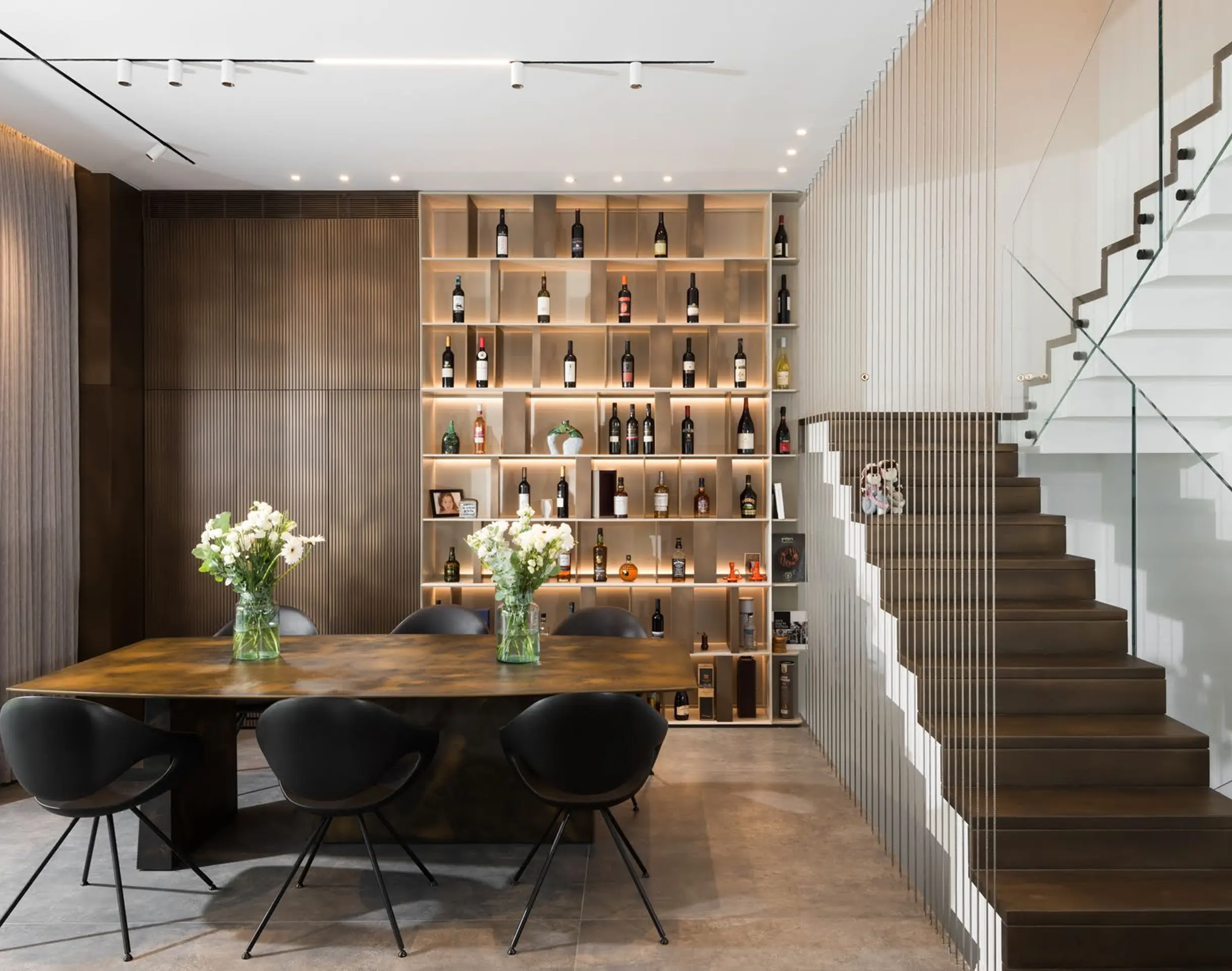
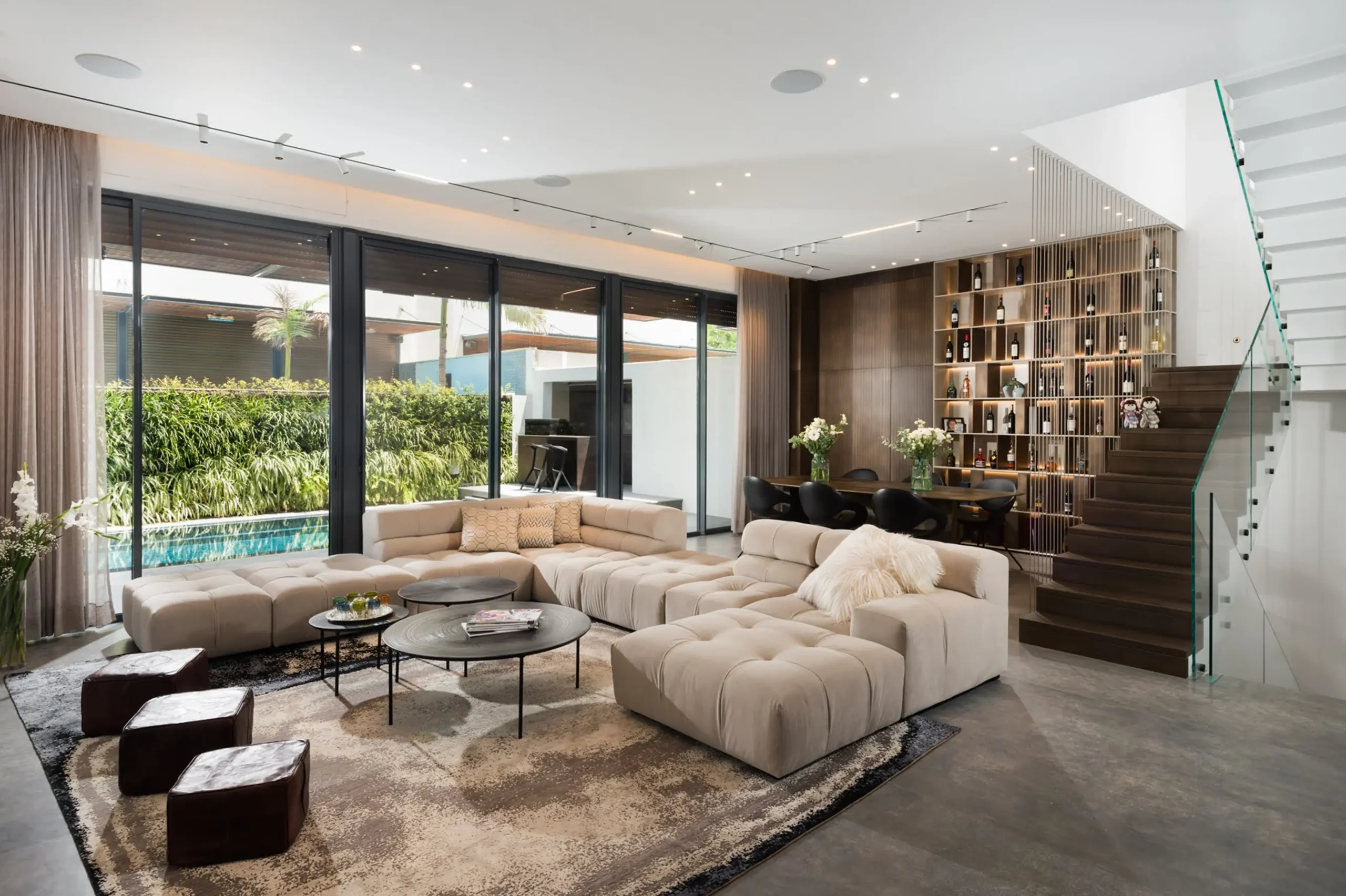
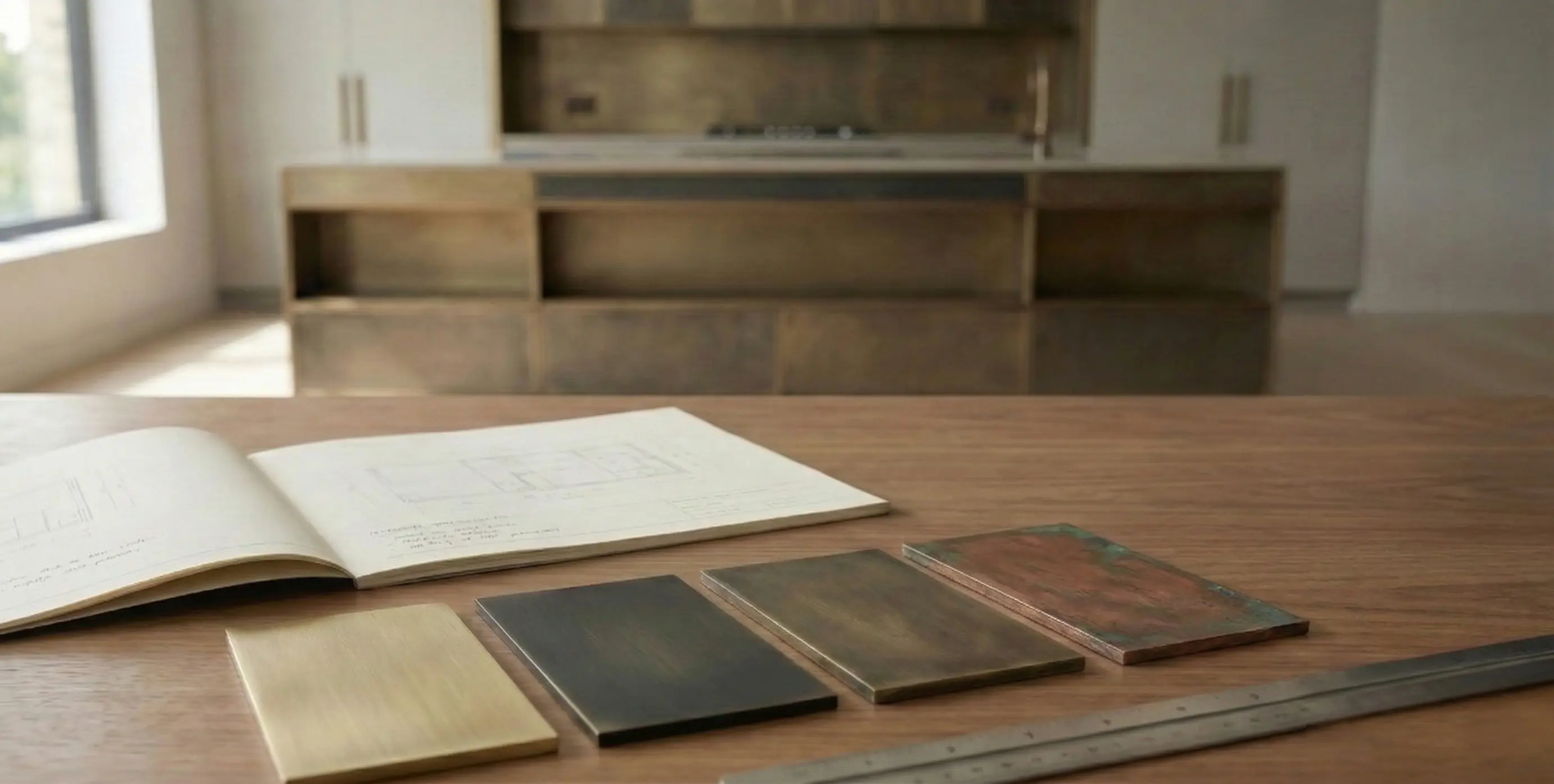
Liquid metal coating creates a real metal surface from metal powder applied over a prepared substrate and refined after application. At Modulux, this liquid metal finish is called MetaliQ. It is relevant when a project needs metal on shaped joinery, large wall elements, doors, furniture, or surfaces where sheet metal would introduce weight, seams, or difficult edge conditions. The right direction depends on substrate preparation, primer compatibility, use conditions, and an approved sample. For a broader category overview, see מה זה מתכת נוזלית.
Sheet metal can be the right choice when the geometry is simple and the fabrication logic is clear. It becomes more restrictive when a design asks for long continuous planes, wrapped edges, tight radii, or one metal language across different built elements. Liquid metal coating helps address those conditions by forming the metal surface over the prepared substrate rather than forcing the design around folded sheets.
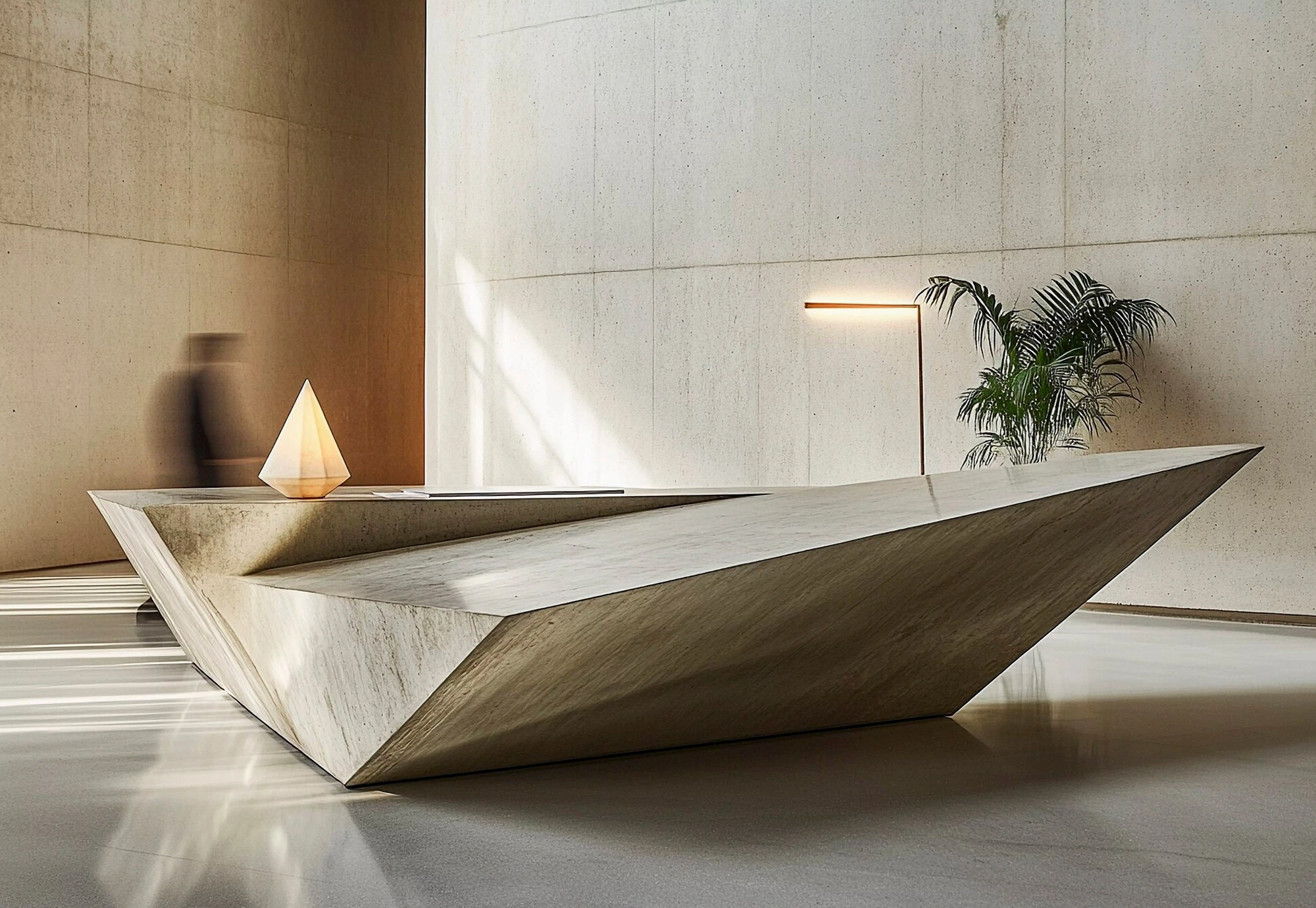
The value is not only visual. It can simplify how a reception desk, wall panel, door face, or custom furniture element is built, especially when the base construction is better handled in MDF, wood, composite, stone, or prepared metal. The surface is then refined toward the approved sample, with finish direction, sheen, and protection selected according to the project.
Creating an impressive and luxurious first impression that defines the hospitality experience.

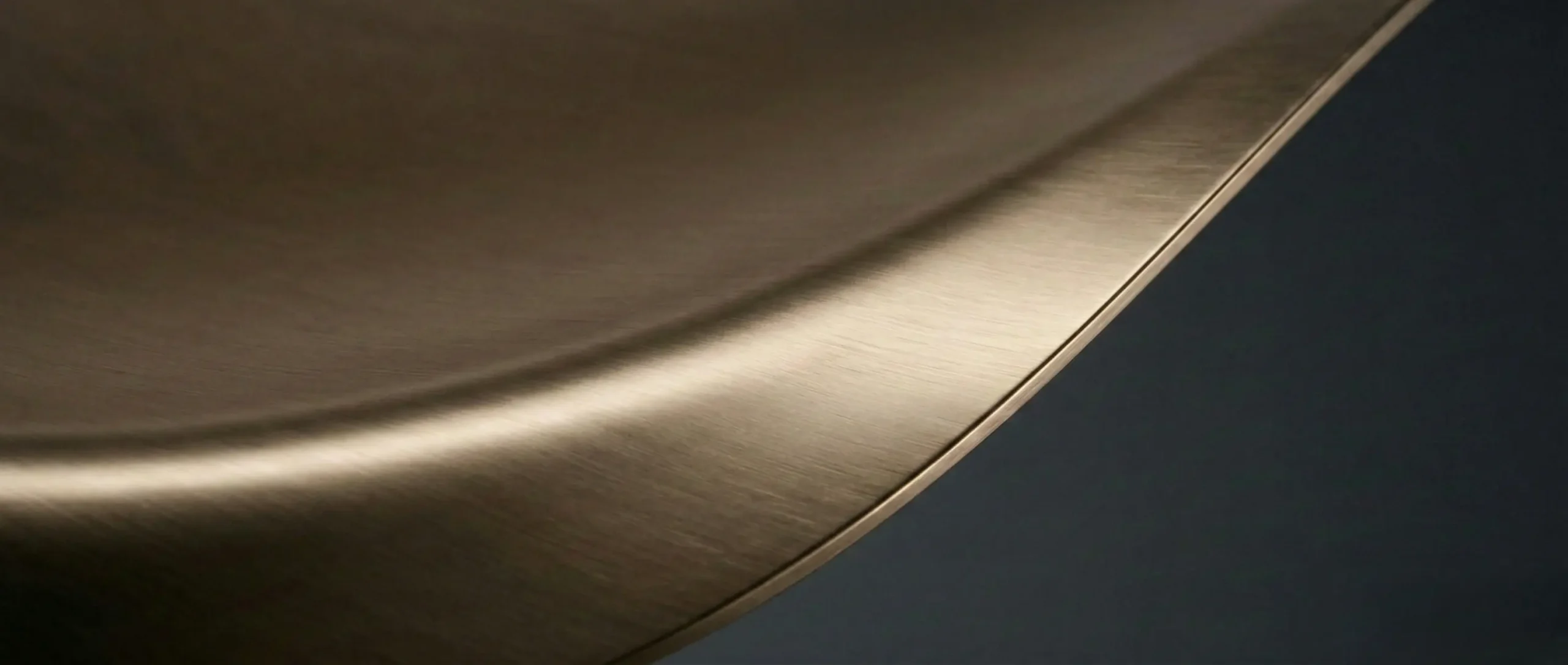
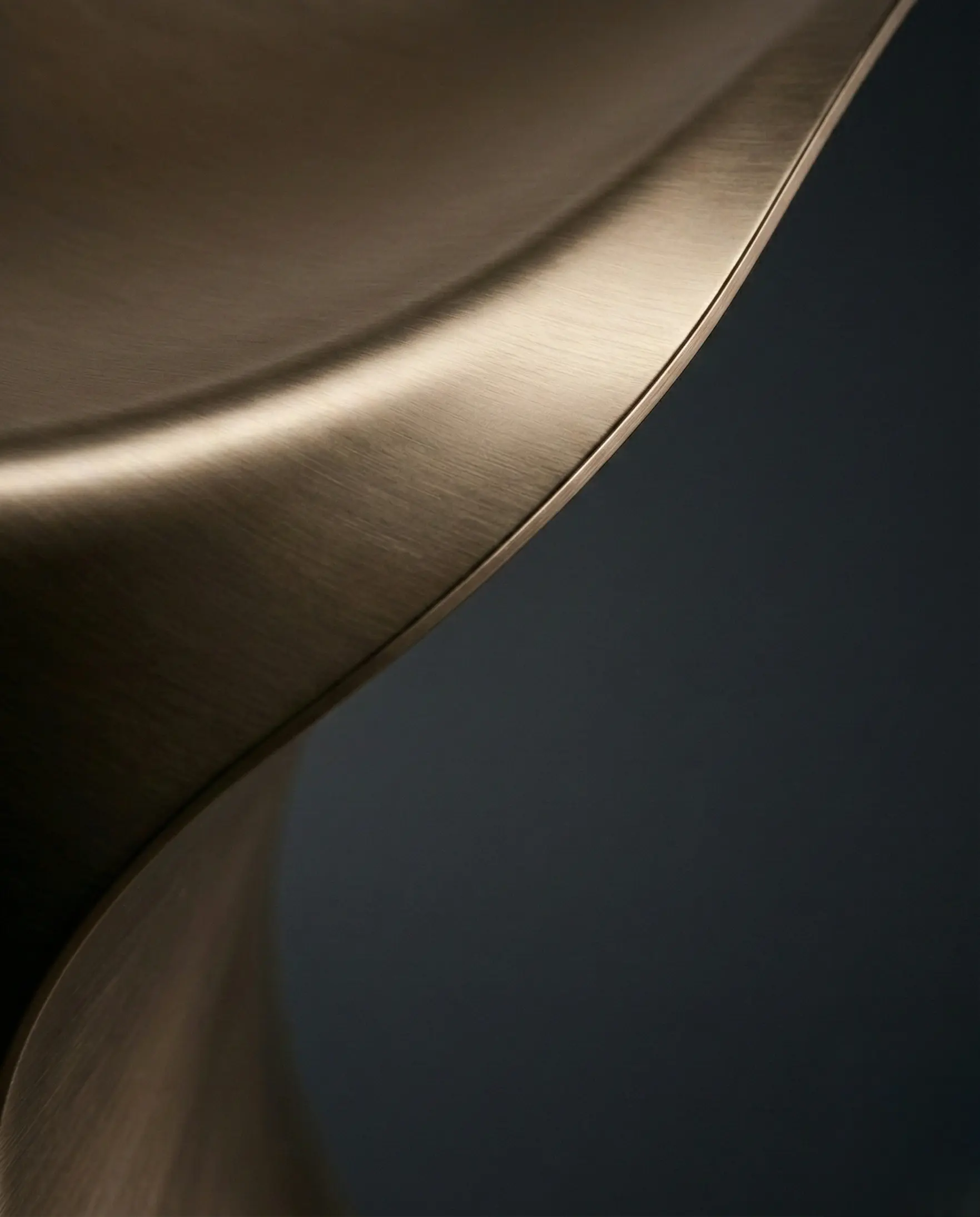
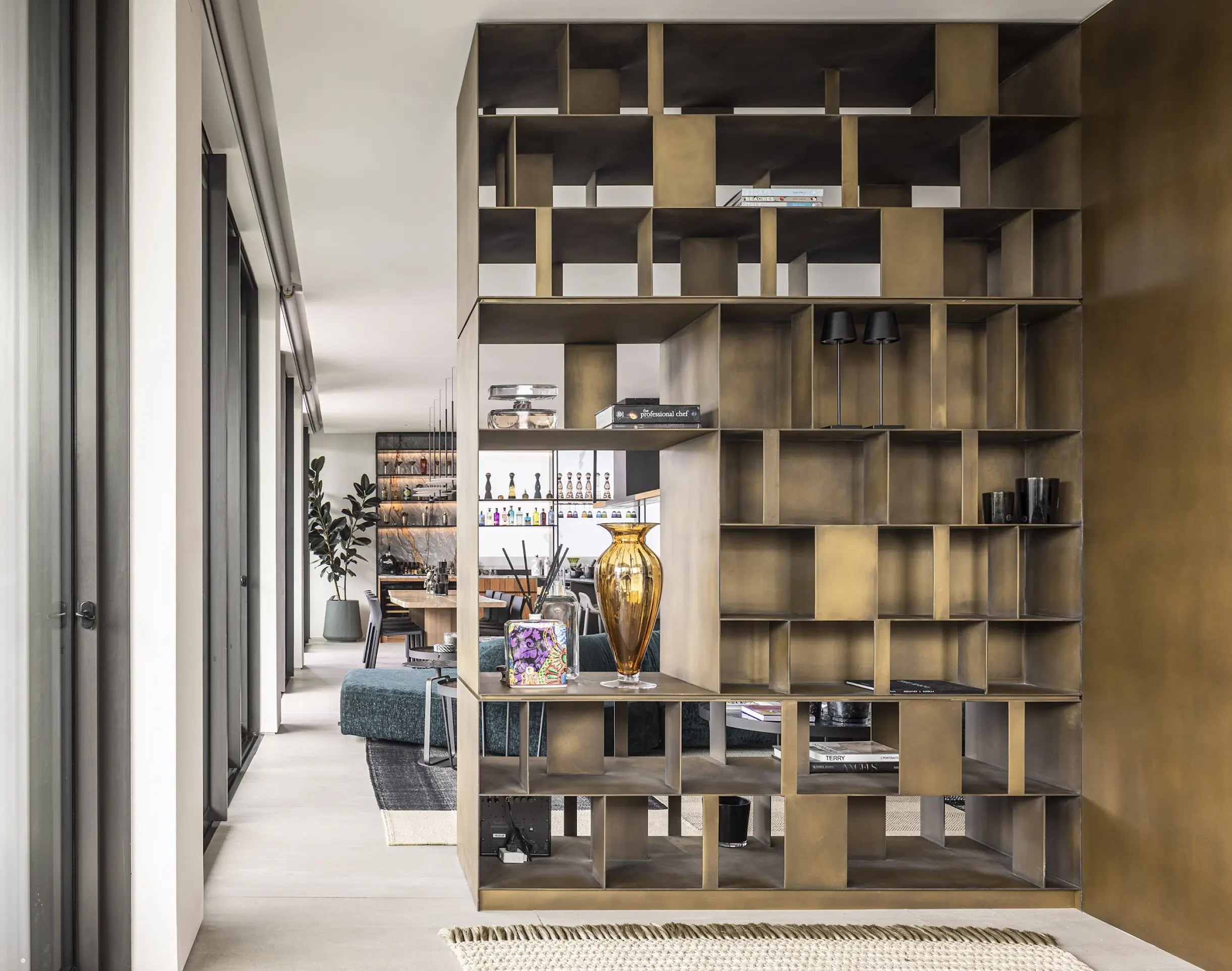
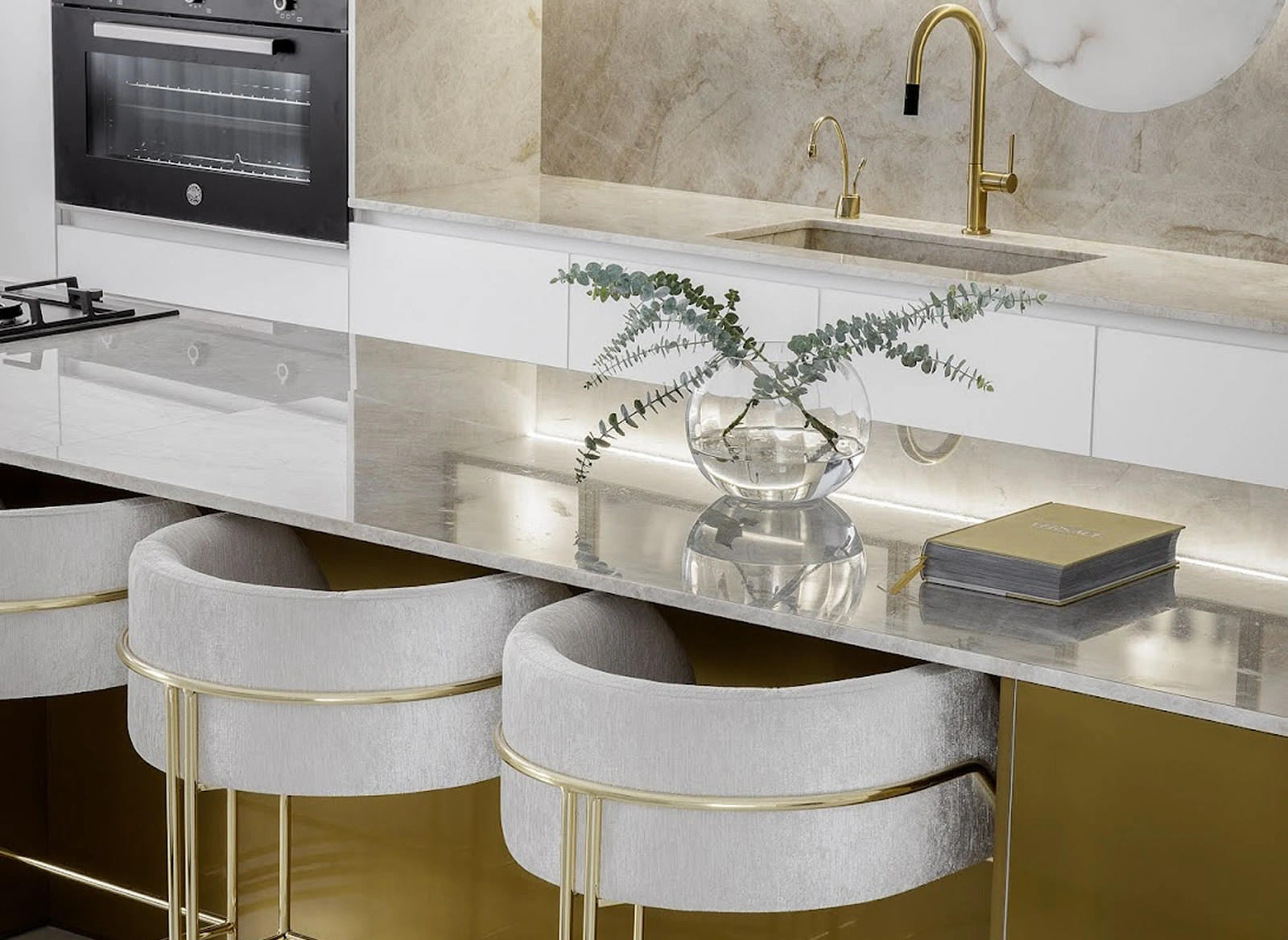
Liquid metal coating is most useful where metal needs to read as part of the architecture, not as a decorative layer added at the end. It can support reception desks, kitchen fronts, feature walls, wall panels, doors, and custom furniture when the surface requires metal depth with controlled geometry. In interior projects, it also helps align different elements under one finish direction, so joinery, panels, portals, and furniture do not feel disconnected. For broader material planning, it can sit within a project’s architectural metal finishes strategy from the first specification stage.
Liquid metal coating begins with the substrate. Stability, surface preparation, pore sealing, and primer compatibility all affect the result. The coating uses real metal powder held in a two-component binder to create a sprayable mix that forms a stable metal-bearing layer over the prepared surface.
After application, the finish is refined through sanding and finishing. Depending on the project direction, this may include brushing, satin refinement, polishing, or patination. The final surface can be protected with a transparent topcoat selected according to exposure, touch level, and maintenance expectations. The approved sample remains the reference for tone, texture, sheen, and finish direction.
Liquid metal coating is relevant when the project needs a metal surface on forms that are difficult to resolve with sheet metal. Curves, wrapped edges, large panels, and mixed built elements can be approached through the substrate first, then finished as metal. Suitability still depends on surface stability, preparation quality, and the intended use conditions.
Durability should be reviewed as a full system, not as a finish name alone. Substrate preparation, primer compatibility, coating build, finish direction, protective topcoat, exposure, and touch level all influence how the surface should be specified and maintained. This makes early consultation useful before committing to a production route.
The approved sample sets the working reference for tone, sheen, brushing, polish level, patina character, and protection. Production is developed toward alignment with that sample, while allowing for the natural behavior of real metal, lighting conditions, and hand-finished surface variation. This helps reduce uncertainty before the work moves into fabrication.
MDF, wood, composites, stone, and prepared metal can all be reviewed for liquid metal coating, but they are not treated the same. Each substrate has its own preparation, sealing, primer, and movement considerations. The surface should be assessed before finish approval so the visual direction and technical build can support each other.
A brushed, satin, polished, or patinated direction changes how the surface reflects light and how it should be protected. The transparent topcoat is selected according to the required look, touch level, cleaning expectations, and project environment. This keeps the finish decision connected to daily use, not only to appearance.
Liquid metal coating can be refined toward several finish directions, depending on the metal, substrate, and intended use. Brushed and satin surfaces are often selected for larger architectural planes because they control reflection and feel stable in changing light. Polished areas can be used more selectively where clarity or highlight is required. Patination can introduce depth and tonal variation, while a protective topcoat helps stabilize the chosen direction for everyday handling. Related finish options should be reviewed through physical samples, not only screen images.
Liquid metal finishes can be developed with common architectural metal directions such as brass, bronze, copper, zinc, aluminum, iron, and related tonal targets. The selected metal affects color, patina potential, reflection, and maintenance expectations. When the project needs alignment with an existing metal element, a physical reference should be reviewed before sample development.
Samples are not a formality. They define the finish direction before production begins. They help confirm tone, texture, brushing, sheen, patination, and protective topcoat behavior under the project’s lighting conditions. Once approved, the sample becomes the reference point for production alignment, while still allowing for responsible material variation.
For specification, the project team should share substrate type, geometry, installation zone, expected touch level, cleaning conditions, and desired finish direction. Modulux can then advise whether liquid metal coating is the right path or whether another metal surface system should be considered. For project review, contact us.
Start with the surface conditions: substrate, geometry, exposure, touch level, and the metal direction you want to achieve. Modulux will review the project logic, develop the sample route, and help define the finish and protection system before production.
Start with a finish consultation
שלח לנו וואטסאפ