
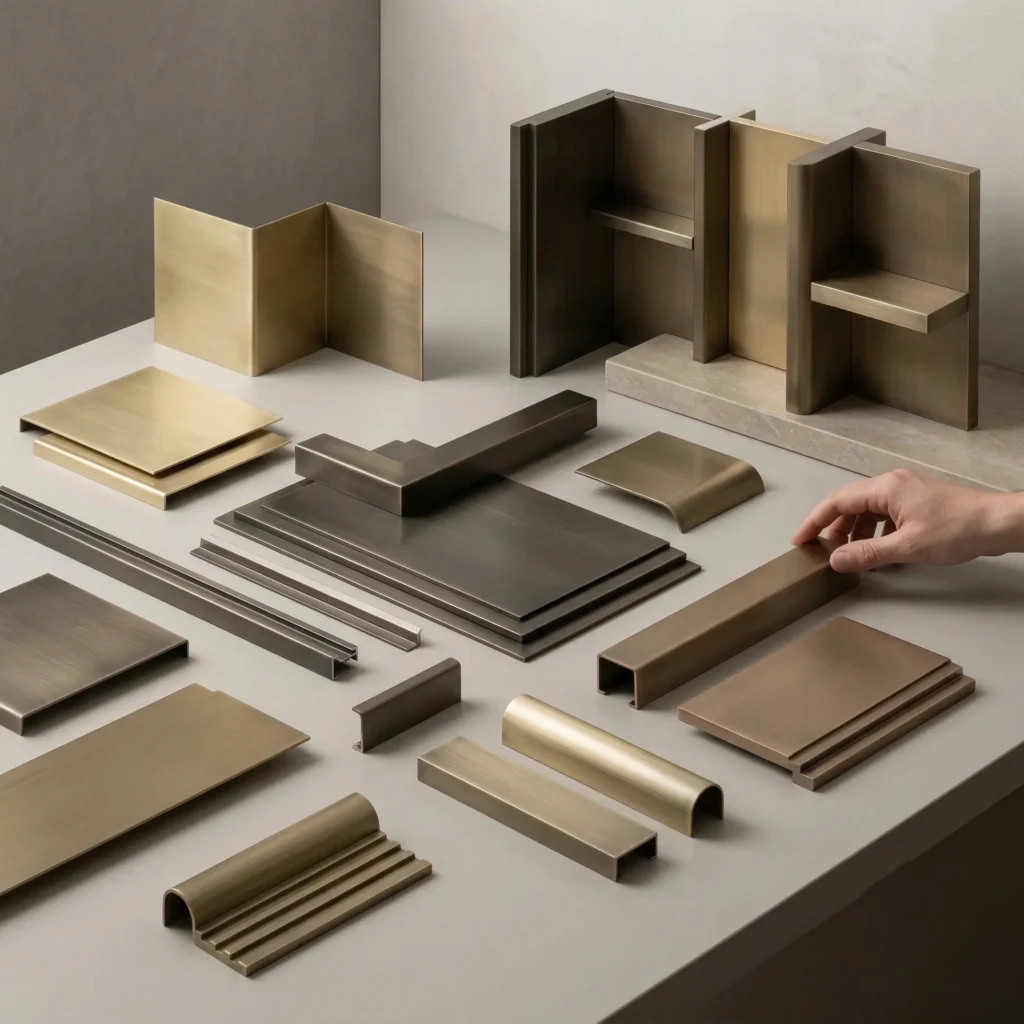
כשאומרים מתכת, רוב האנשים מדמיינים לוחות כבדים, חיבורים גלויים, וקצוות שמכריחים את התכנון להתיישר לפי מגבלות ייצור. הטכנולוגיה מציעה נקודת מוצא אחרת: לא מתכת כגוש שצריך לכופף ולחבר, אלא כשכבת ציפוי מתכתי אמיתי שנבנה על גבי המשטח ומתנהג כמו חומר אדריכלי. במילים פשוטות, זה פתרון שמאפשר עיצוב במתכת בלי להיכנס לאותן פשרות של פח, ריתוכים וכיפופים.
במודולוקס, הטכנולוגיה הזו נקראת MetaliQ, מערכת שבה אבקת מתכת אמיתית יוצרת את פני השטח, ופולימר דו-רכיבי הופך אותה לתערובת ניתנת להתזה שמתקשה לשכבה יציבה. אחרי היישום מגיע שלב הדיוק, ליטוש, הברשה או פטינה, ואז שכבת הגנה שקופה שמייצבת את הגוון והברק ומקלה על תחזוקה יומיומית.
מתכת נוזלית בהגדרה הכי ברורה
מתכת נוזלית היא ציפוי מתכת שמיושם בתהליך קר, כלומר בלי חום שמעמיס על החומר שמתחת. מערבבים אבקת מתכת אמיתית עם חומר מקשר, מתיזים על תשתית שהוכנה נכון, נותנים לזה להתקשות, ואז מסיימים ידנית כדי להגיע למראה שנקבע בדוגמת ייחוס. התוצאה היא משטח שנראה ומרגיש כמו מתכת, אבל המבנה עצמו יכול להישאר עץ, MDF, אלומיניום, אבן, או מתכת קיימת שעברה הכנה.
היתרון הגדול הוא חופש הצורה. מתכת נוזלית יודעת לעטוף רדיוסים, קצוות, חריצים ופרטים חדים, ולשמור על קריאה רציפה של החומר. לכן עיצוב במתכת יכול לעבור מדלת, לקיר, לנגרות, לאלמנט פיסולי, בלי שפתאום תראו שינוי שפה בגלל אילוצי חיבור.
למה לא פשוט להשתמש בלוח מתכת רגיל
יש מקרים שבהם פח הוא פתרון נכון, אבל הוא כמעט תמיד מגיע עם מחיר תכנוני. פאנלים גדולים דורשים ריתוכים. פינות דורשות כיפופים שמחליפים כיוון סיבים ומייצרים רעש ויזואלי. משקל דורש תשתיות חיזוק ומקשה על התקנה. ובחללים שבהם האור גולש לאורך המשטח, כל תפר קטן הופך לקו בולט.
כאן הגישה הזו נכנסת לעבודה: כציפוי מתכת שמאפשר משטח מונוליטי יותר, עם פחות שברים ופתרונות סיום. מבחינת עיצוב במתכת, זה מאפשר לחשוב קודם על אור, פרופורציות וגאומטריה, ורק אחר כך על איך לבנות את השלד הכי יעיל.
על אילו תשתיות אפשר ליישם
מתכת נוזלית לא מחפשת חומר אחד מושלם. היא מסתדרת עם מגוון תשתיות נפוצות באדריכלות פנים, כל עוד עובדים בצורה מסודרת.
ב MetaliQ אפשר ליישם על MDF ועץ אחרי איטום וסגירת נקבוביות, על אלומיניום, ברזל, נירוסטה, וגם על פח שחור או מגולוון שעבר ניקוי, שיוף ופריימר תואם. זה בדיוק המקום שבו ציפוי מתכת הופך לכלי שמאחד בין עבודות של כמה בעלי מקצוע.
במילים אחרות, אם אתם רוצים עיצוב במתכת עקבי בפרויקט, אבל חלק מהאלמנטים נבנים בנגרות וחלק במסגרות, מתכת נוזלית מאפשרת להביא את כולם לאותה שפה.
איך נראה התהליך בפועל
כדי שציפוי מתכת ייראה נקי ויחזיק טוב, התהליך חשוב לא פחות מהחומר. עם MetaliQ אנחנו עובדים לפי רצף קבוע.
ראשית, בודקים את התשתית: יציבות, נקבוביות, וסוג החומר. אחר כך מבצעים ניקוי ודה גריזינג, שיוף להכנה, ושליטה באבק ובסטטיות. לאחר מכן בונים מערכת פריימר ומילוי שמתאימה לתשתית. רק אז מגיע שלב ההתזה של מתכת נוזלית, לרוב בשתי שכבות עם זמן ייבוש קצר ביניהן.
לאחר שהחומר מתקשה, מתחיל שלב הגימור שהוא הלב של עיצוב במתכת. שיוף מדורג, הברשה כיוונית שמגדירה את תנועת האור, או ליטוש שמייצר חדות והשתקפות. ואם רוצים אופי יותר עמוק, אפשר לפתח פטינה מבוקרת, ואז לקבע אותה עם שכבת הגנה שקופה שנבחרת לפי שימוש וסביבה.
מראה, מרקם ואור: איפה קסם החומר
הדבר שמבדיל את השיטה הזו מצבעים מטאליים הוא שהמתכת היא לא אפקט, היא חומר.
כשהאור פוגע בהברשה עדינה, הוא לא רק מחזיר ברק, הוא מדגיש כיוון ומדידה. בליטוש, הוא מייצר נקודת פוקוס מדויקת. בפטינה, הוא חושף שכבות זמן וגוון שמרגישות טבעיות, אבל נשלטות באמצעות דוגמת ייחוס.
במובן הזה, ציפוי מתכת הוא כלי ליצירת נוכחות שקטה. הוא מאפשר עיצוב במתכת שמרגיש מחובר לעץ, אבן, טיח וזכוכית, בלי לצעוק ובלי להיראות מודבק.
איפה משתמשים בזה בפרויקטים אמיתיים
בפועל, השיטה רלוונטית בכל מקום שבו רוצים אמירה מתכתית נקייה, אבל לא רוצים לשלם את מחיר המבנה הכבד. במטבחים, היא מתאימה לחזיתות נגרות וקצוות מעוגלים. בחללים מסחריים, היא מצוינת לדלפקים, קירות כוח ואלמנטים שמקבלים הרבה מגע.
וכדי לתת תמונה קונקרטית, הנה כמה תרחישים שבהם עיצוב במתכת הופך להרבה יותר פרקטי בזכות ציפוי מתכת מסוג מתכת נוזלית.
עיצוב חדר מדרגות בבית פרטי יכול ליהנות ממשטח מתכתי רציף על גבי אלמנטים מ-MDF או קומפוזיט, במיוחד כשיש רדיוסים ומעקות עם פרטים עדינים.
עיצוב דלתות כניסה מקבל יתרון גדול כשהדלת עצמה בנויה בצורה יציבה ונוחה לייצור, והמתכת מגיעה כציפוי מתכת שמאחד בין פני הדלת, המשקוף והריווחים.
חיפוי קירות יוקרתי אפשר להשיג בלי לוחות כבדים, תוך יצירת שפה מונוליטית שמגיבה יפה לאור צדדי ומסתירה חיבורים.
עיצוב לובי מרוויח מהיכולת לשמור על אותה שפה מתכתית בין קיר, פורטל, וקונסטרוקציות שונות שמיוצרות במספר סדנאות.
ספרייה מעוצבת יכולה לקבל מידוף וחזיתות מתכתיות אמיתיות על בסיס נגרות או מסגרות מדויקת, בלי להוסיף משקל מיותר למדפים ולמבנה.
מה לגבי עמידות ותחזוקה
כמו כל משטח מתכתי, גם מתכת נוזלית היא חומר שחי עם מגע, ניקוי ואוויר. לכן שכבת ההגנה היא חלק מהמערכת. היא נועדה לייצב גוון וברק, לשפר עמידות למגע יומיומי, ולהפוך ניקוי לפשוט יותר. ההמלצה הבטוחה היא ניקוי עם מטלית מיקרופייבר וחומר ניקוי ניטרלי, והימנעות מחומרים שוחקים.
למה זה נחשב פתרון נכון גם מבחינה סביבתית
הסיפור כאן לא ירוק בכוח, הוא פשוט ענייני. במודולוקס עובדים עם מערכות נמוכות או אפס VOC לפי הצורך, ומדברים על צמצום פסולת דרך תכנון תשתית יעיל ושכבות נשלטות. כשאתה מייצר את רוב הנפח בחומר זמין כמו MDF או אלומיניום, ומוסיף רק את שכבת המתכת במקום לוחות עבים, אתה משתמש פחות במתכת בלי לפגוע במראה.
מתכת נוזלית כסיכום קצר למתכנן ולמבצע
מתכת נוזלית היא לא טריק, היא מערכת. היא מאפשרת ציפוי מתכת אמיתי על תשתיות מגוונות, עם שליטה גבוהה בגימור, ועם יכולת לשמור על שפה רציפה בקצוות וברדיוסים. למי שמחפש עיצוב במתכת נקי, שקט ומדויק, זה כלי שמרחיב את מה שאפשר לתכנן, לבנות ולהתקין, בלי להכביד על הפרויקט.