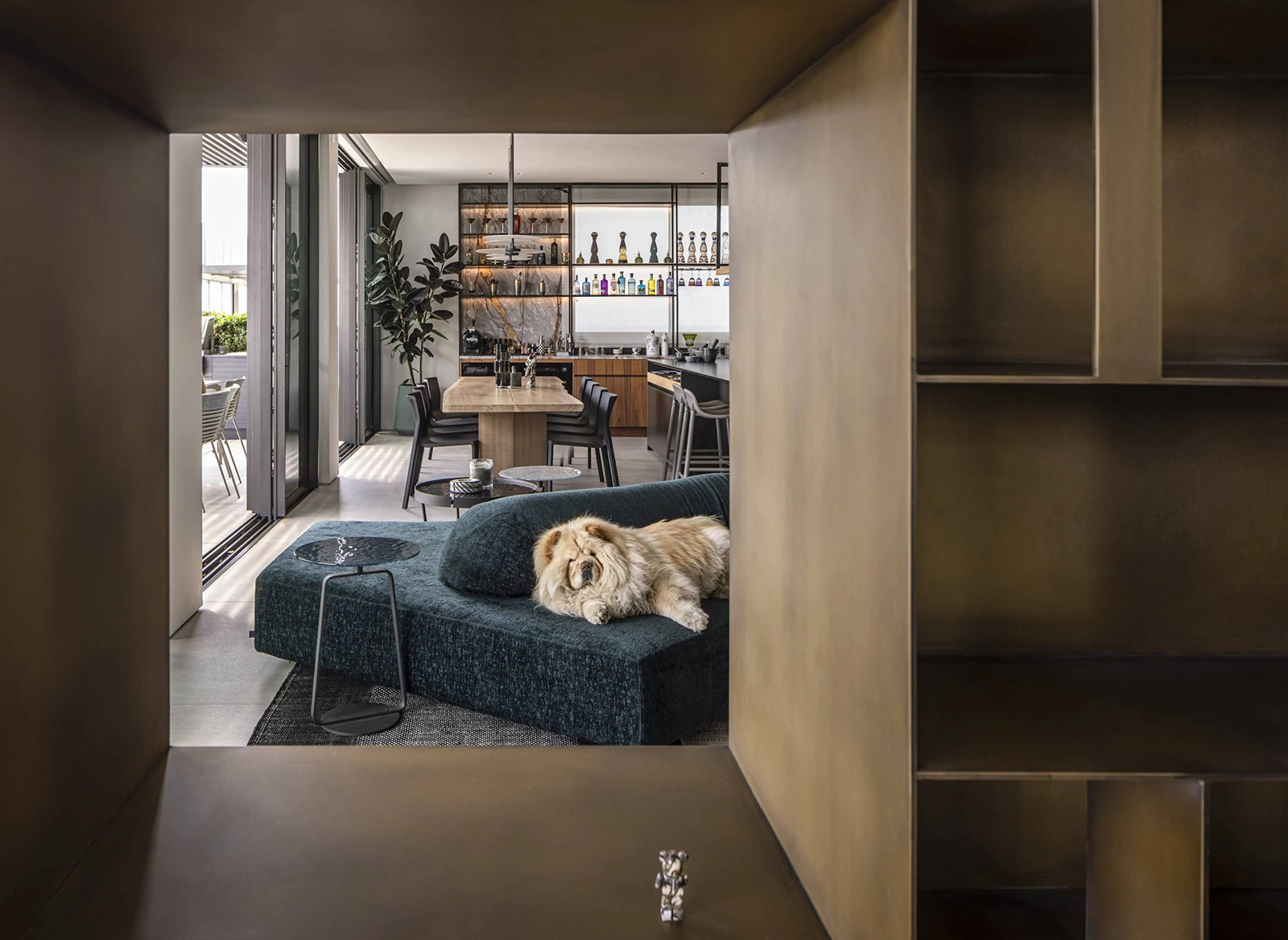
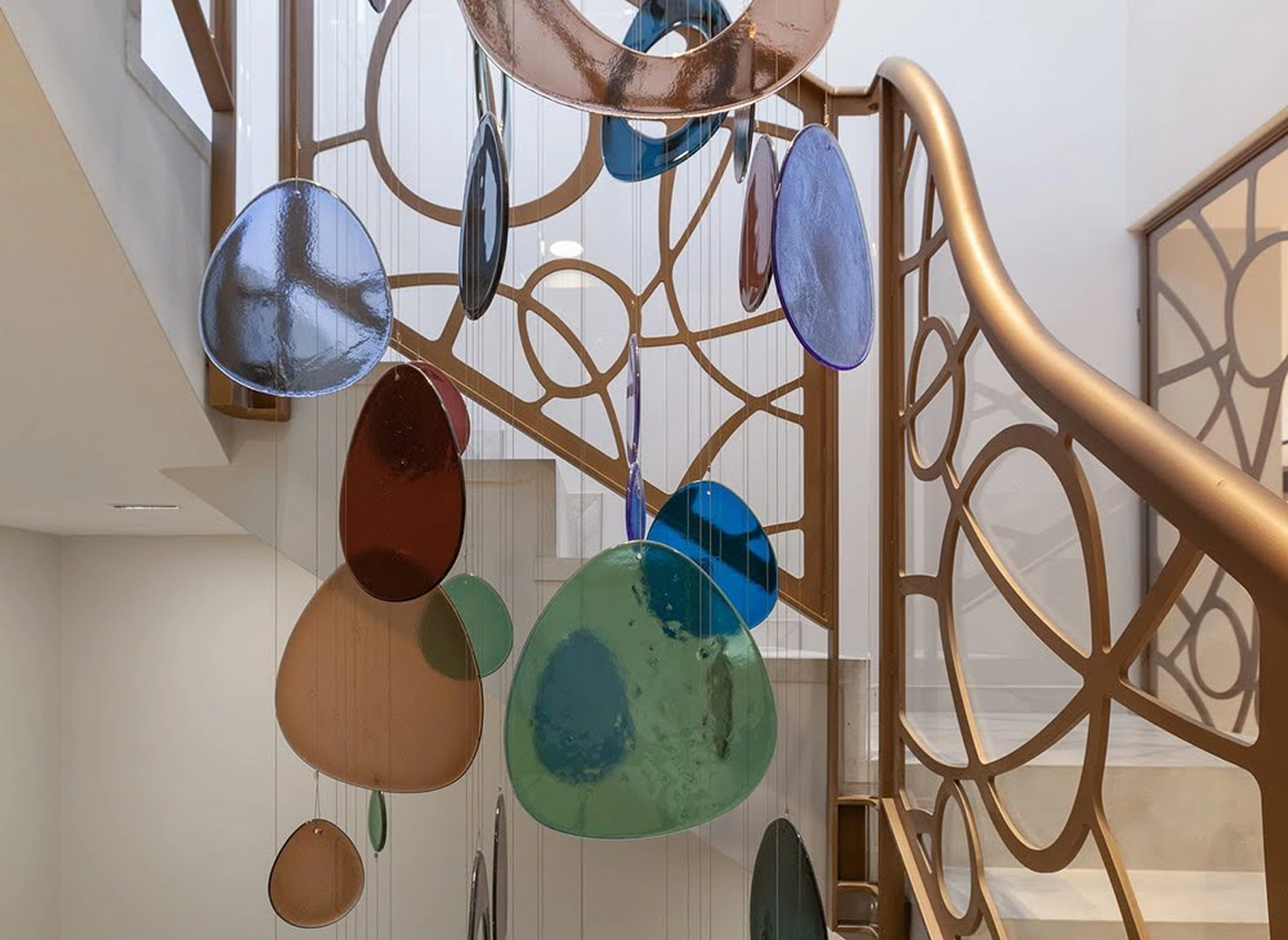
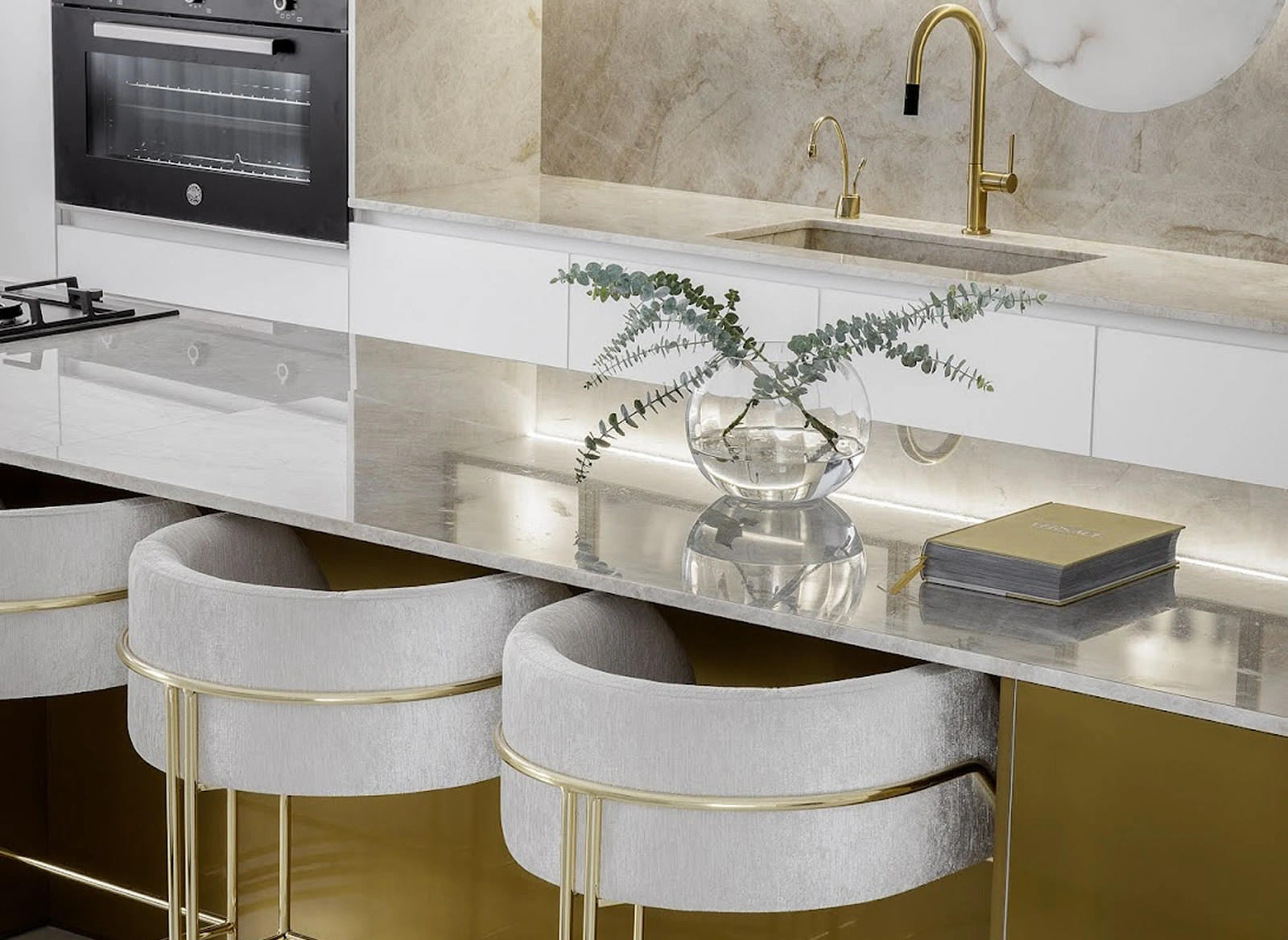
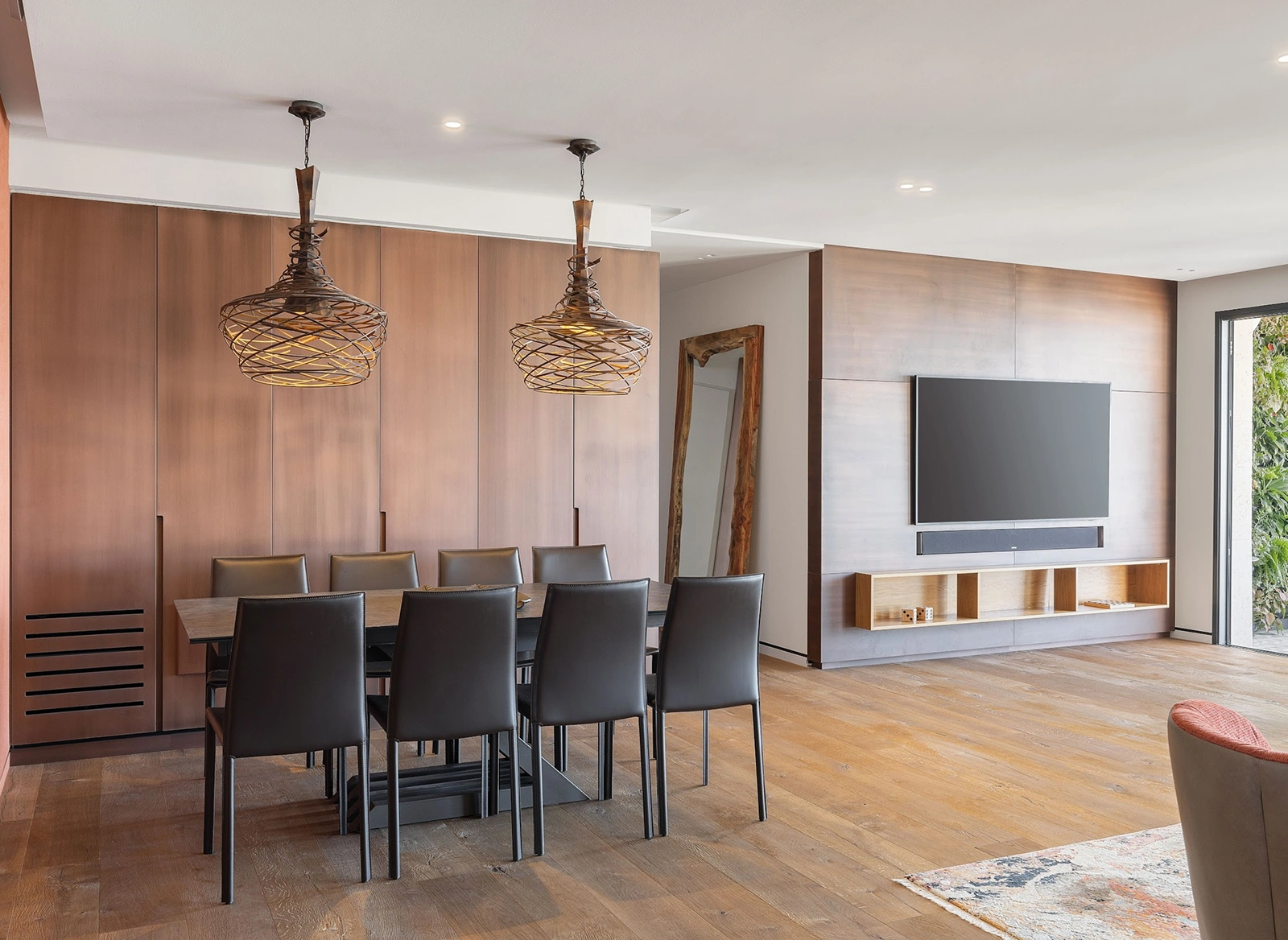
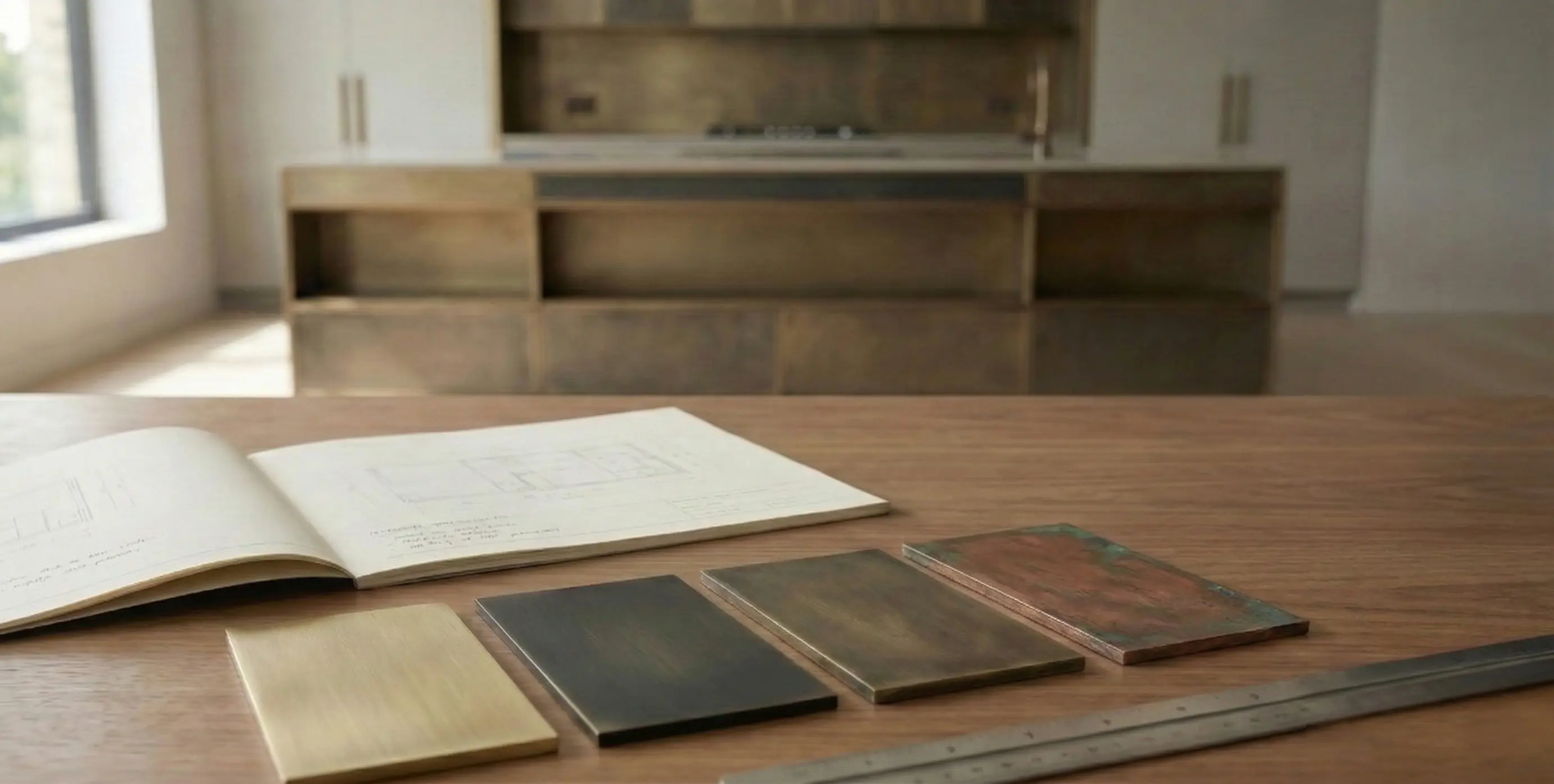
Good metalwork starts with precise fabrication. But when a fabricated piece needs to become part of the project’s design language, there’s one more step. Not structure, but surface. Tone, sheen, texture, and the way the metal talks to light and geometry.
This service is for metal fabricators and workshops, usually requested by architects and interior designers. You build the element in solid metal, and we fine tune how it reads: we set the brushing or polishing direction, develop a patina or a darkened finish based on an approved reference sample, and then choose a protective layer based on how and where it will be used. The result is real metal that feels coherent, stable, and precise, both up close and in the larger view of the space.
This works well for entry portals and doors, wall cladding, profiles and trim, handrails, kitchen elements, metal furniture, and any system where the metal needs to feel “designed” rather than industrial. It also helps when you need to align finishes across multiple suppliers, match an existing element with a new piece, or keep continuity between handoffs and project phases.
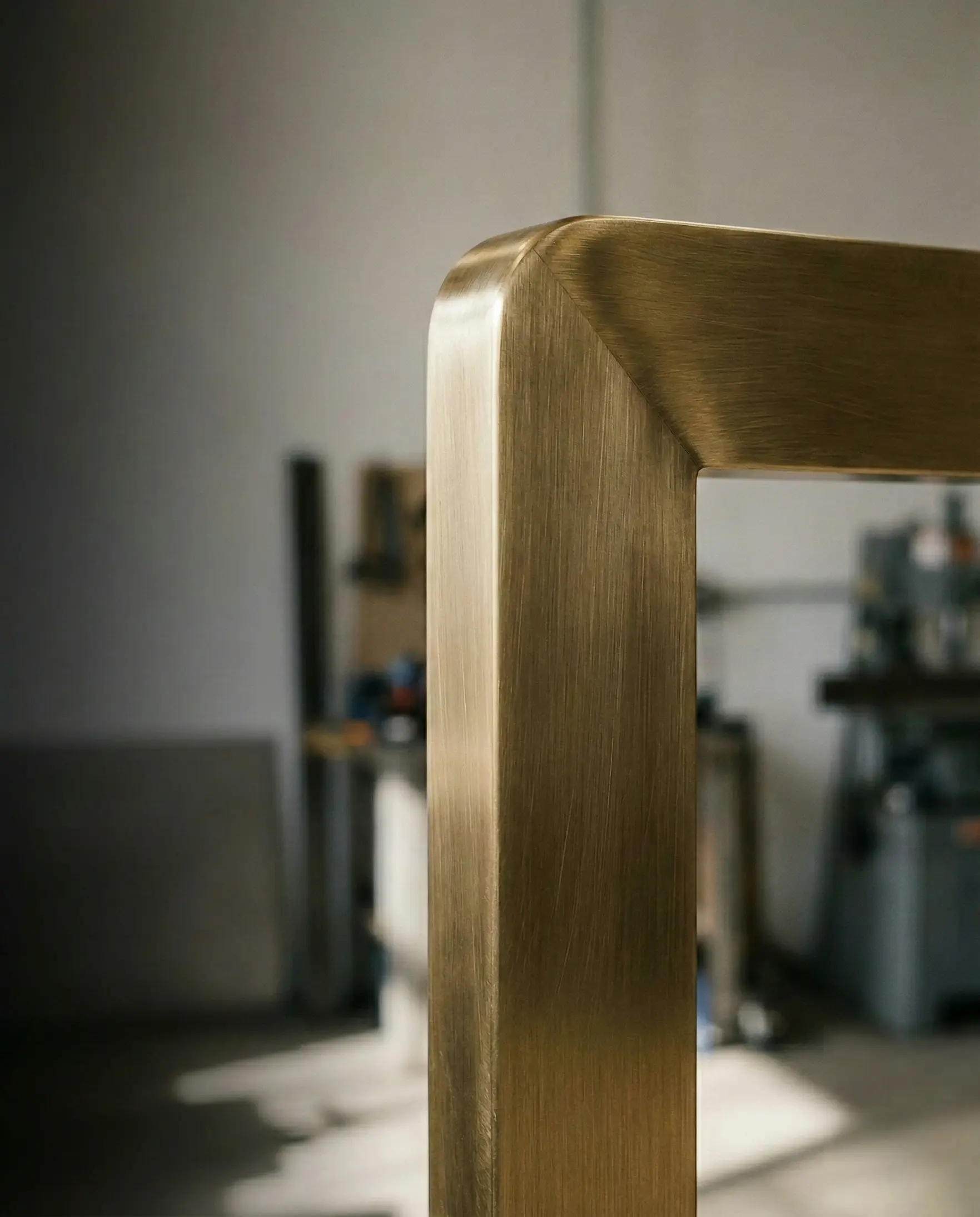
In architectural metalwork, small deviations show fast. Two parts made from the same metal can come out with different tone. Weld zones can jump out. Brushing direction can drift, and light can break unevenly across the surface. When that happens on a portal, a railing, or wall cladding, the whole project reads less quiet and less precise.
We work with a process that starts with a clear decision and continues with repeatable execution. We define grain direction, sheen level, and tonal depth up front, then apply the finish consistently across every part. The goal is for the element to read as one object, even with joints, welds, geometry changes, and on-site installation.
Creating an impressive and luxurious first impression that defines the hospitality experience.

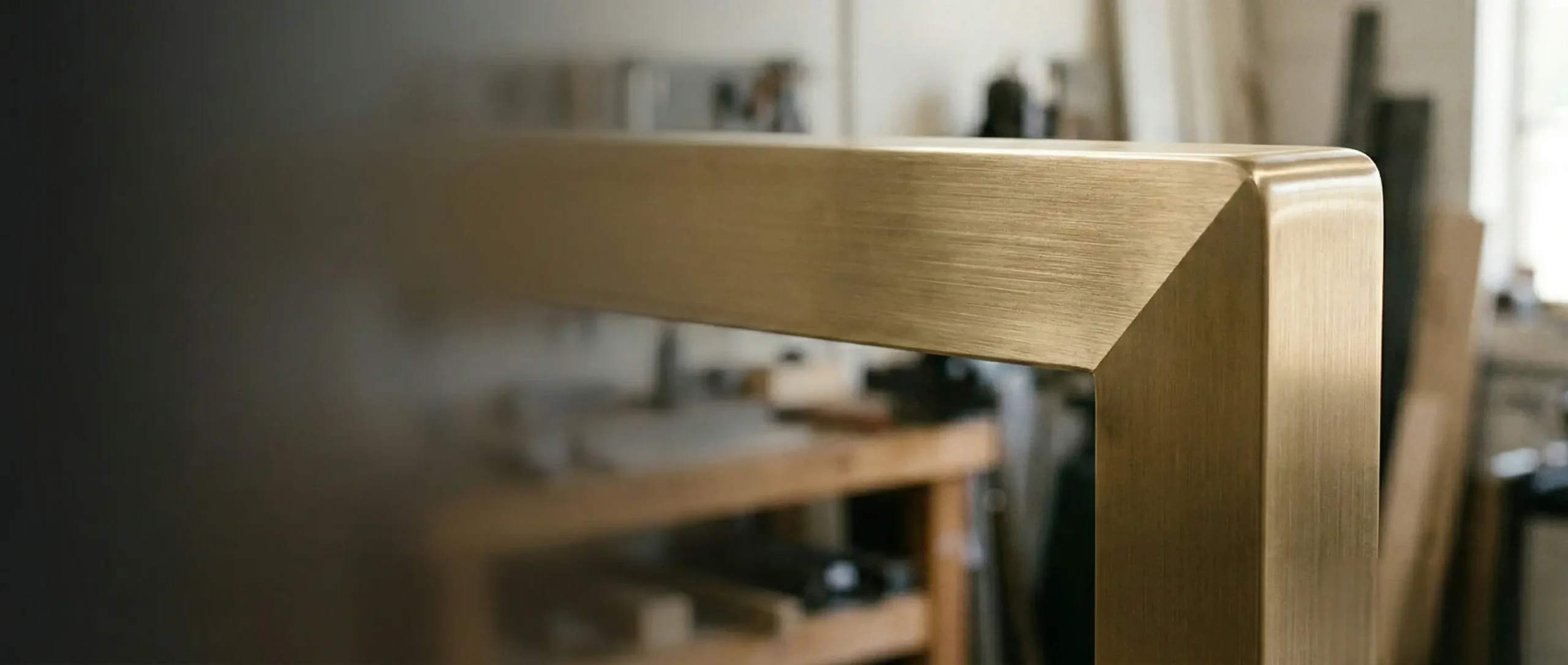
In projects where metalwork is not just structure but part of the language, finishing is the final design layer. This is the point where a fabricated product becomes an architectural piece.
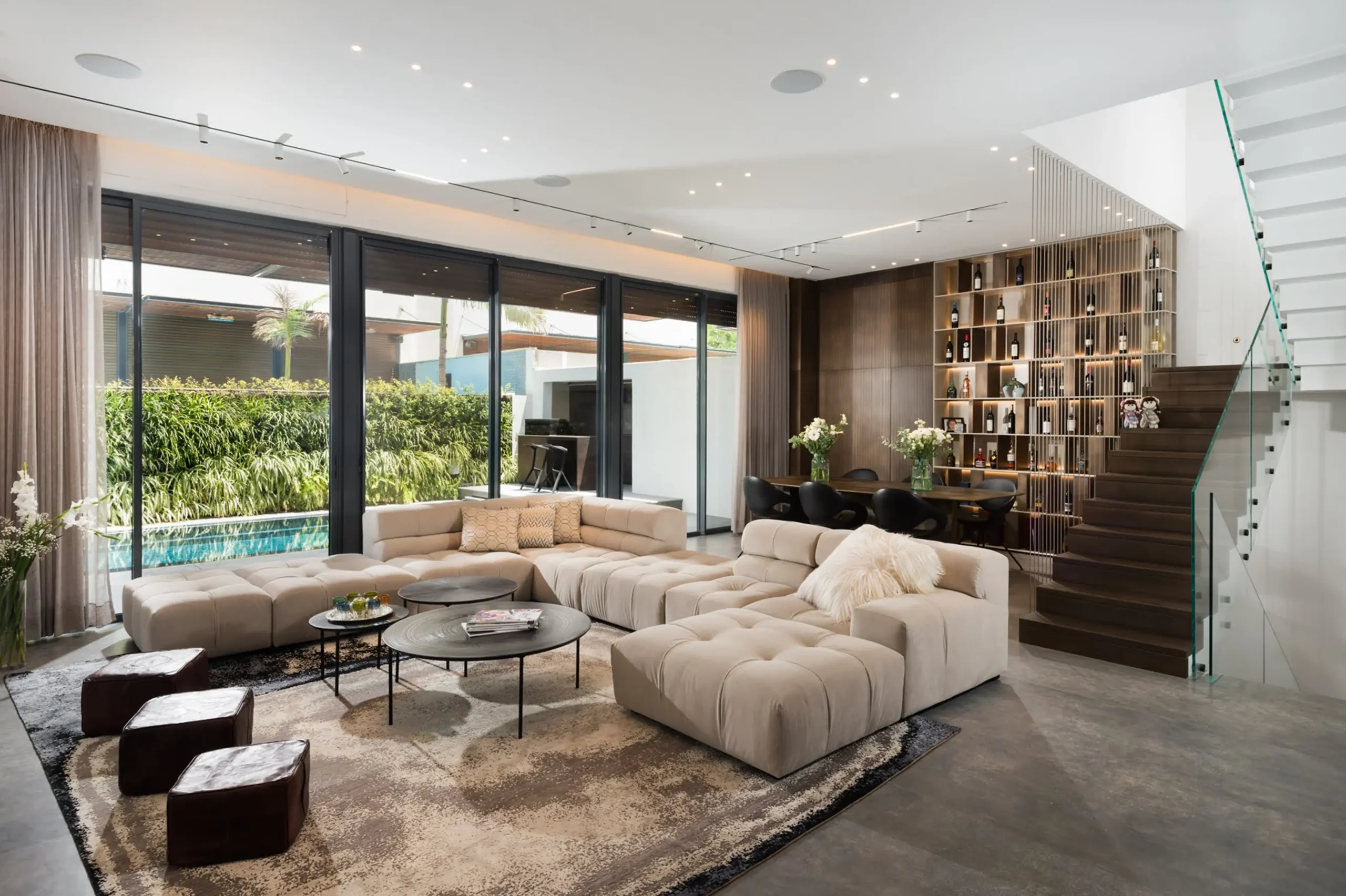
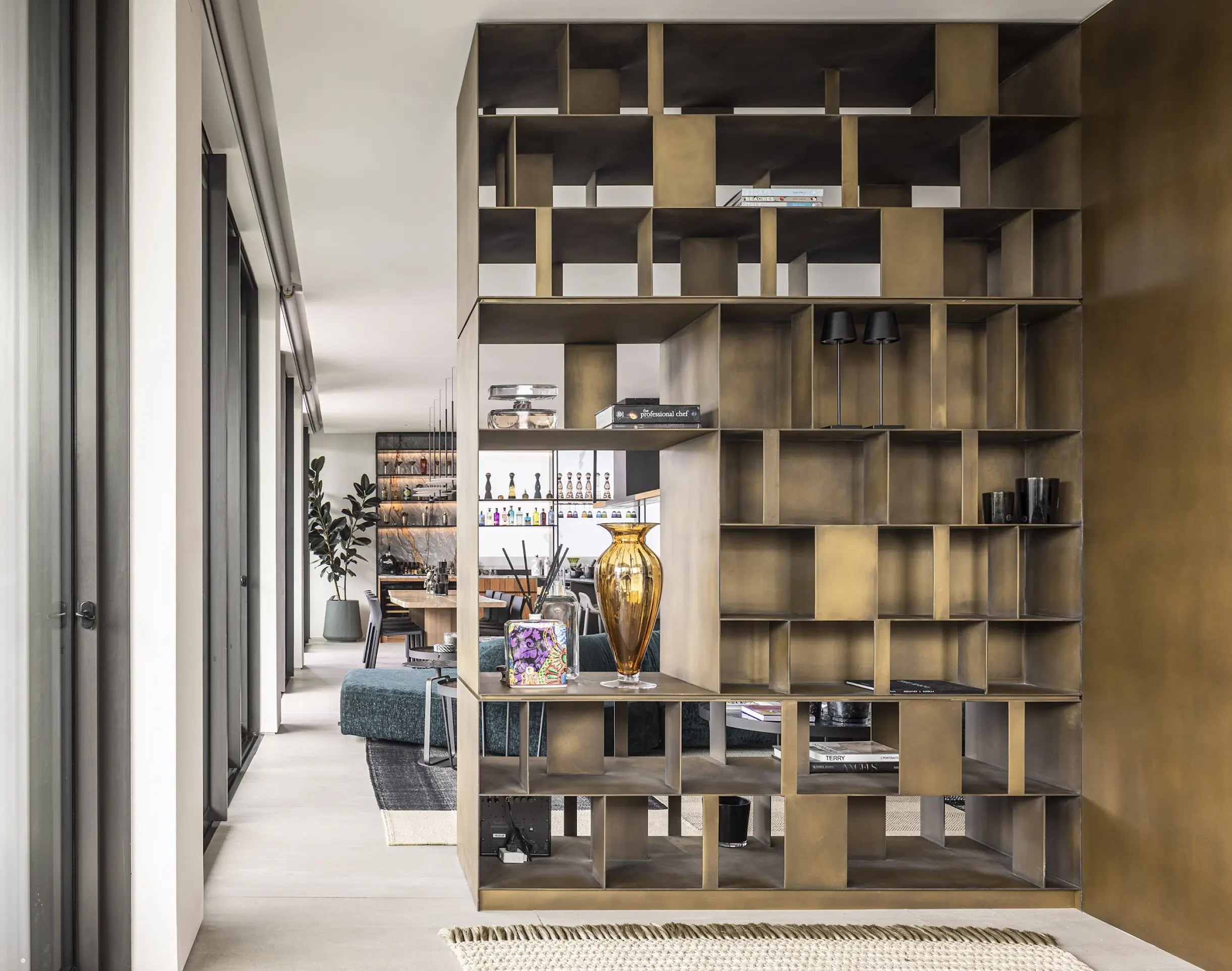
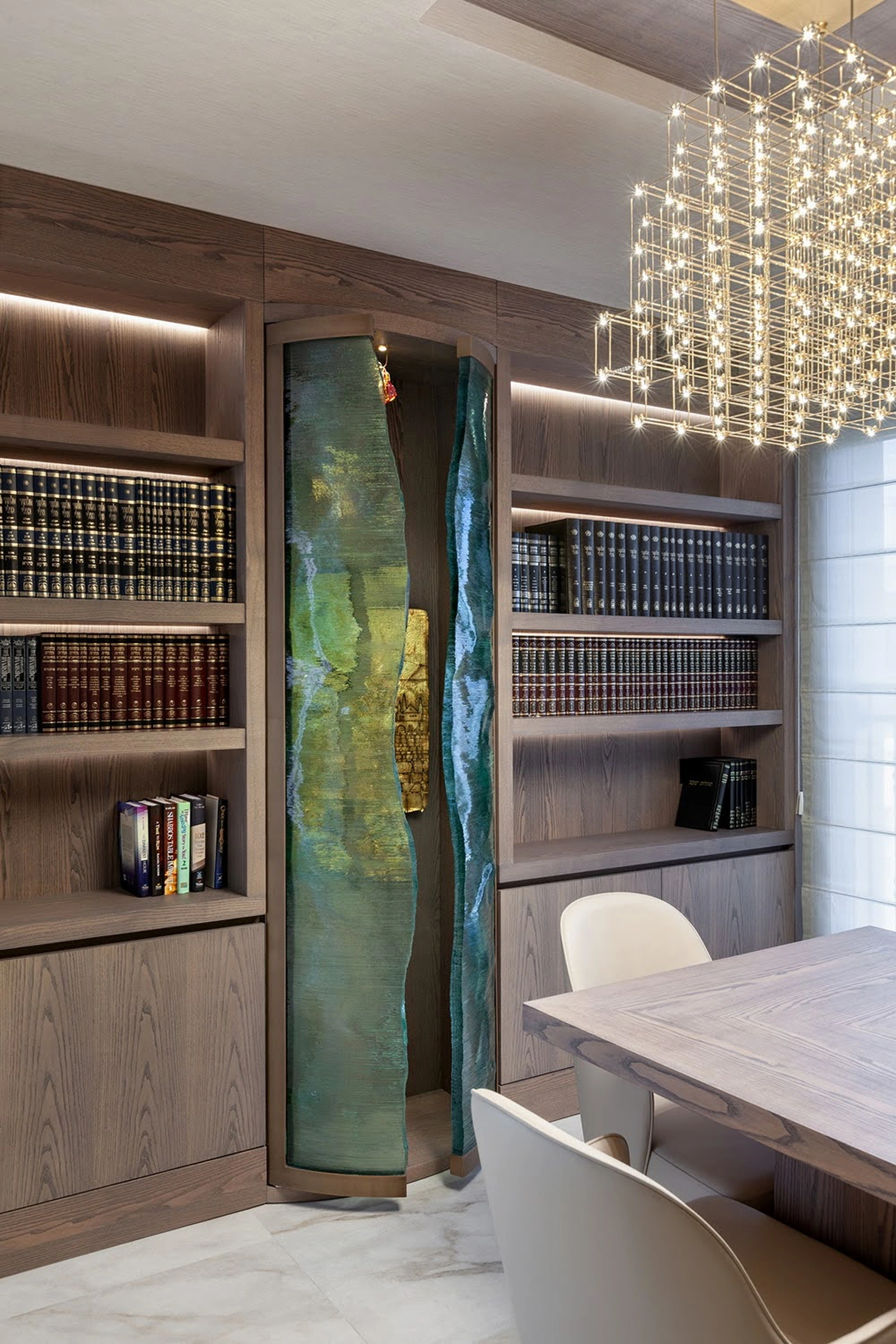
Entry portals, stair railings, frames for wall cladding, kitchen elements, built in shelving, metal furniture frames, profiles around openings, steel style windows and doors, and metal systems that take a central role in the project. In all of these, the finish determines whether the metal reads intentional and unified, or scattered and random.
This service also fits when you need continuity across different elements: doors next to profiles, cladding next to furniture details, or integrating an existing element into a new scheme. We work from a physical reference, develop samples, then fine tune the series production so the result stays consistent under the project’s lighting.
Finishing is where the metal “locks in” to the project. The same brass can feel warm and quiet, or sharp and bright. The same steel can feel heavy and grounded, or clean and minimal. The difference is in the process, not in promises: texture, sheen, layers, and protection.
We combine surface prep, finishing technique, and a protective layer. Brushing and polishing set the reading direction of the surface. Patina adds layers when you want depth and time. Darkening brings restraint and contrast. The protective layer is selected based on location and touch level, to support day to day care and reduce sensitivity in regular use.
When an architect or designer wants metalwork to read as “designed,” the finish has to be consistent. We bring order: fixed grain direction, controlled sheen, and uniform tone, even around welds, joints, and geometry shifts.
The work is based on approved samples and a repeatable process. That helps keep a unified look across a series, even when it’s produced in stages or finished after installation.
We tune the surface to look right in the project’s actual lighting. Brushed, satin, or polished is chosen to reduce glare and noise, and keep the reading clean.
Patina can feel alive without being unpredictable. We develop it against reference samples, so you can produce a full set with the same character and return to that direction later.
Every finish is closed with a protective layer selected for the use case. The goal is a surface that holds up better to day-to-day touch, with clear guidance for cleaning and upkeep.
In solid metal, beauty lives in the details, but value comes from control. Brushed brass and bronze bring quiet warmth and a texture that sits well next to wood and stone. Balanced satin works on larger surfaces and reduces harsh reflections. A localized polish can sharpen edges and details without turning the whole element overly glossy.
When you want more depth and richer material presence, patina adds layers of tone and time. We develop it through samples to keep variation controlled and avoid big shifts between parts. Darkened and deeper tones bring weight and clarity, especially for architectural details where you want presence without noise.
Brass, bronze, copper, steel, aluminum and stainless steel, and in some cases additional alloys depending on the project. If there’s an existing element to match, we work from a physical reference to dial in tone and sheen.
Brushing, polishing, patina, darkening, and surface conditioning, along with a protective layer selected by environment, touch level, and expected cleaning frequency.
We start with samples and mockups for approval. Once the direction is approved, we execute the same route to deliver a finish that can be reproduced, submitted, and coordinated between fabricator, architect, and on-site installation.
If an architect or interior designer wants your metalwork to function as a design element, send us the metal type, a photo or drawing, and the target finish direction. We’ll come back with a clear work route, approval samples, and a recommendation for the right protective layer, so the element stays precise in day-to-day use.
WhatsApp us