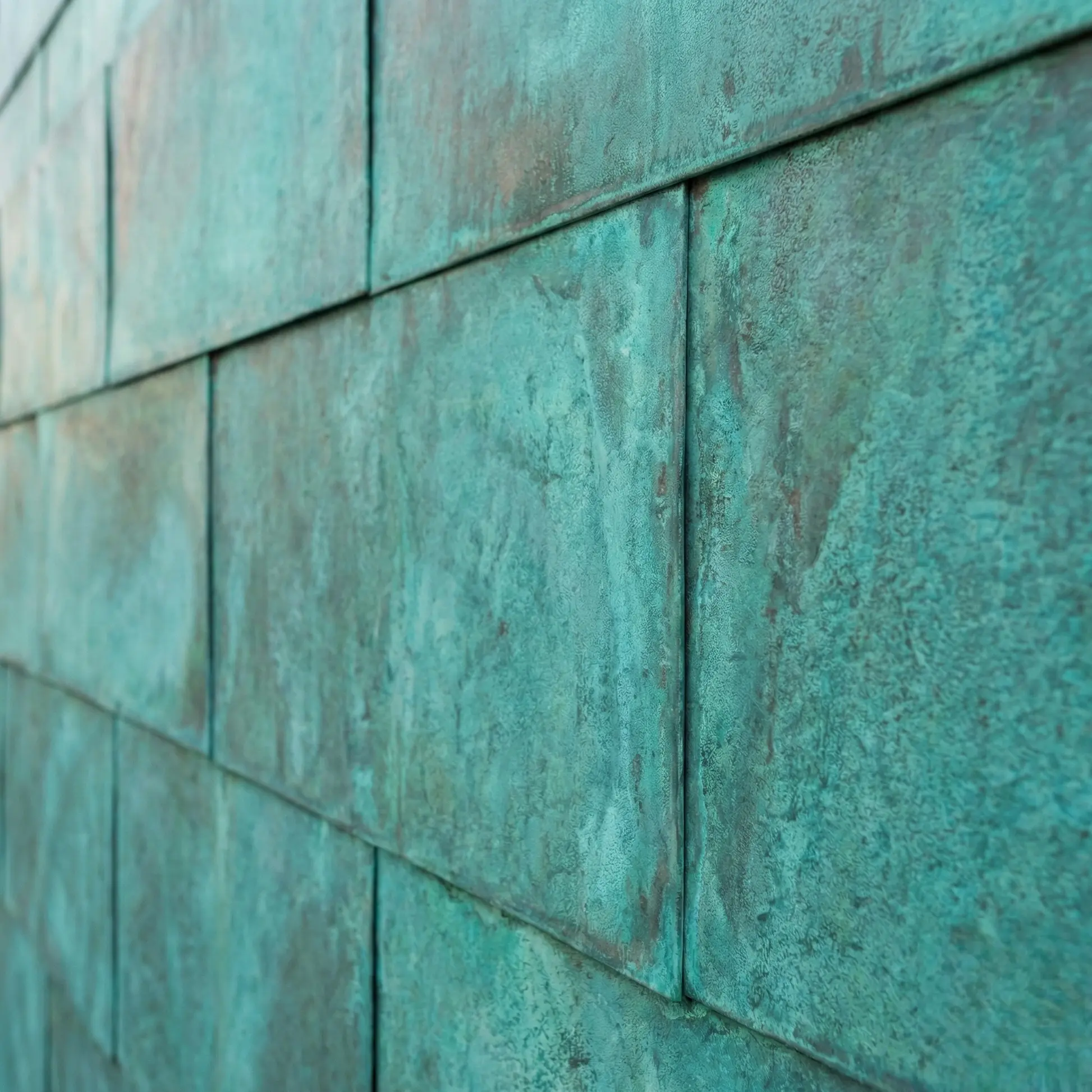
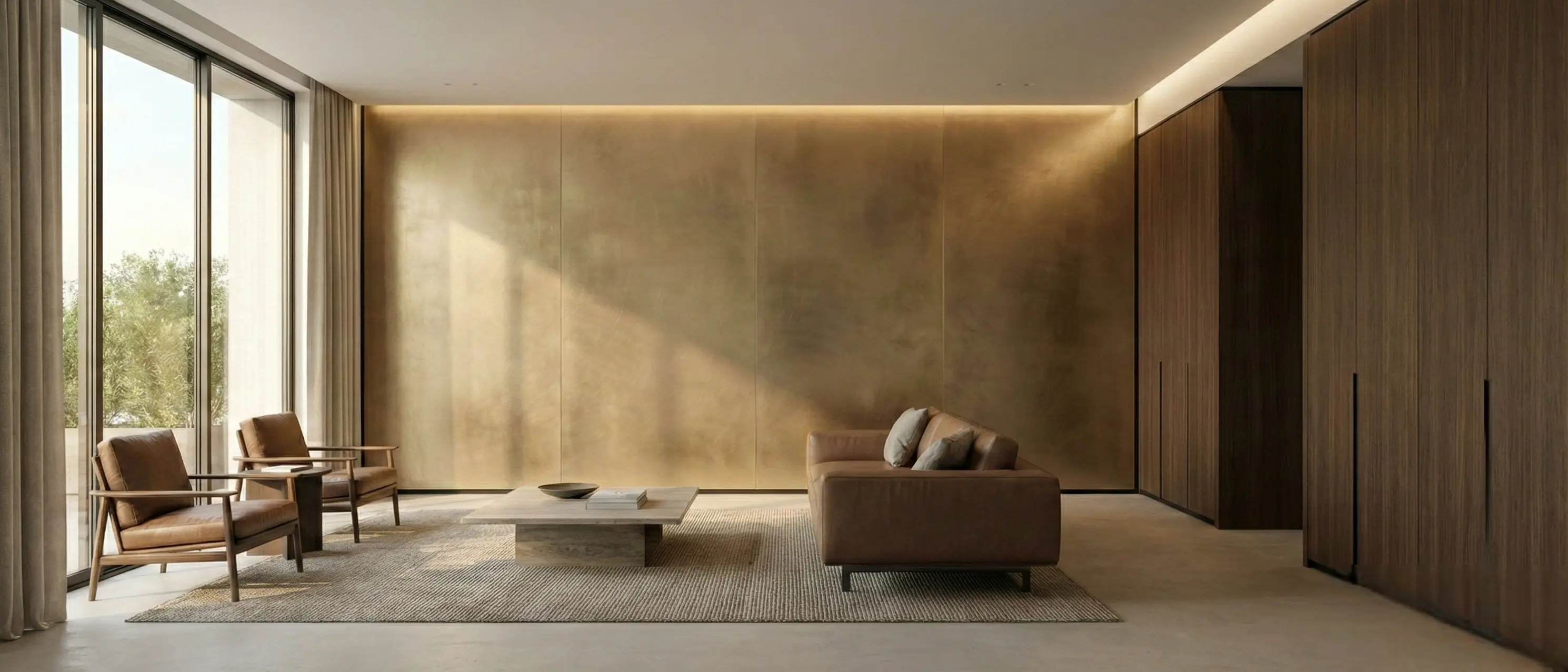
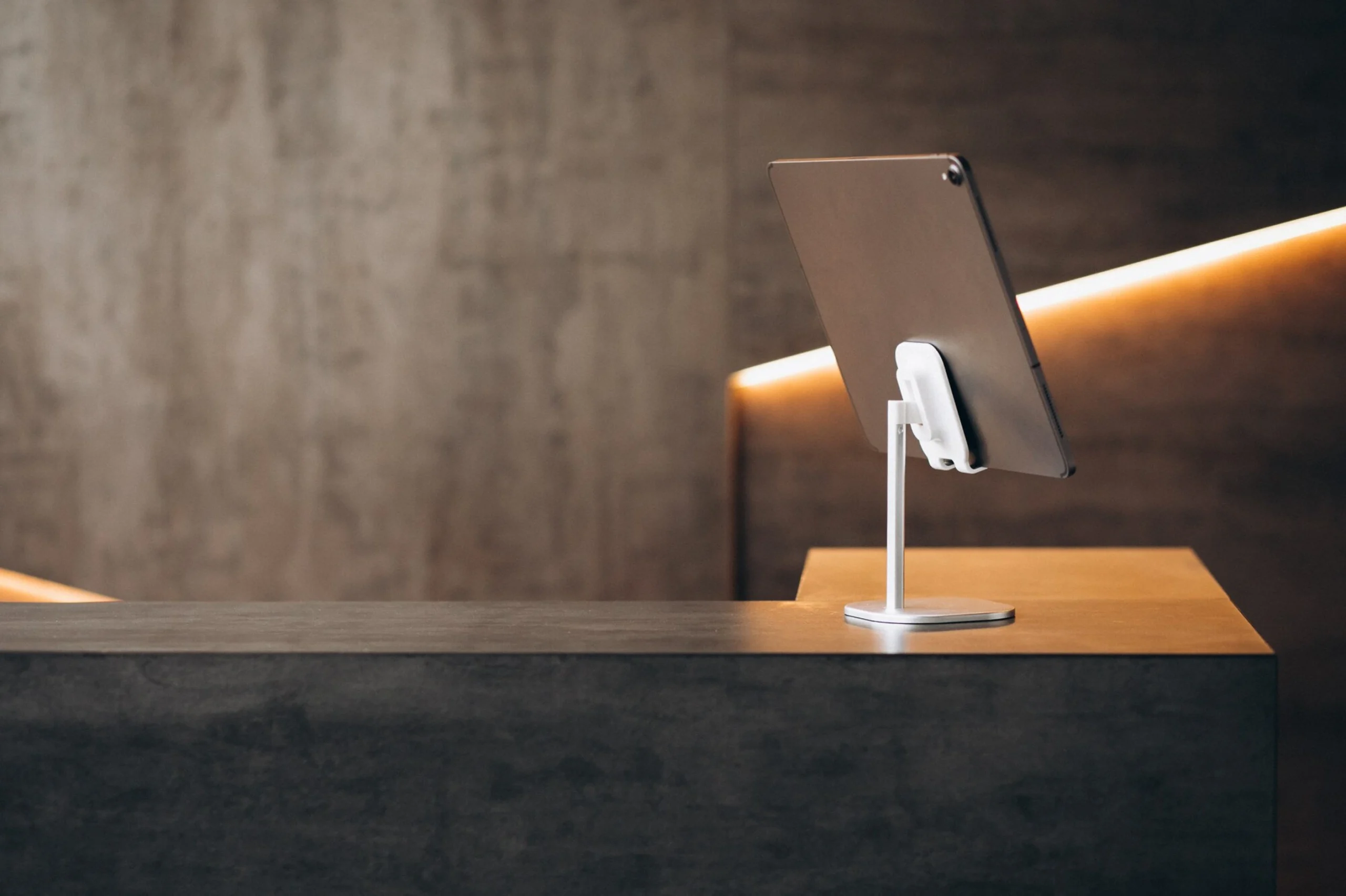
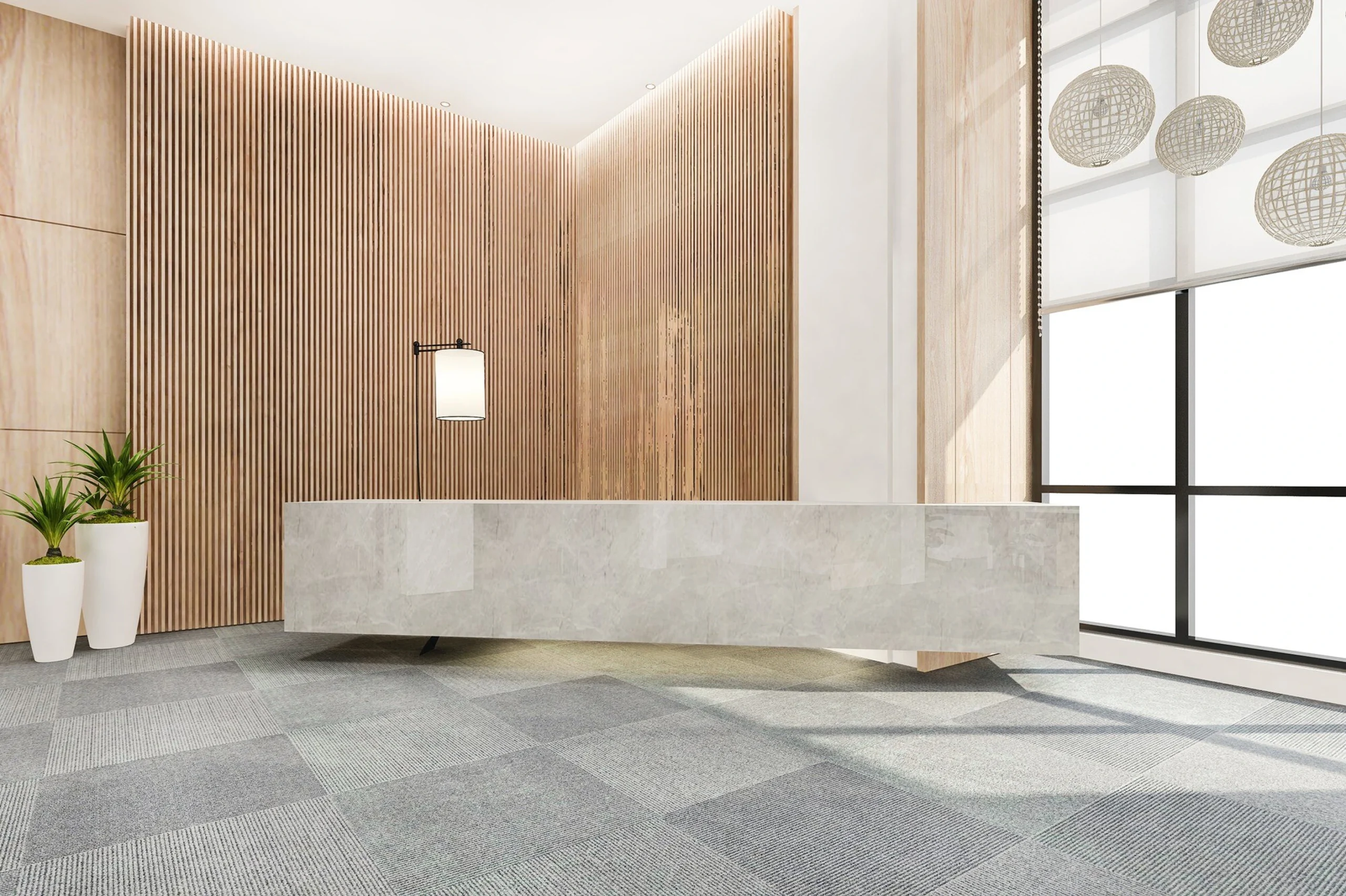
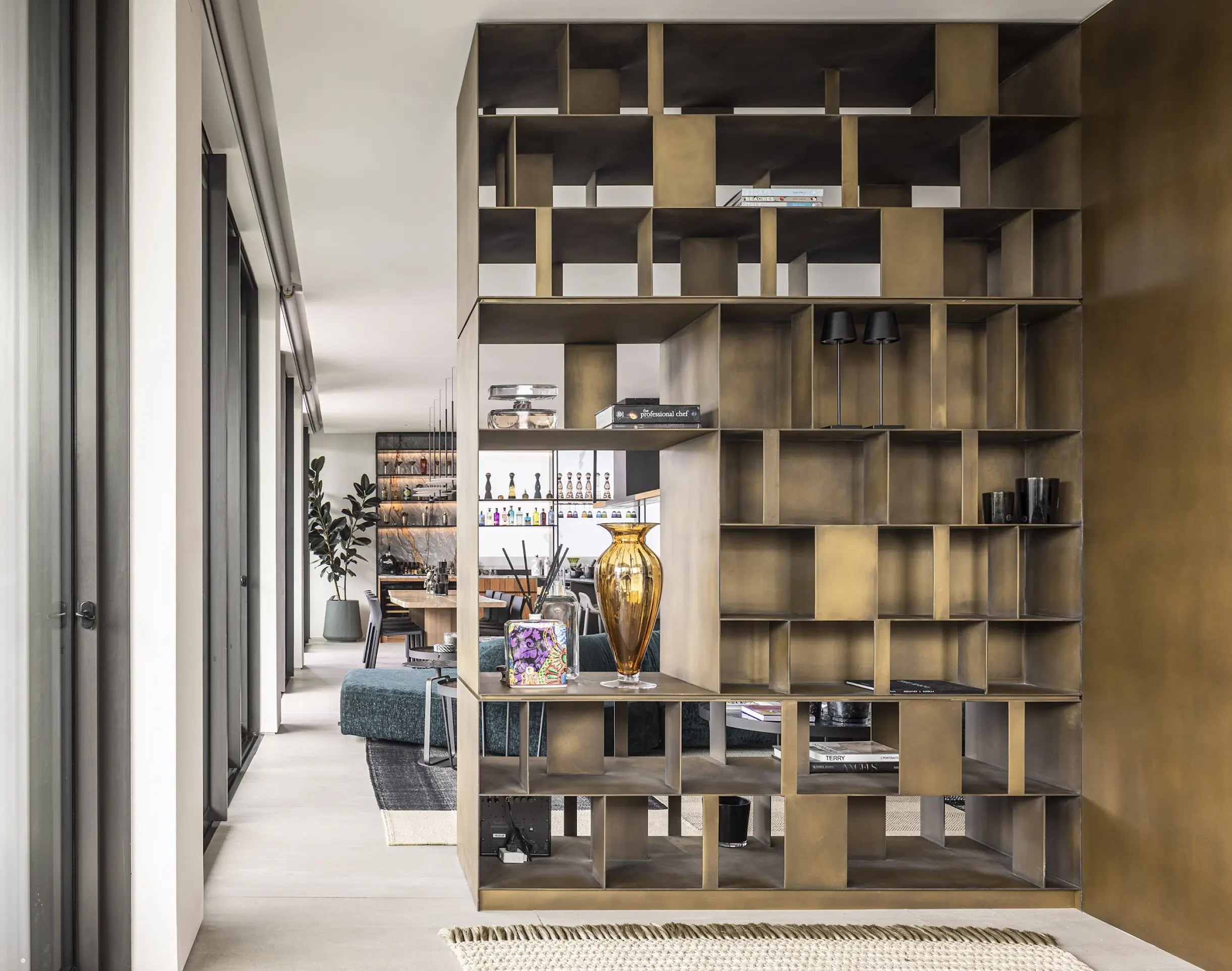
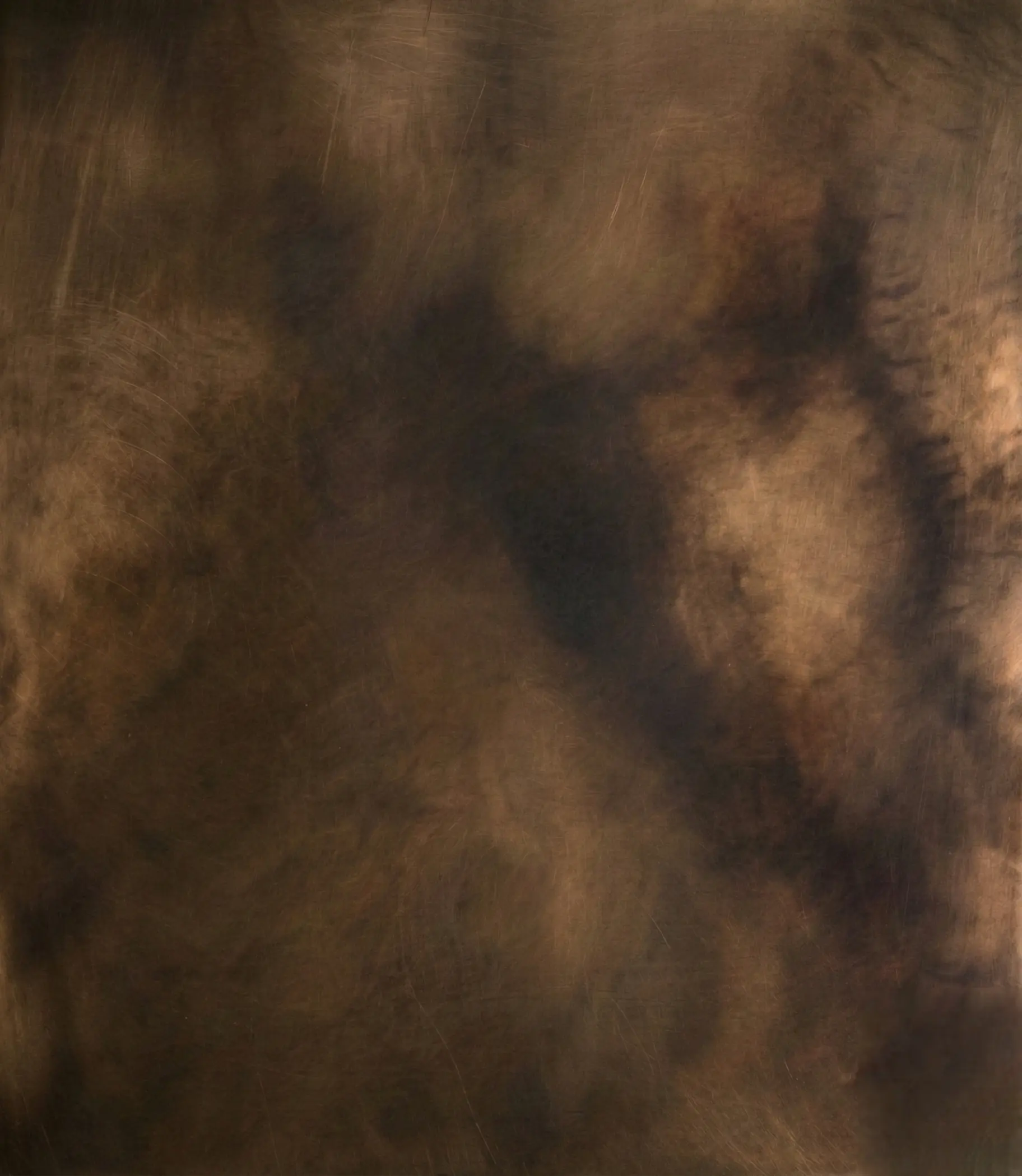
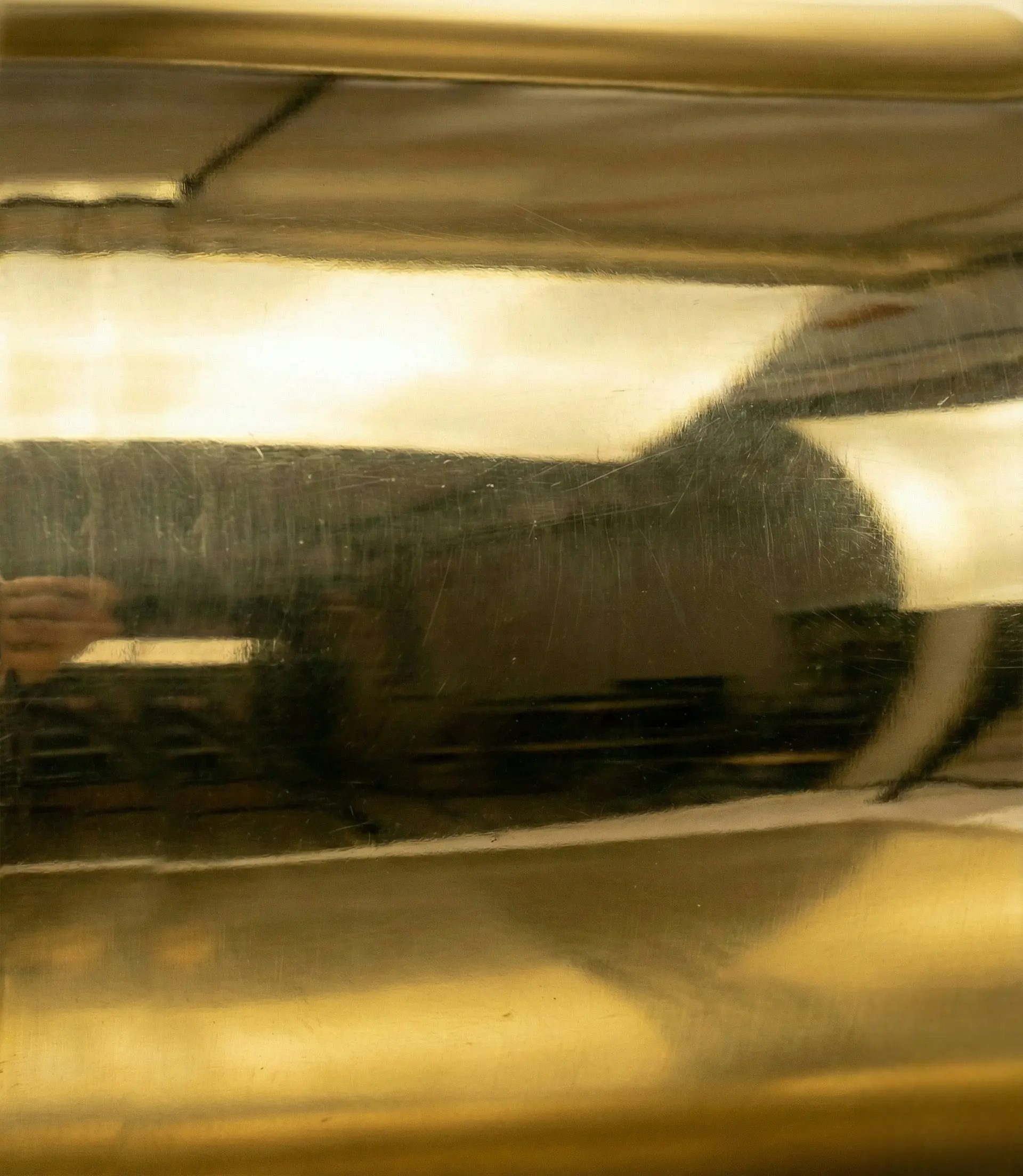
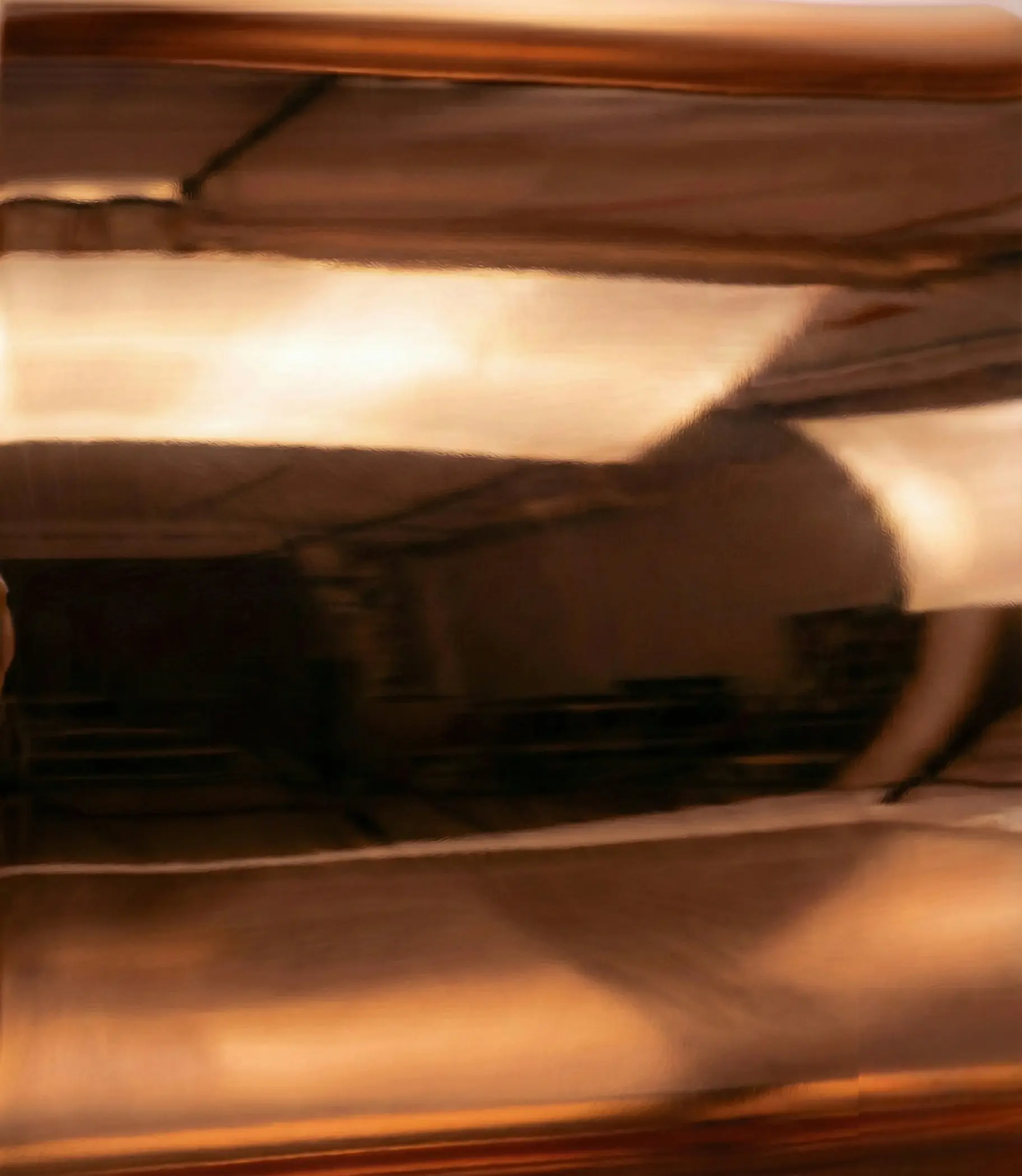
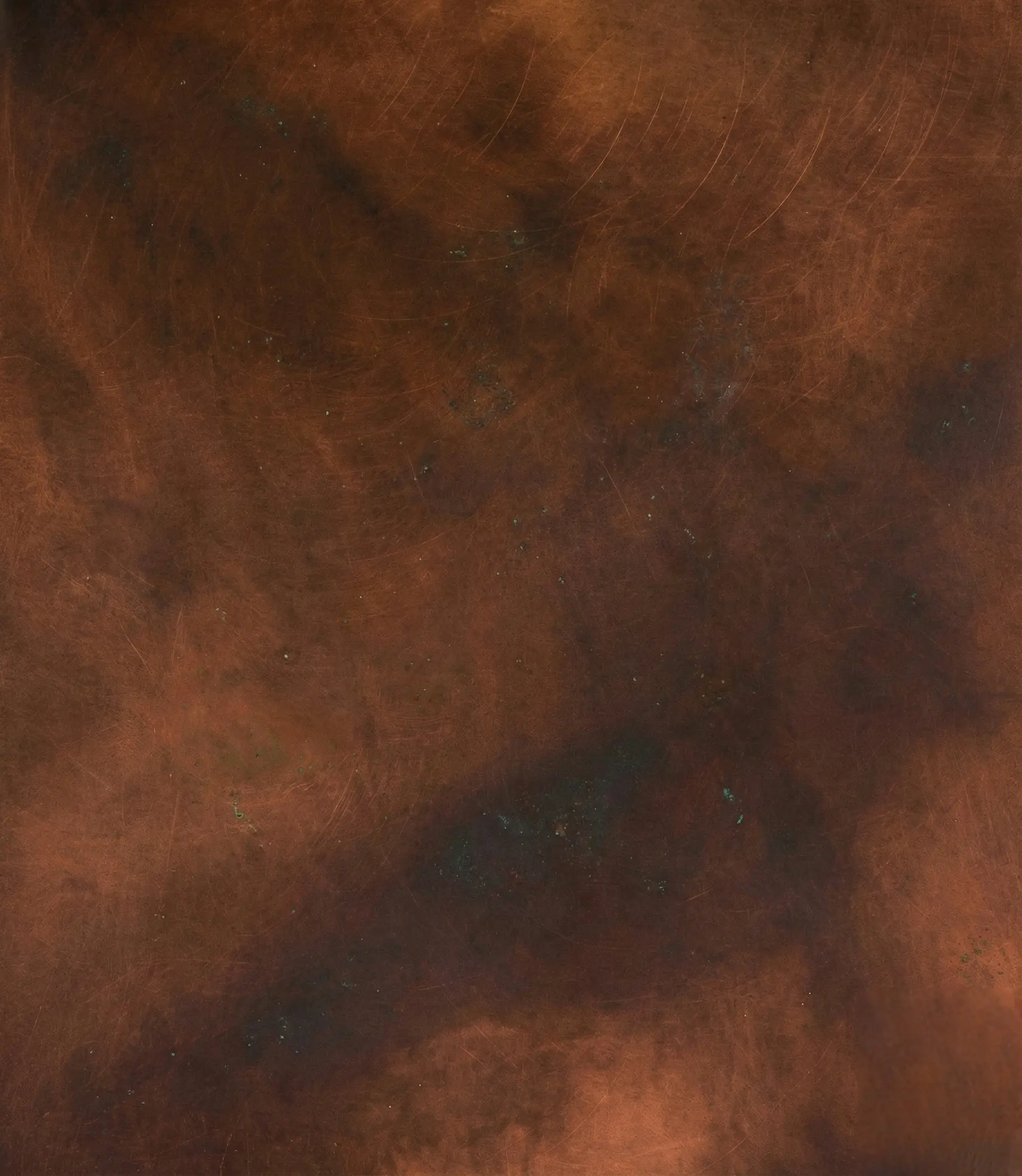
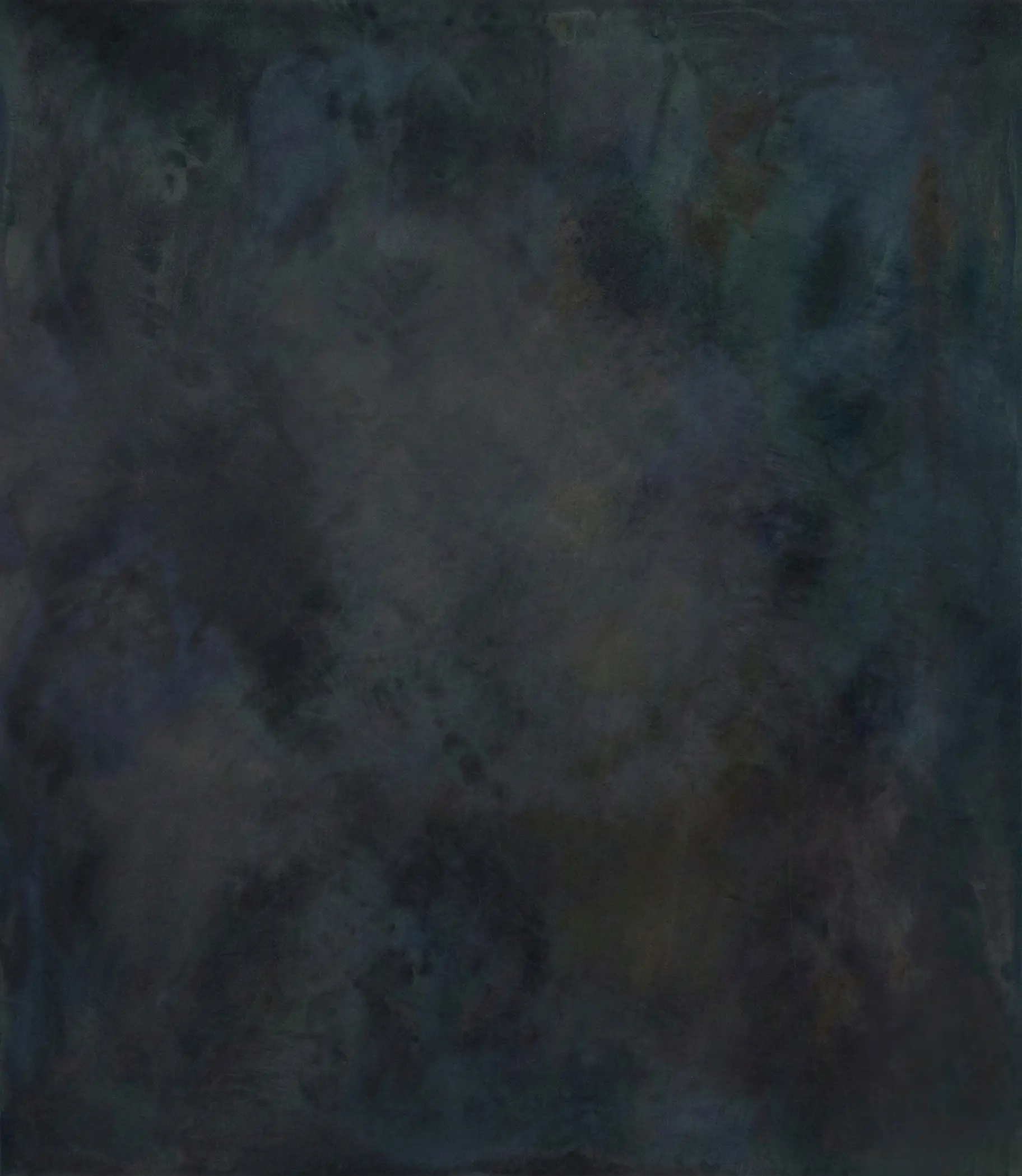
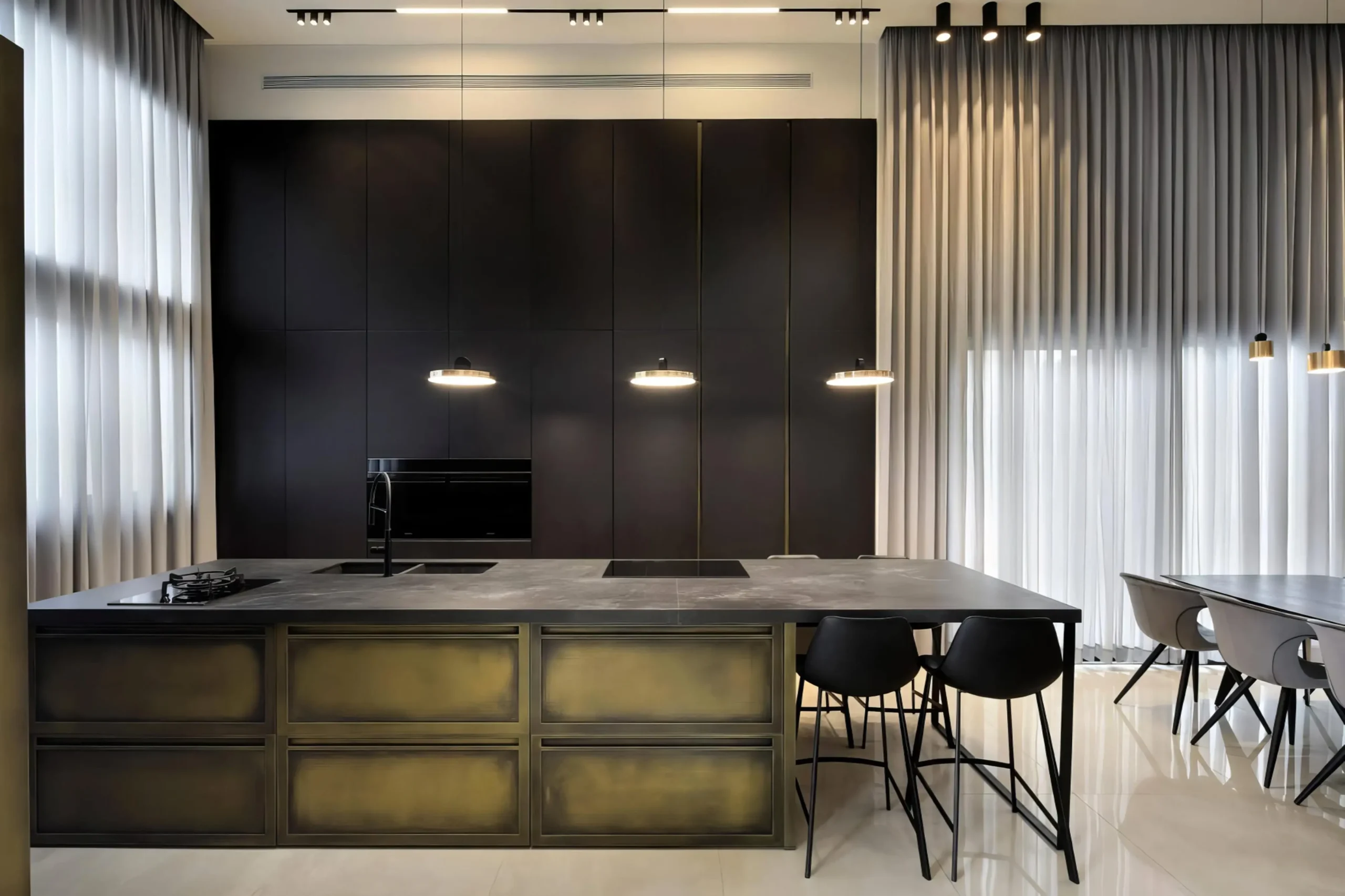
A feature wall or TV wall is often where a space defines itself.
It is the surface that holds the first glance, carries the longest reflection, and shapes how material, light, and proportion are read together.
When selecting a metal finish for feature walls, TV walls, or wall cladding, it is not enough for the surface to look impressive in a rendering. It also needs to work within the real architectural conditions of the project: across large planes, joint lines, edges, corners, reveals, lighting details, and connections to joinery, stone, glass, and adjacent elements.
At MODULUX, we treat these applications as architectural surface decisions, not as decorative layers added at the end. The choice begins with the intended effect, the lighting conditions, the substrate, the panel rhythm, the maintenance expectations, and the way the wall will actually be built. Only then do we define the suitable finish technology, surface character, and level of protection.
The goal is not simply to create a metallic wall.
The goal is to allow metal to become a precise, controlled, and buildable part of the project’s design language, whether the application is a feature wall, a TV wall, or a larger wall cladding system.
A successful metal wall is one that can be sampled, approved, and repeated consistently across surfaces that meet on site with the right level of precision. It should remain calm under changing light, read consistently across wall panels, joints, corners, and transition details, and feel like part of the architecture rather than something added on top of it.
That is why the design logic begins not with which metal to choose, but with how the wall should behave in the space.
Should it hold a quieter, more monolithic presence. Should it break light. Should it emphasize depth, framing, panel rhythm, or its relationship to a key element such as a screen, joinery, fireplace, portal, or lighting feature.
At this stage, it is worth defining the layout early: the direction of the surface, the character of the reflection, the relationship between a continuous plane and a panelized composition, and the way the wall meets the surrounding elements. The earlier these decisions are resolved, the easier it becomes to reduce the gap between design intent and final execution.

Feature walls, TV walls, metal wall panels, and wall cladding are always read through light.
Daylight, side light, recessed lighting, linear LED details, ambient lighting, and lighting integrated into the joinery or wall itself all directly influence how the finish will be perceived.
For that reason, good planning begins with how the surface is expected to respond to light.
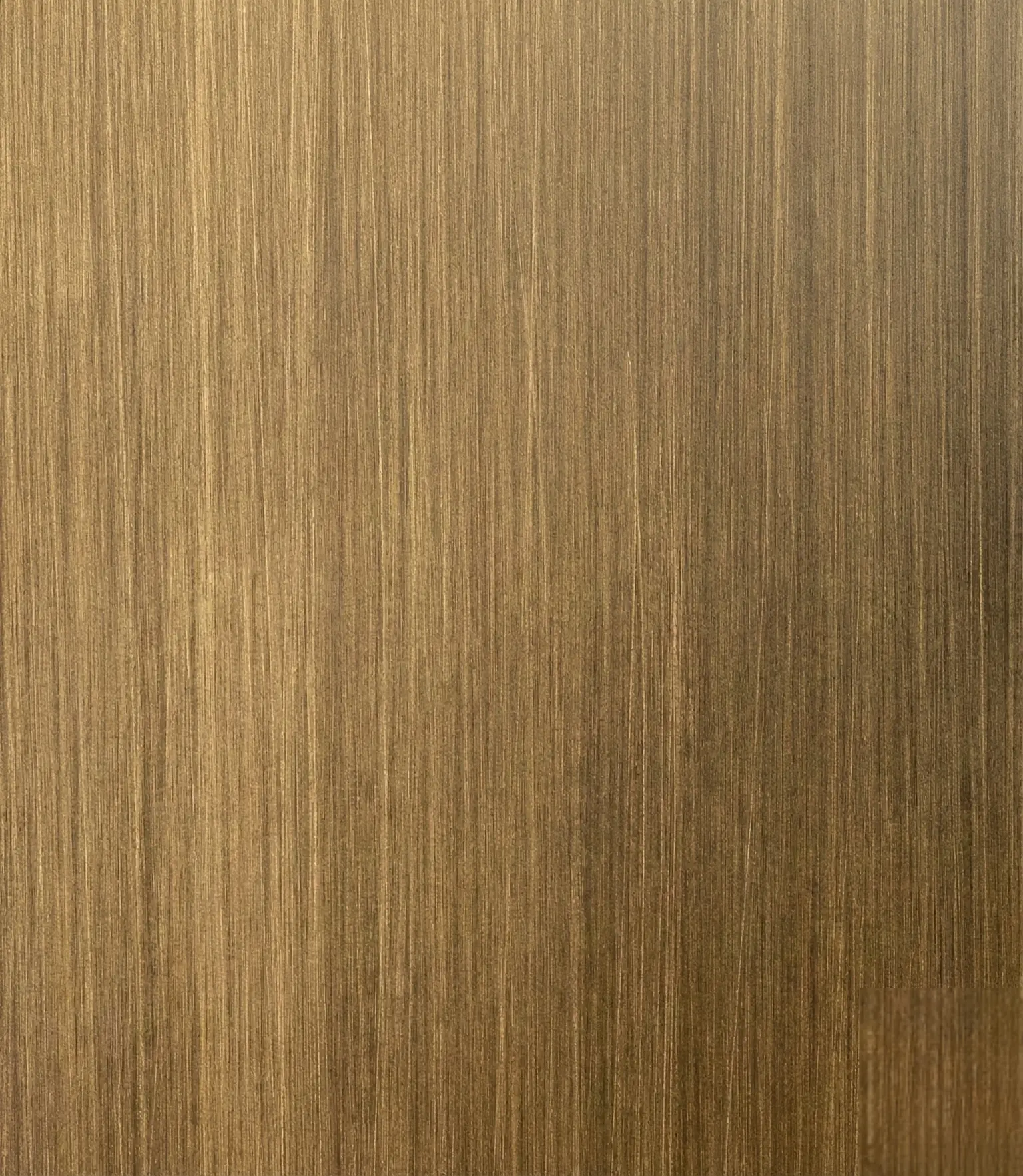
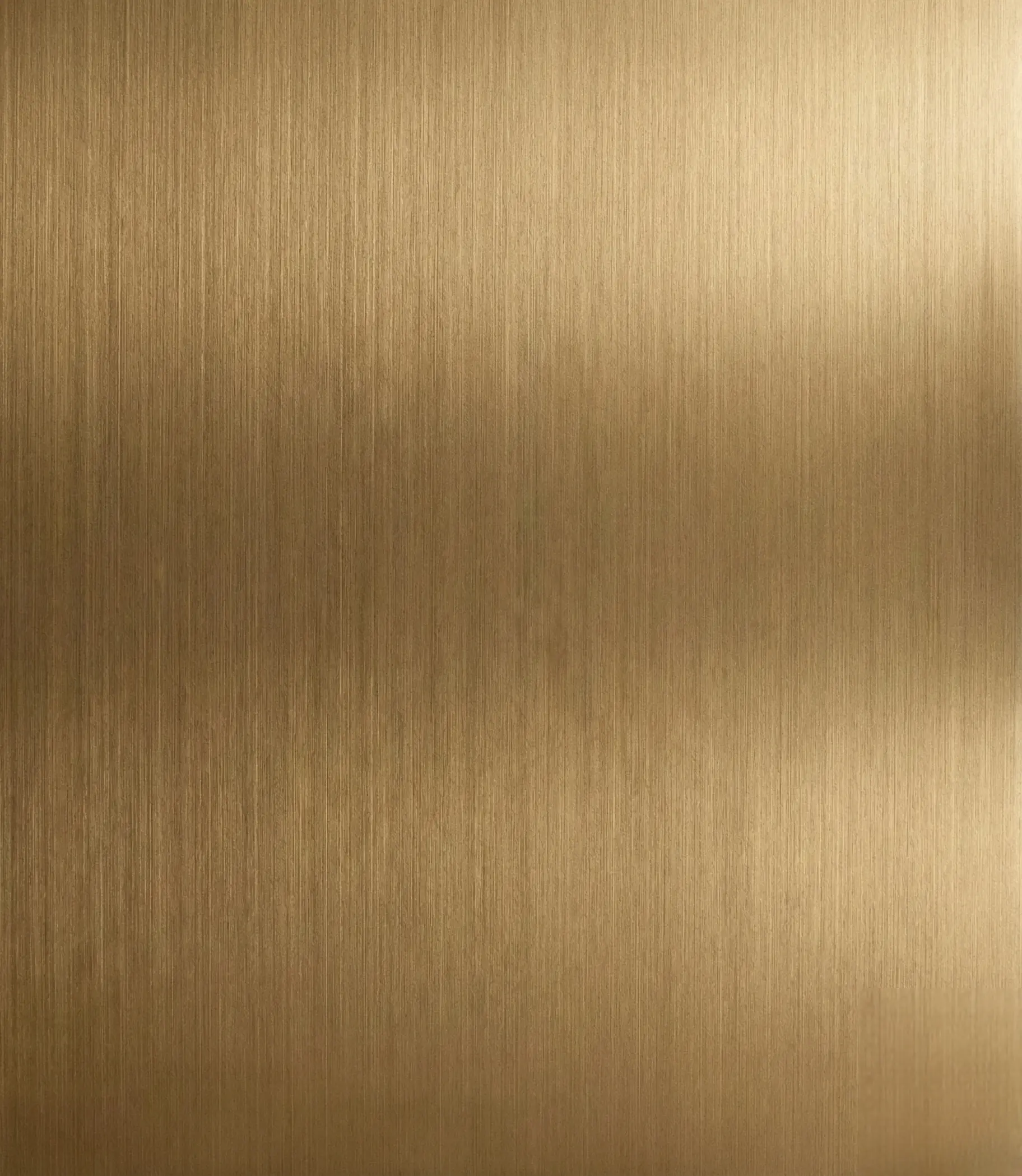
Should the wall feel more monolithic and quiet. Should it carry more visible material movement. Should the brushing direction lead the eye horizontally, vertically, or reinforce the relationship between the screen, frame, and cladding.
When the reference sample, sheen level, surface direction, and relationship between the planes are defined correctly, the wall holds a more controlled material reading both up close and at a distance.
In many projects, there is no need to build the entire wall in solid metal in order to achieve a convincing metal presence. In some cases, it is more effective to build a precise and stable substrate, then select a finish system that allows the metal surface to move cleanly across planes, edges, frames, repeated modules, corners, and transition details.
This approach expands design freedom.
It reduces dependence on excess weight, visible seams, restrictive folds, and unnecessary finishing details, and makes it possible to think of the wall first as part of the architecture, then define the right way to realize it. This is especially relevant in projects that use metal finishes on feature walls, TV walls, and custom wall cladding rather than relying only on conventional sheet metal fabrication.
With metal walls, the quality of the result is determined long before the metal itself is visible.
Flatness, stability, edge quality, opening details, screen integration, joinery interfaces, lighting recesses, maintenance access, and precision at the finishing details all affect how the wall will read in light.
Metal surfaces reveal every inconsistency.
That is why the substrate has to be built for the finish, not only for the construction.
During application, the material is established, but during refinement, the architectural reading is defined.
This is where brushing direction, finish depth, visual consistency, reflective balance, and the treatment of sensitive details such as corners, returns, and transitions are resolved.
The protective system is then selected according to the project conditions: dry or wet area, frequent cleaning, touch level, proximity to a screen, kitchen vapours, or use in public-facing spaces.
This is the stage where wall cladding or a metal feature wall becomes more than a visually impressive surface and turns into a reliable architectural specification.
This approach is suitable for a wide range of architectural wall applications where the surface needs to combine material presence, visual control, and practical buildability.
Creating an impressive and luxurious first impression that defines the hospitality experience.
The first step is to define which planes are included, where the wall begins and ends, and how edges, corners, joints, transitions, and connections to adjacent elements will be resolved.
This is also the stage to define whether the surface is continuous or panelized, and whether the scope includes repeated modules, portals, frames, niches, columns, wrapped corners, or ceiling transitions.
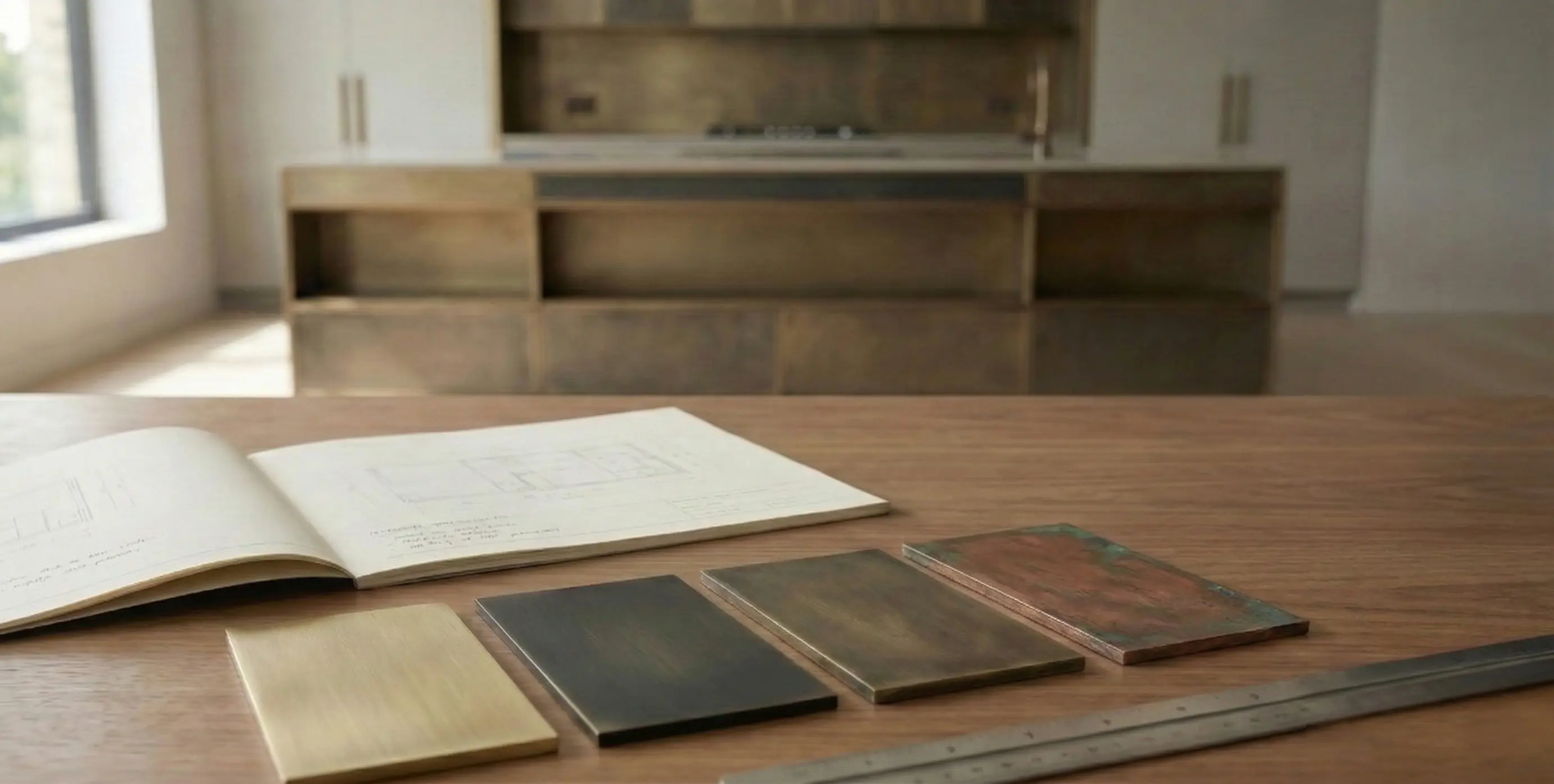
The approval sample is the anchor of the process.
On walls, it is not enough to approve colour alone. It is also worth reviewing sheen level, surface direction, reflection character, the way the finish responds to light, and in some cases an edge detail, joint rhythm, or transition condition.
Where several elements need to work together, such as wall cladding, joinery, frames, and portals, the sample is what helps maintain one coherent material language across the project.
Once the direction is approved, the next step is to define substrate requirements, flatness level, edge condition, treatment of openings and penetrations, panel breakdown, and the application conditions needed to keep the final result aligned with the approved sample.
At the final stage, the topcoat strategy, routine cleaning logic, and the approach to future touch-ups or refresh work are defined.
Where continuity is especially critical, it may be appropriate to think ahead about control samples, spare panels, or an agreed touch-up method.
Every wall of this kind begins with one basic decision:
how the metal should behave in light.
Everything else develops from that point.
The substrate, the panel rhythm, the approval sample, the technology selection, the surface character, the protective system, and the maintenance level all follow from the material reading the project is trying to achieve.
At MODULUX, each of these directions can be realized through a different technology, depending on substrate type, geometry, required performance level, and project conditions. When this is defined correctly from the start, the finished wall feels more resolved, more consistent, and more appropriate to the space.
That depends on the selected system and the way the wall is built. In many cases, a range of substrates can be used as long as they are stable, clean, and appropriate for the required build-up. The final decision should be based on wall type, flatness, edge conditions, and project use.
Edges and corners are not secondary details. They are part of the wall’s visual field. That is why it is important to decide early whether the design calls for wrapped corners, crisp reveals, accurate frames, or shadow gaps, then choose a system that can support that geometry without forcing finishing solutions that break the reading of the surface.
Some systems can support both interior and exterior conditions, but the decision should be based on exposure, detailing, protection, and the planned maintenance logic. The same material direction may work indoors and outdoors, but not necessarily through the same system or the same level of sealing.
In most interior applications, routine maintenance is relatively simple: gentle cleaning with a soft damp cloth and avoidance of strong or abrasive cleaners. On more sensitive surfaces, in wet areas, or in projects with defined maintenance requirements, both the cleaning routine and the protective system should be set in advance.
That depends on the finish direction, sheen level, protective system, and site conditions. For that reason, it is worth considering future repairs already during coordination, keeping the approved reference sample, and documenting the approved system. Where perfect continuity is especially critical, spare panels or an approved mockup may also be worth considering.
The timeline varies according to area, complexity, substrate condition, the number of aligned elements, and the duration of the sampling and approvals stage. For walls of this kind, the programme should always include time for samples, substrate preparation, and coordination between production and site phases.
Feature walls, TV walls, wall cladding, and metal wall panel applications can suit a wide range of project types, from private homes and premium apartments to hotels, offices, hospitality interiors, and commercial environments. When drawings, inspiration images, substrate information, wall layout, and project conditions are shared early, it becomes easier to recommend the right system, a more accurate approval sample, and an application path that keeps design intent aligned with final execution.
If you are planning a feature wall, TV wall, wall cladding element, or custom wall surface with a metal finish, it is often worth starting with a small sample.
A good sample clarifies quickly what drawings and renderings cannot always resolve: tone, sheen, texture, surface direction, behaviour in light, and the resolution of edges, joints, and transitions.
Share your substrate, geometry, exposure conditions, and inspiration images, and we will recommend the finish direction and technology path that fit the project.
WhatsApp us