
What Is Liquid Metal, and How It Changes the Way We Design with Metal

MetaliQ Liquid Metal

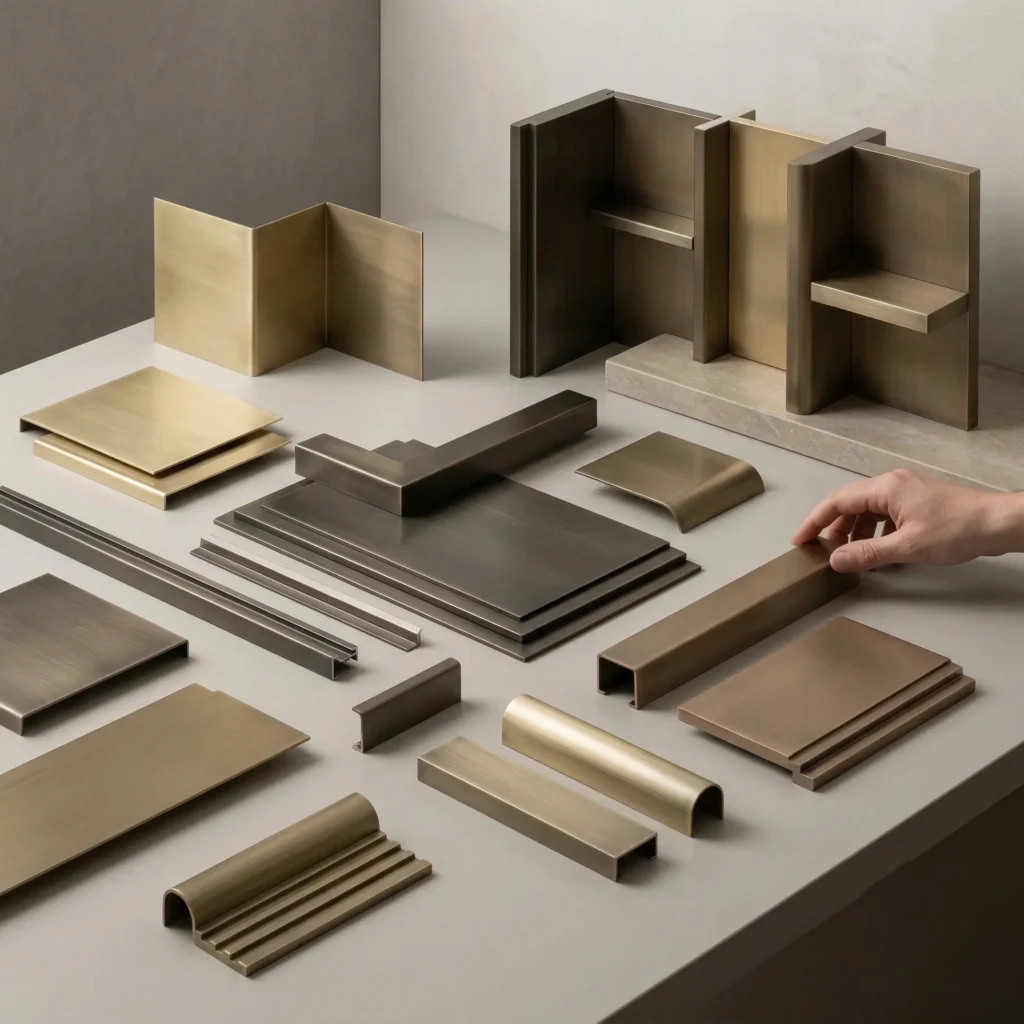
When people hear “metal,” they usually picture heavy sheets, visible joints, and edges that force the design to follow manufacturing limits. Liquid metal starts from a different place. It is not metal as a solid piece you have to bend and connect. It is a real metal coating that’s built on top of a surface and behaves like an architectural material. Put simply, it lets you do design with metal without getting pulled into the usual compromises of sheet metal, welding, and bending.

At Modulux, this technology is called MetaliQ. It is a system where real metal powder creates the finished surface, and a 2K polymer turns it into a sprayable mix that cures into a stable layer. After application comes the precision work: sanding, polishing, brushing, or patina, followed by a clear protective layer that locks in color and sheen and makes everyday care easier.

Liquid metal, in the clearest definition

Liquid metal is a metal coating applied in a cold process, meaning there is no heat that stresses the material underneath. You blend real metal powder with a binding agent, spray it onto a properly prepared substrate, let it cure, and then finish it by hand to match an approved reference sample. The result is a surface that looks and feels like metal, while the structure underneath can stay wood, MDF, aluminum, stone, or even existing metal that has been properly prepped.
The biggest advantage is freedom of form. Liquid metal can wrap radiuses, edges, grooves, and sharp details, while keeping a continuous read of the material. That means design with metal can move from a door, to a wall, to cabinetry, to a sculptural element, without a sudden change in language caused by joints or assembly constraints.

Why not just use regular metal sheet

There are cases where sheet metal is the right answer, but it almost always comes with a design cost. Large panels often require welding. Corners require bends that change the direction of the grain and create visual noise. Weight demands reinforcement and makes installation harder. And in spaces where light slides across a surface, even a small seam becomes a line you can’t unsee.
This is where the approach becomes useful. As a metal coating, it can create a more monolithic surface, with fewer breaks and fewer forced edge solutions. From a design with metal standpoint, it lets you think about light, proportion, and geometry first, and only then figure out the smartest structure underneath.

What substrates can it go on

Liquid metal does not rely on one perfect substrate. It works across a range of common interior architecture surfaces, as long as the work is done properly.
With MetaliQ, you can apply it on MDF and wood after sealing and closing the pores. You can apply it on aluminum, iron, stainless steel, and also on black steel sheet or galvanized steel that has been cleaned, sanded, and primed correctly. This is exactly where a metal coating becomes a practical bridge between different trades.
In other words, if you want consistent design with metal across a project, but some elements are built in a wood shop and others are fabricated in a metal shop, liquid metal lets you bring everything into the same visual language.

What the process looks like in real life

If you want a metal coating to look clean and hold up well, the process matters as much as the material. With MetaliQ, we follow a consistent sequence.
First, we assess the substrate: stability, porosity, and material type. Then we clean and degrease, sand for proper key, and control dust and static. After that, we build a primer and filler system that matches the substrate. Only then do we spray the liquid metal, usually in two coats with a short drying time between them.
Once the material cures, finishing begins, and that is the heart of design with metal. It can be a stepped sanding process, a directional brush that defines how light moves, or polishing that creates sharpness and reflection. If you want more depth and character, you can develop a controlled patina, and then lock it in with a clear protective layer chosen for the environment and the way the surface will be used.

Look, texture, and light: where the material really works

What separates this from metallic paints is simple. The metal is not an effect. It is the material.
When light hits a fine brushed finish, it does more than reflect. It highlights direction and scale. With polishing, it creates a precise focal point. With patina, it reveals layers of time and color that feel natural, but are still controlled through a reference sample.
In that sense, a metal coating becomes a tool for quiet presence. It allows design with metal that feels connected to wood, stone, plaster, and glass, without shouting and without looking like something was stuck on at the last minute.

Where this shows up in real projects

In practice, this approach makes sense anywhere you want a clean metal statement, but you do not want to pay the price of a heavy metal build. In kitchens, it works well on cabinetry fronts and radiused ends. In commercial spaces, it’s a strong option for counters, feature walls, and elements that get touched a lot.
To make it concrete, here are a few situations where design with metal becomes much more practical thanks to a metal coating like liquid metal.
Private home staircases can benefit from a continuous metal surface over MDF or composite elements, especially when there are radiuses and handrails with fine detailing.
Entry doors get a real advantage when the door itself is built in a stable, production friendly way, and the metal comes in as a metal coating that unifies the face, the frame, and the reveals.
Luxury wall cladding can be achieved without heavy panels, creating a monolithic language that responds beautifully to side light while visually hiding joints.
Lobby design benefits from the ability to keep the same metal language across walls, portals, and different structures made by different workshops.
A designed bookcase can get real metal shelving and metal front faces on top of precise cabinetry or metalwork, without adding unnecessary weight to the shelves and the structure.

What about durability and maintenance

Like any metal surface, liquid metal lives with touch, cleaning, and air. That is why the protective clear layer is part of the system. It is meant to stabilize color and sheen, improve resistance to everyday contact, and make cleaning simpler. The safest approach is to clean with a microfiber cloth and a neutral cleaner, and avoid abrasive materials.

Why it can also make sense from a sustainability angle

This is not about forced green messaging. It is simply practical. Modulux works with low or zero VOC systems where appropriate, and focuses on waste reduction through efficient substrate planning and controlled layer build. When most of the volume is made from a common material like MDF or aluminum, and you add only the metal layer instead of thick metal sheets, you use less metal without sacrificing the look.

A short wrap up for designers and fabricators

Liquid metal is not a gimmick. It is a system. It delivers a real metal coating over a wide range of substrates, with strong control over the finish, and with the ability to keep a continuous language across edges and radiuses. If you are after clean, quiet, precise design with metal, it expands what you can design, build, and install, without making the project heavier than it needs to be.

What Is Liquid Metal, and How It Changes the Way We Design with Metal

When people hear “metal,” they usually picture heavy sheets, visible joints, and edges that force the design to follow manufacturing limits. Liquid metal starts from a different place. It is not metal as a solid piece you have to bend and connect. It is a real metal coating that’s built on top of a surface and behaves like an architectural material. Put simply, it lets you do design with metal without getting pulled into the usual compromises of sheet metal, welding, and bending.

At Modulux, this technology is called MetaliQ. It is a system where real metal powder creates the finished surface, and a 2K polymer turns it into a sprayable mix that cures into a stable layer. After application comes the precision work: sanding, polishing, brushing, or patina, followed by a clear protective layer that locks in color and sheen and makes everyday care easier.

Liquid metal, in the clearest definition

Liquid metal is a metal coating applied in a cold process, meaning there is no heat that stresses the material underneath. You blend real metal powder with a binding agent, spray it onto a properly prepared substrate, let it cure, and then finish it by hand to match an approved reference sample. The result is a surface that looks and feels like metal, while the structure underneath can stay wood, MDF, aluminum, stone, or even existing metal that has been properly prepped.
The biggest advantage is freedom of form. Liquid metal can wrap radiuses, edges, grooves, and sharp details, while keeping a continuous read of the material. That means design with metal can move from a door, to a wall, to cabinetry, to a sculptural element, without a sudden change in language caused by joints or assembly constraints.

Why not just use regular metal sheet

There are cases where sheet metal is the right answer, but it almost always comes with a design cost. Large panels often require welding. Corners require bends that change the direction of the grain and create visual noise. Weight demands reinforcement and makes installation harder. And in spaces where light slides across a surface, even a small seam becomes a line you can’t unsee.
This is where the approach becomes useful. As a metal coating, it can create a more monolithic surface, with fewer breaks and fewer forced edge solutions. From a design with metal standpoint, it lets you think about light, proportion, and geometry first, and only then figure out the smartest structure underneath.

What substrates can it go on

Liquid metal does not rely on one perfect substrate. It works across a range of common interior architecture surfaces, as long as the work is done properly.
With MetaliQ, you can apply it on MDF and wood after sealing and closing the pores. You can apply it on aluminum, iron, stainless steel, and also on black steel sheet or galvanized steel that has been cleaned, sanded, and primed correctly. This is exactly where a metal coating becomes a practical bridge between different trades.
In other words, if you want consistent design with metal across a project, but some elements are built in a wood shop and others are fabricated in a metal shop, liquid metal lets you bring everything into the same visual language.

What the process looks like in real life

If you want a metal coating to look clean and hold up well, the process matters as much as the material. With MetaliQ, we follow a consistent sequence.
First, we assess the substrate: stability, porosity, and material type. Then we clean and degrease, sand for proper key, and control dust and static. After that, we build a primer and filler system that matches the substrate. Only then do we spray the liquid metal, usually in two coats with a short drying time between them.
Once the material cures, finishing begins, and that is the heart of design with metal. It can be a stepped sanding process, a directional brush that defines how light moves, or polishing that creates sharpness and reflection. If you want more depth and character, you can develop a controlled patina, and then lock it in with a clear protective layer chosen for the environment and the way the surface will be used.

Look, texture, and light: where the material really works

What separates this from metallic paints is simple. The metal is not an effect. It is the material.
When light hits a fine brushed finish, it does more than reflect. It highlights direction and scale. With polishing, it creates a precise focal point. With patina, it reveals layers of time and color that feel natural, but are still controlled through a reference sample.
In that sense, a metal coating becomes a tool for quiet presence. It allows design with metal that feels connected to wood, stone, plaster, and glass, without shouting and without looking like something was stuck on at the last minute.

Where this shows up in real projects

In practice, this approach makes sense anywhere you want a clean metal statement, but you do not want to pay the price of a heavy metal build. In kitchens, it works well on cabinetry fronts and radiused ends. In commercial spaces, it’s a strong option for counters, feature walls, and elements that get touched a lot.
To make it concrete, here are a few situations where design with metal becomes much more practical thanks to a metal coating like liquid metal.
Private home staircases can benefit from a continuous metal surface over MDF or composite elements, especially when there are radiuses and handrails with fine detailing.
Entry doors get a real advantage when the door itself is built in a stable, production friendly way, and the metal comes in as a metal coating that unifies the face, the frame, and the reveals.
Luxury wall cladding can be achieved without heavy panels, creating a monolithic language that responds beautifully to side light while visually hiding joints.
Lobby design benefits from the ability to keep the same metal language across walls, portals, and different structures made by different workshops.
A designed bookcase can get real metal shelving and metal front faces on top of precise cabinetry or metalwork, without adding unnecessary weight to the shelves and the structure.

What about durability and maintenance

Like any metal surface, liquid metal lives with touch, cleaning, and air. That is why the protective clear layer is part of the system. It is meant to stabilize color and sheen, improve resistance to everyday contact, and make cleaning simpler. The safest approach is to clean with a microfiber cloth and a neutral cleaner, and avoid abrasive materials.

Why it can also make sense from a sustainability angle

This is not about forced green messaging. It is simply practical. Modulux works with low or zero VOC systems where appropriate, and focuses on waste reduction through efficient substrate planning and controlled layer build. When most of the volume is made from a common material like MDF or aluminum, and you add only the metal layer instead of thick metal sheets, you use less metal without sacrificing the look.

A short wrap up for designers and fabricators

Liquid metal is not a gimmick. It is a system. It delivers a real metal coating over a wide range of substrates, with strong control over the finish, and with the ability to keep a continuous language across edges and radiuses. If you are after clean, quiet, precise design with metal, it expands what you can design, build, and install, without making the project heavier than it needs to be.

MetaliQ Liquid Metal
Call Now Button