There are projects where metal is the decision that organizes the whole space. But solid metal comes with weight, welded seams, fabrication limits, and costs that push you toward compromise. That’s where MODULUX liquid metal coating comes in.
MetaliQ is a liquid metal coating service that gives you the look of real metal on substrates like MDF, wood, aluminum, steel, and more. Instead of thinking in terms of bent sheet metal, you can think in terms of volume, clean lines, and radii, and still get a rich metal presence.
For architectural projects, the advantage isn’t only aesthetic. It’s also a workflow you can actually define: an approval sample, consistency across parts, and the ability to keep one coherent material language across different elements in the same space.
Solid metal has a real sense of material truth, but it doesn’t always fit the way we build today. Once you’re dealing with wall cladding, cabinetry fronts, a kitchen island, a reception desk, or a custom bookcase, metal can quickly turn into a constraint. Weight, joints, welds, and edge solutions start driving the design instead of serving it.
Liquid metal coating lets you keep the same material idea, while freeing up the geometry. The metal layer is built on top of the substrate, and the result reads as genuinely metallic, with texture, depth, and reflection based on the chosen finish. In practice, you gain more control over the details: edges, joints, transitions between planes, and radii, without forcing unnecessary engineering onto the element.
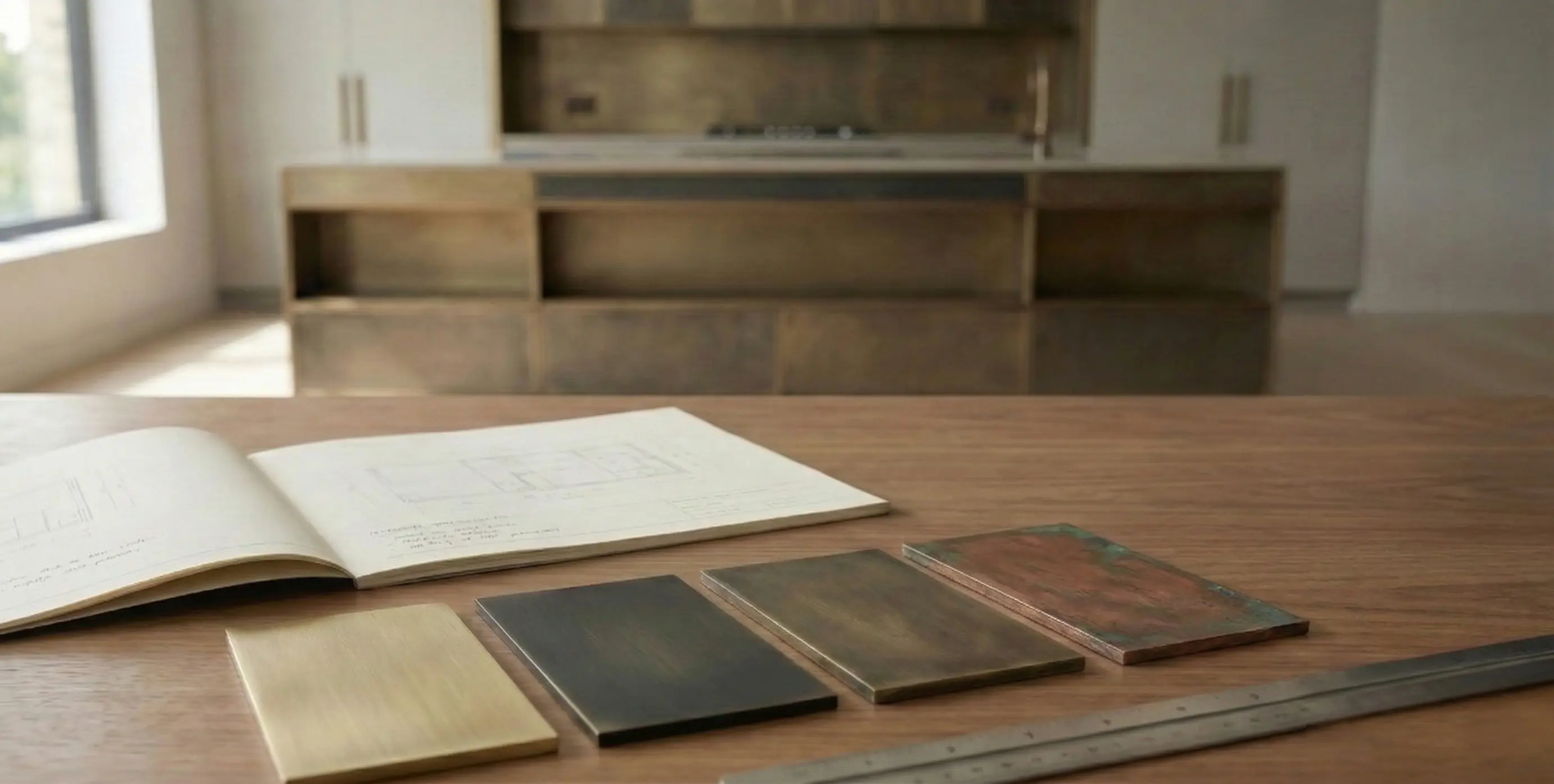
When you need consistency across multiple elements, we work against an approved reference sample and build a finish language that continues cleanly from one piece to the next. It’s the same metal, with the same character, and the same read under changing light.
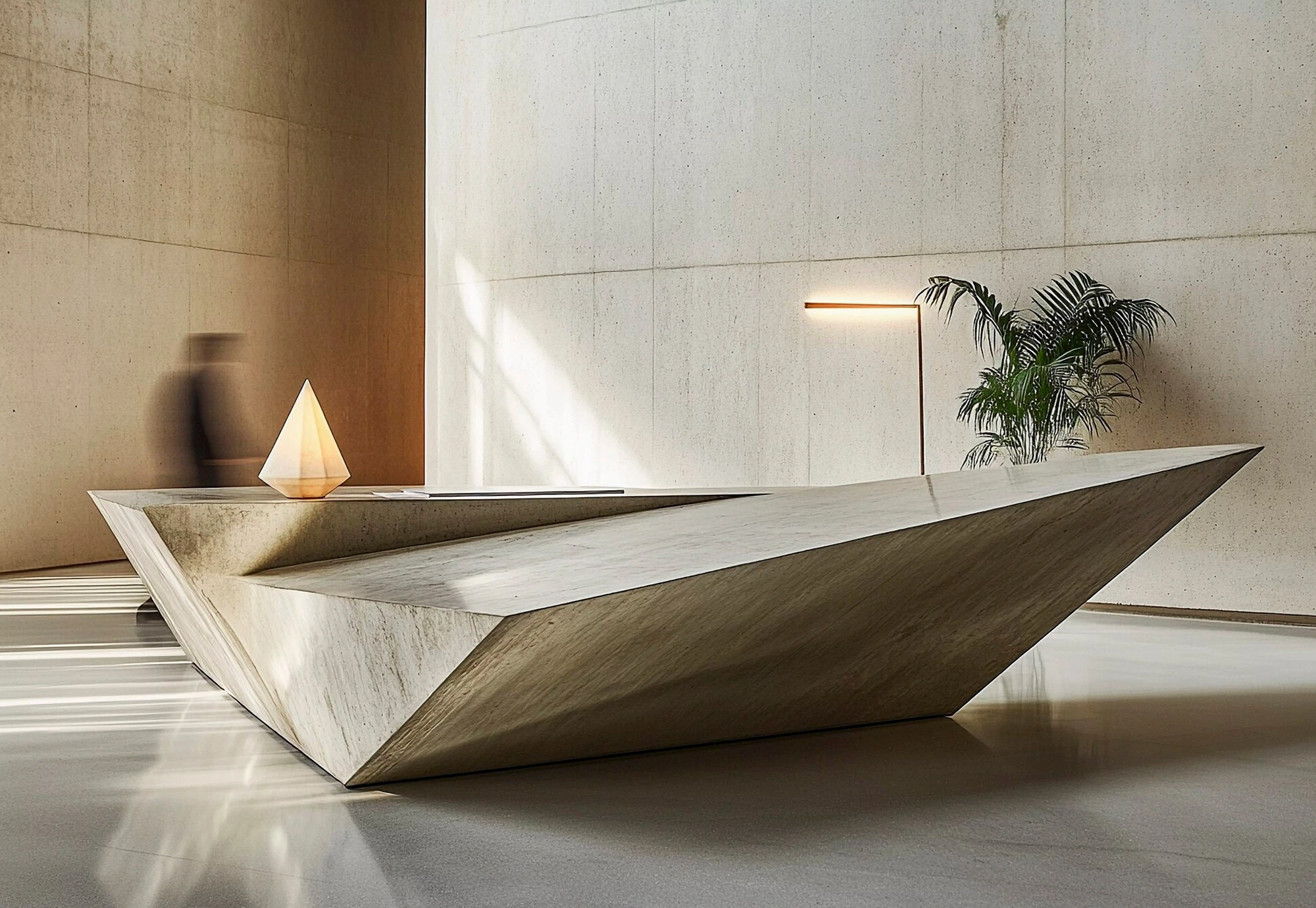
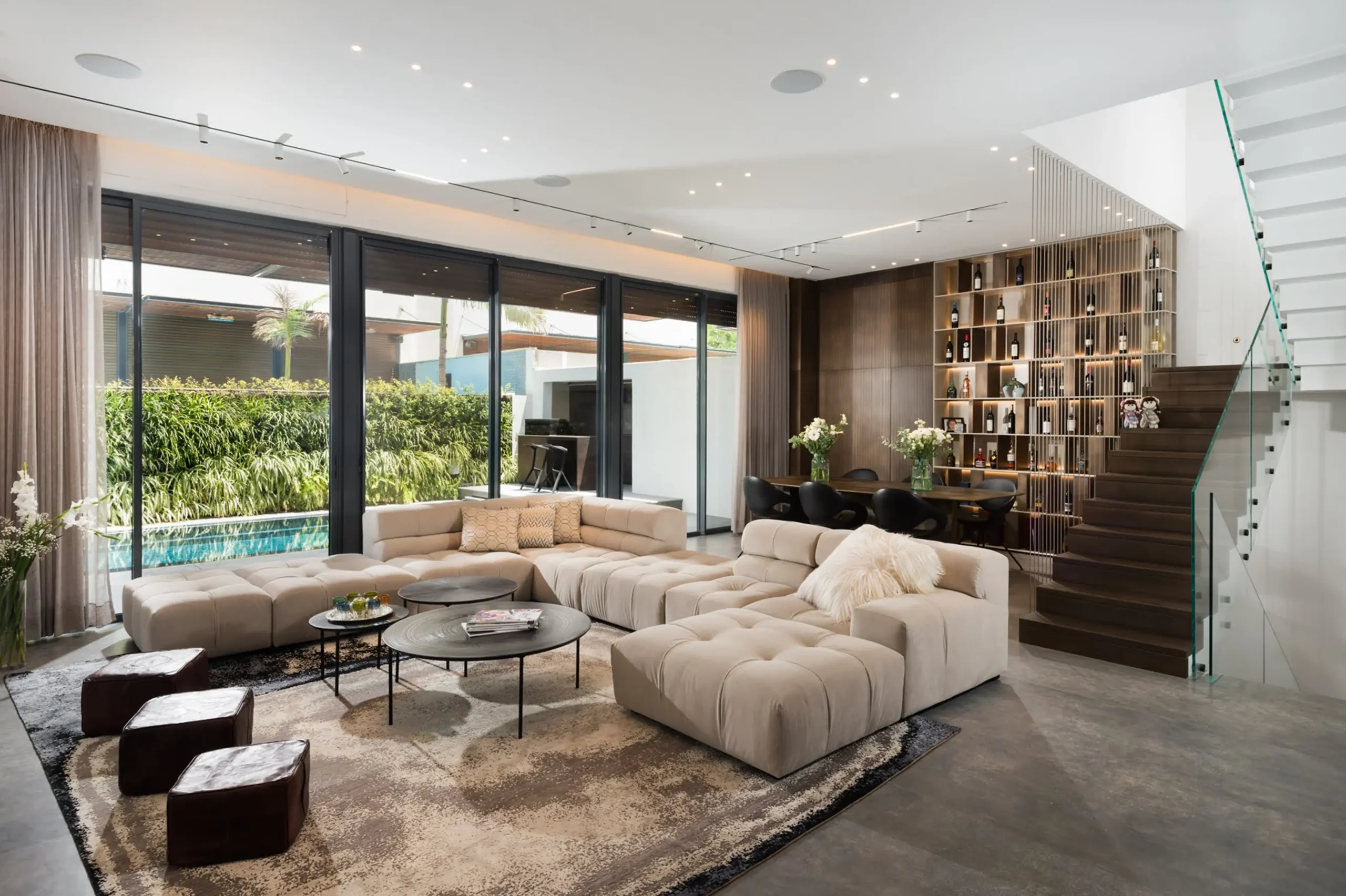
Creating an impressive and luxurious first impression that defines the hospitality experience.

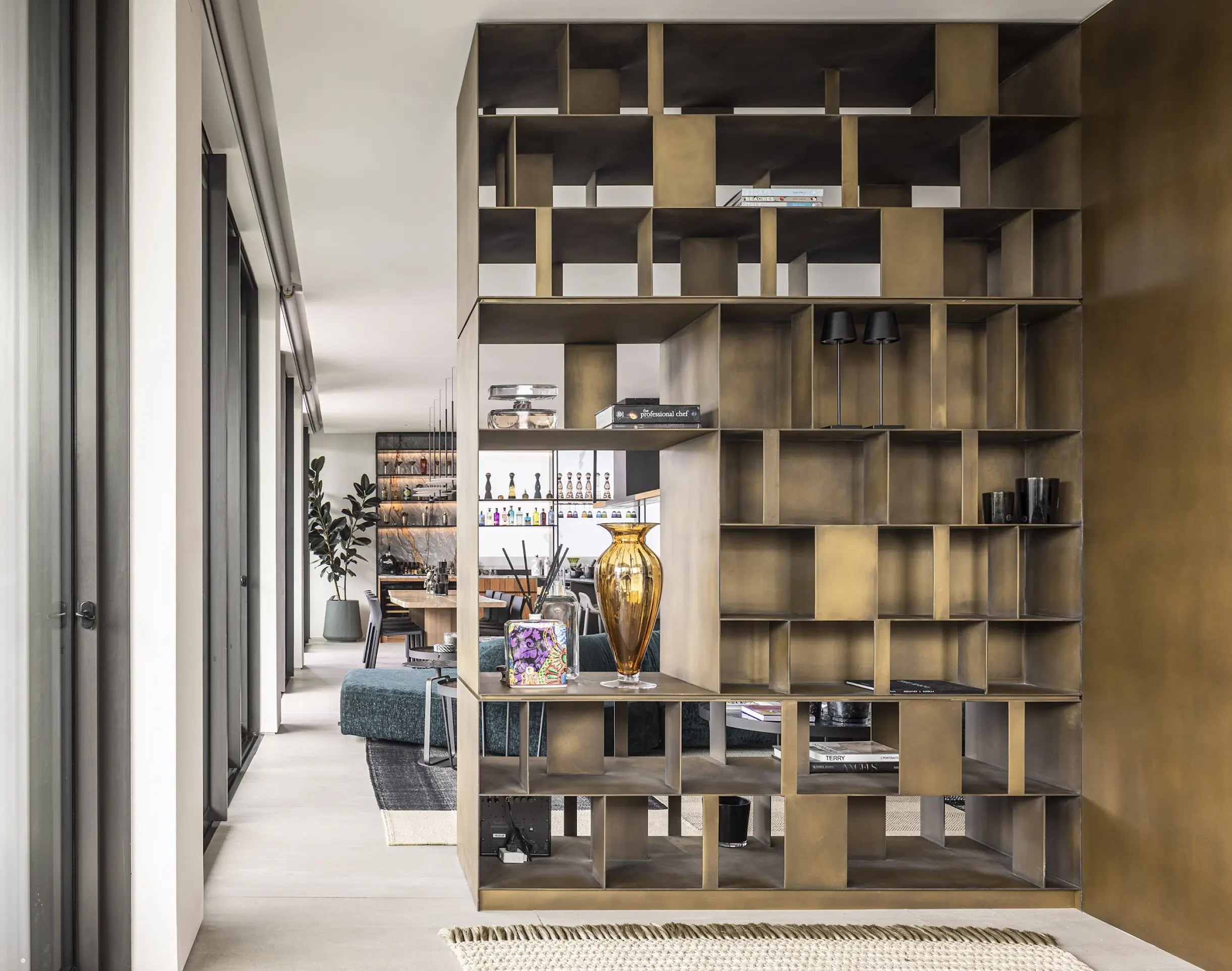
Liquid metal coating is especially relevant when you want metal to act as the organizing material, but you don’t want to lock into solid metal solutions. This comes up often in architectural joinery, in radiused elements, and anywhere you need a substrate that’s stable, easy to fabricate, or structurally appropriate.
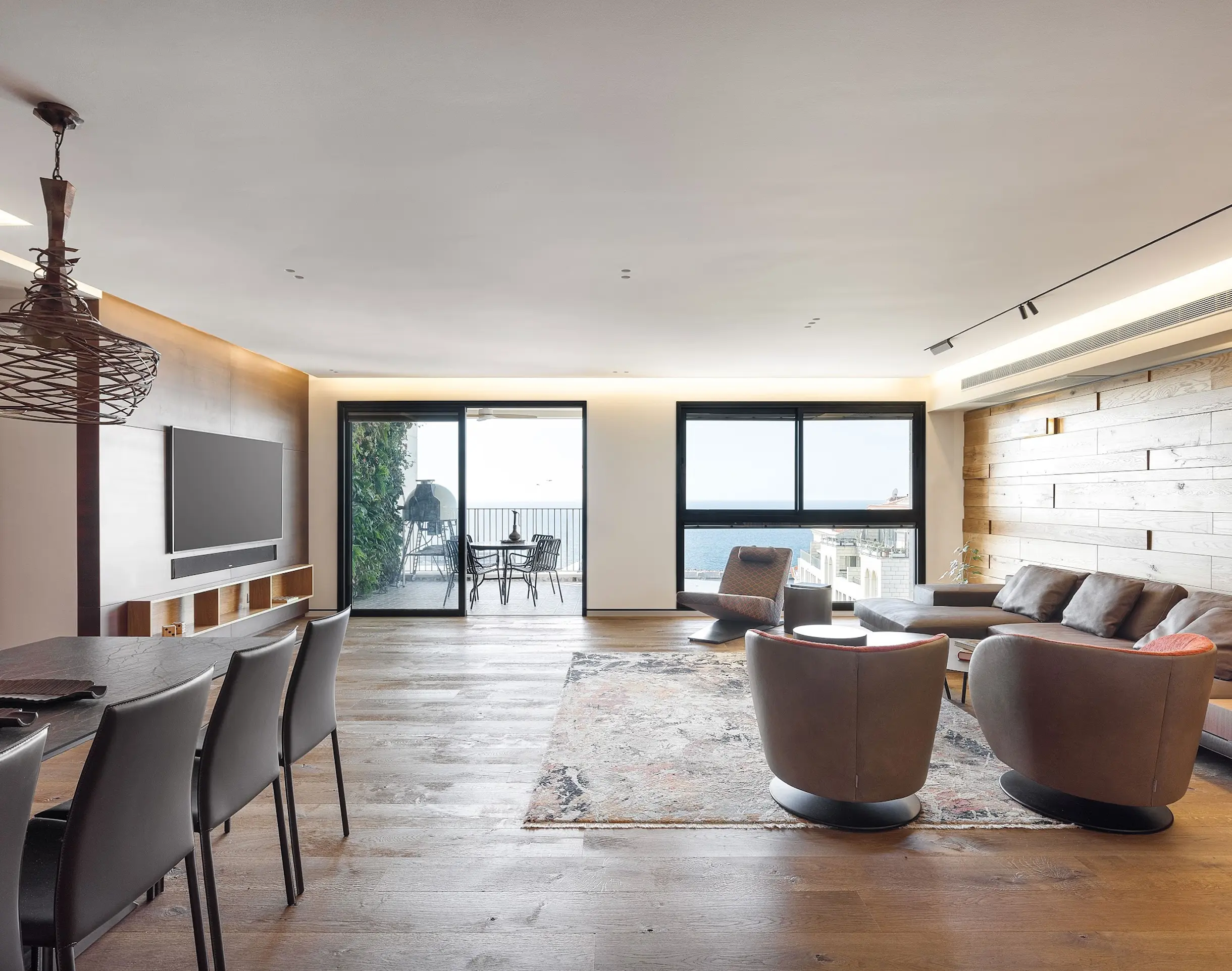
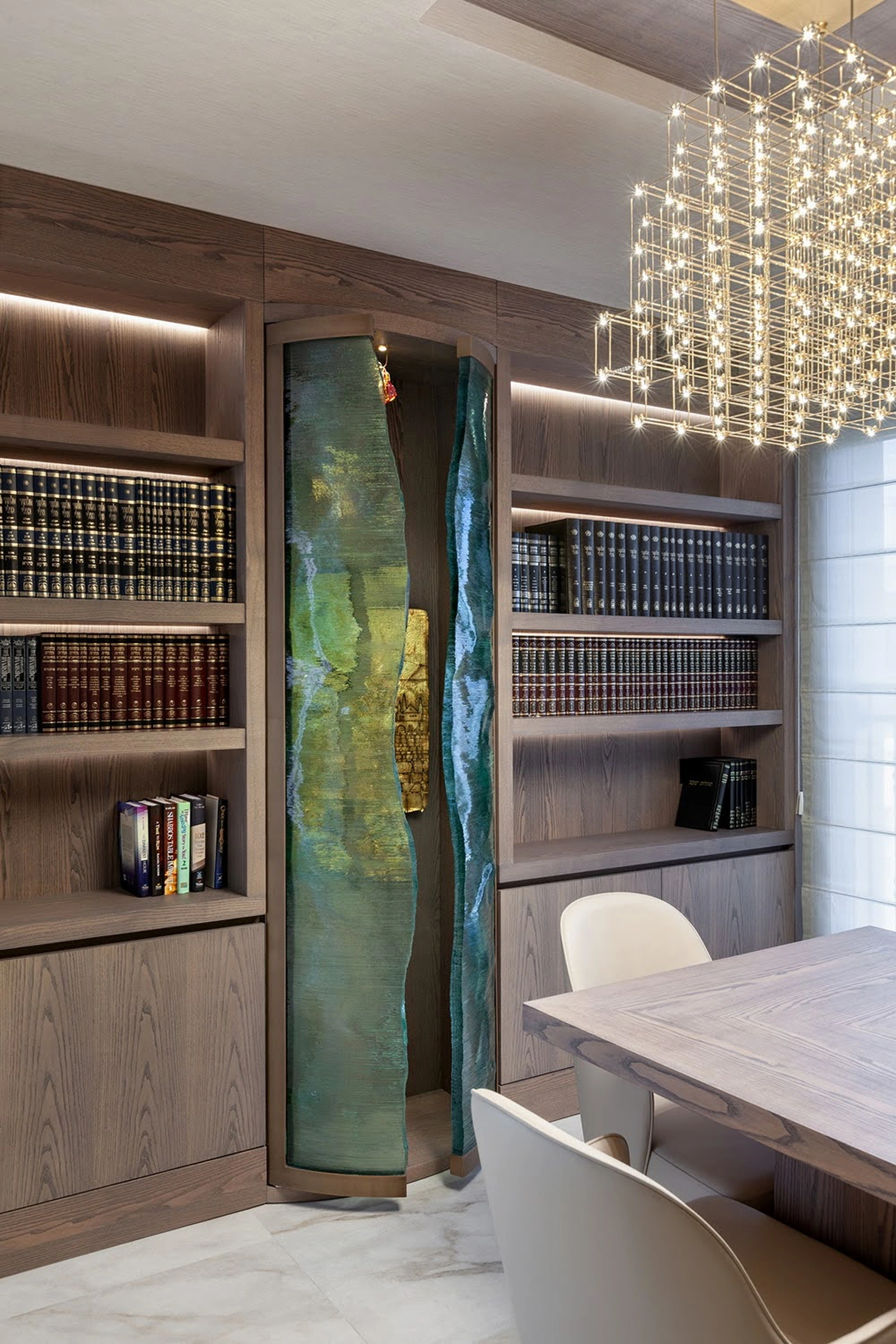
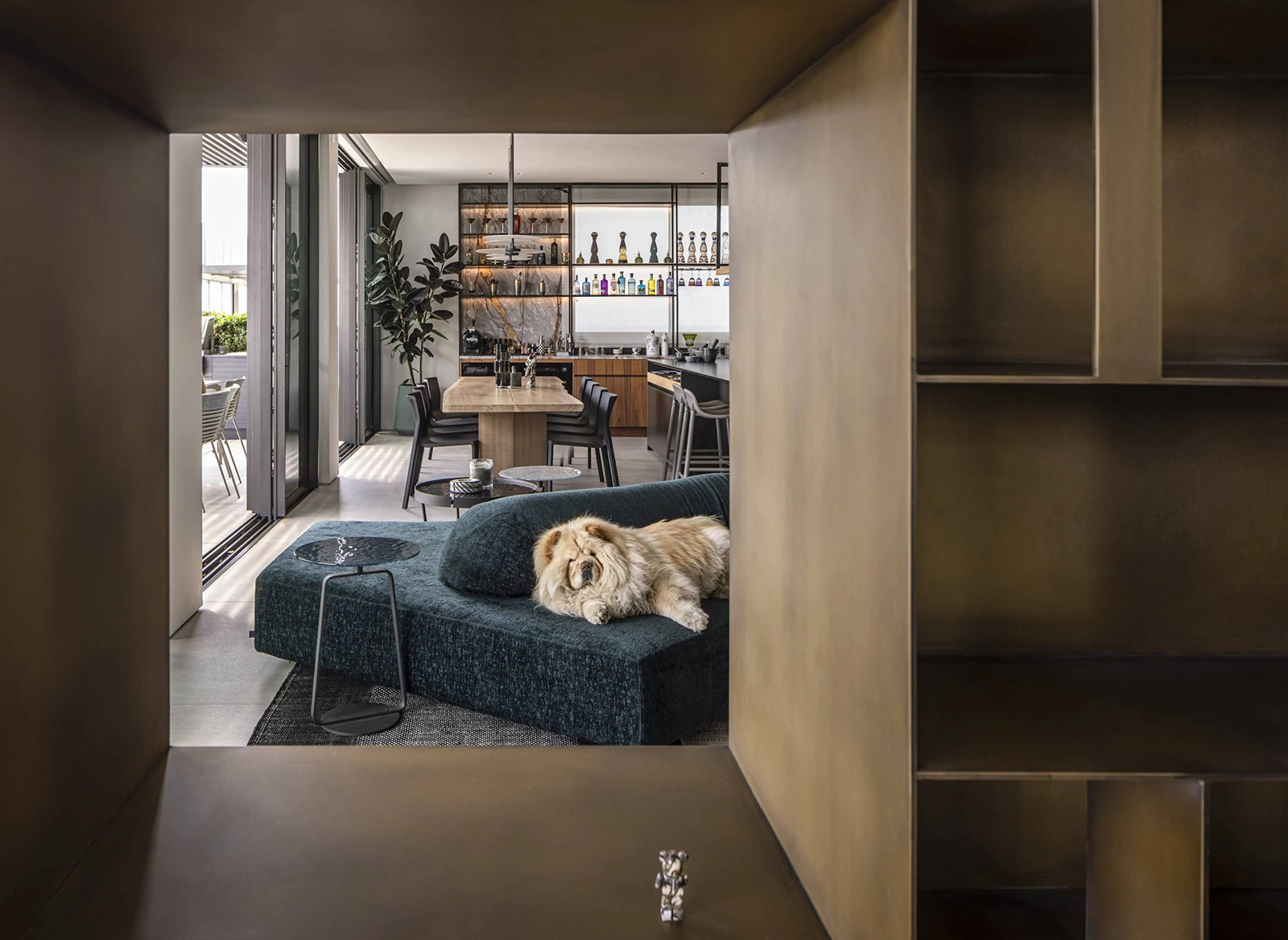
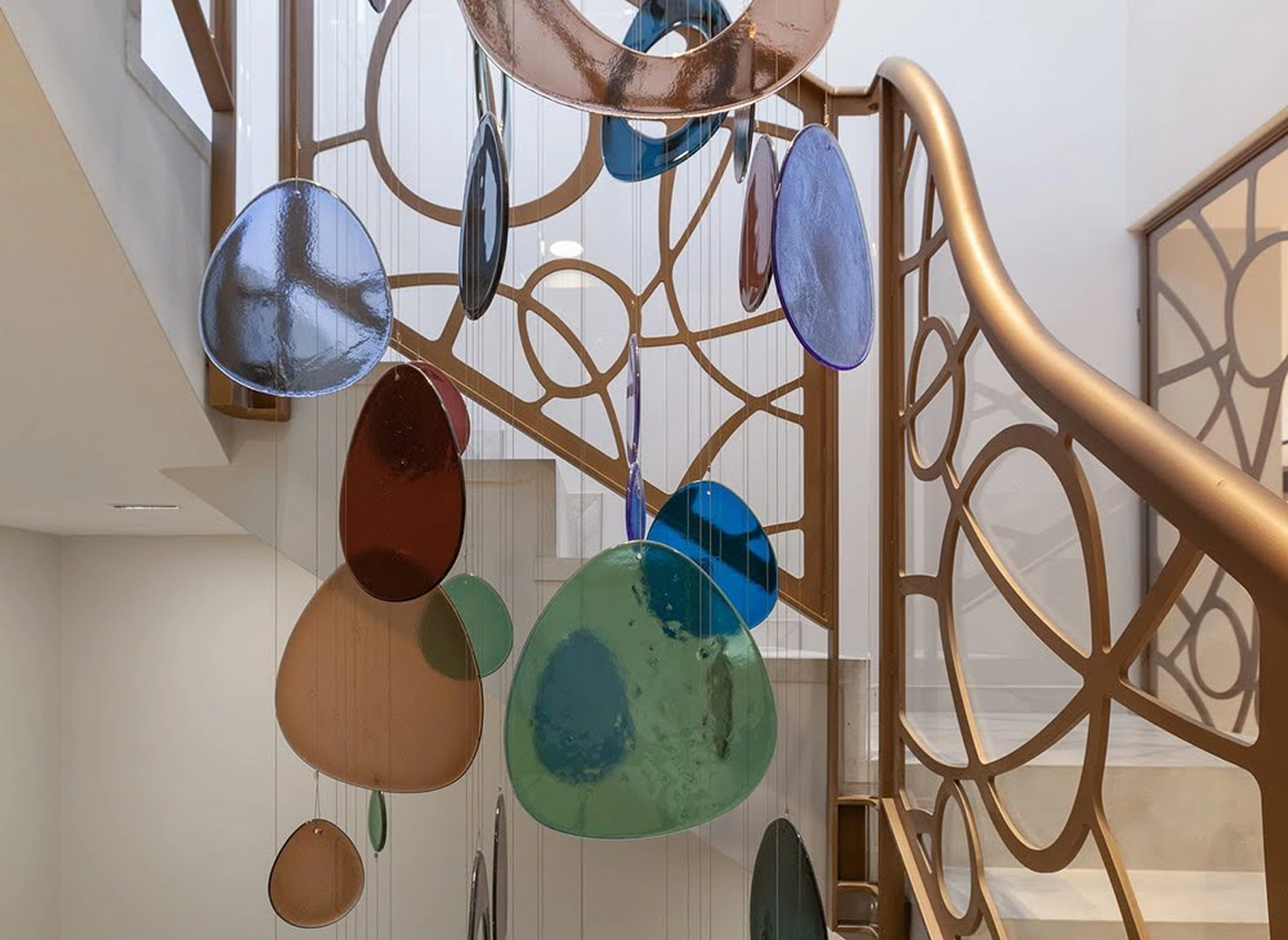
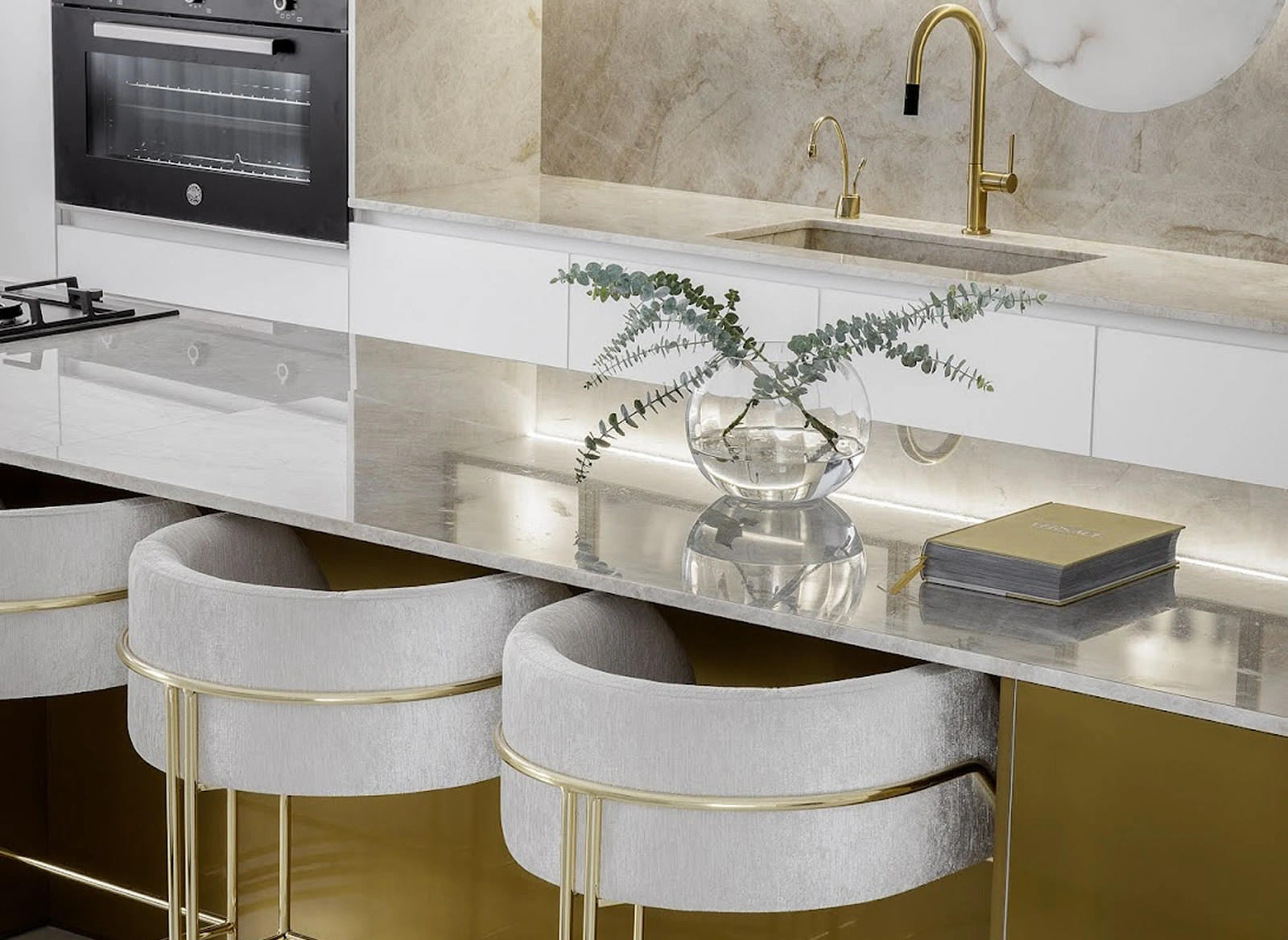
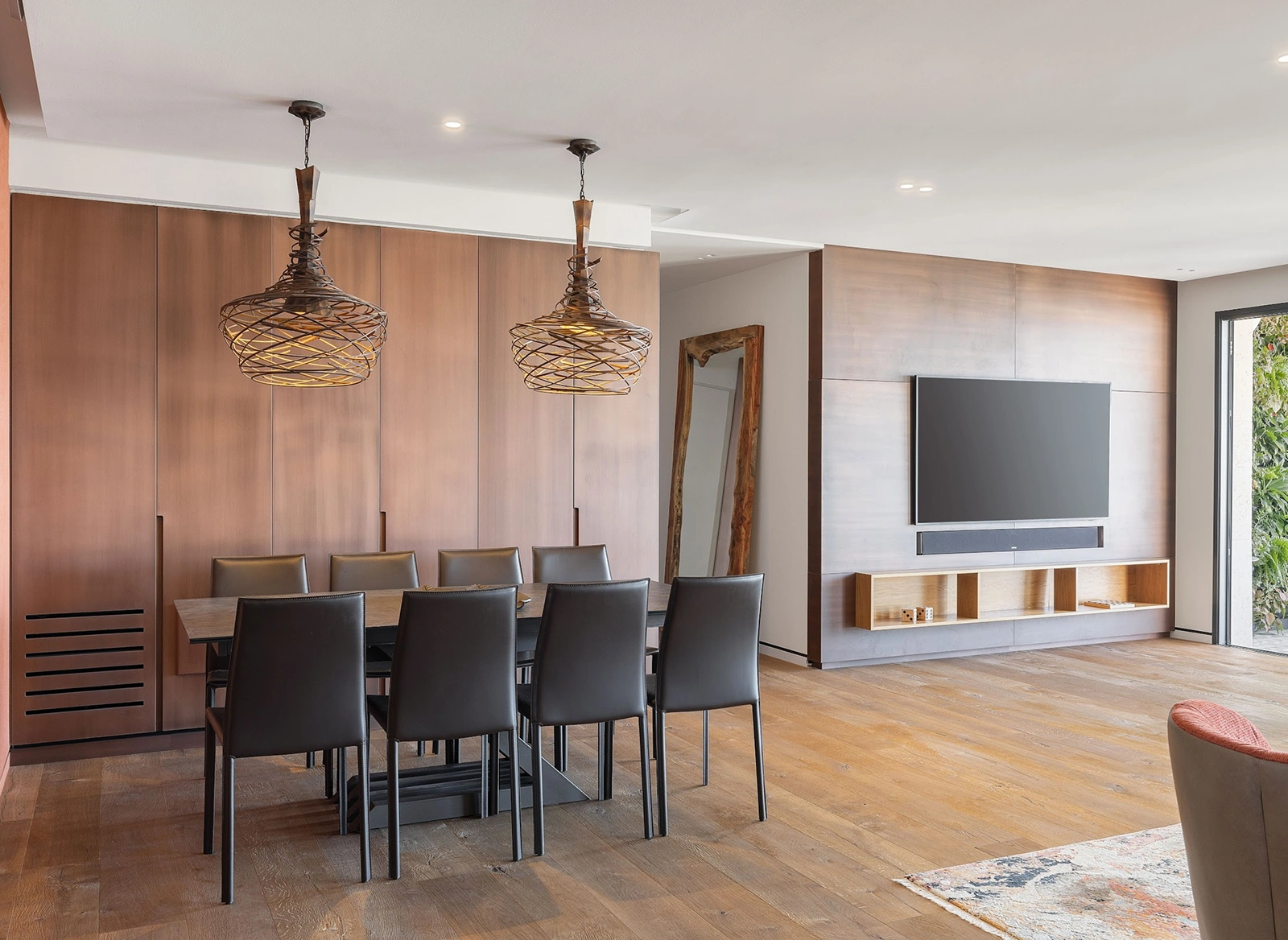
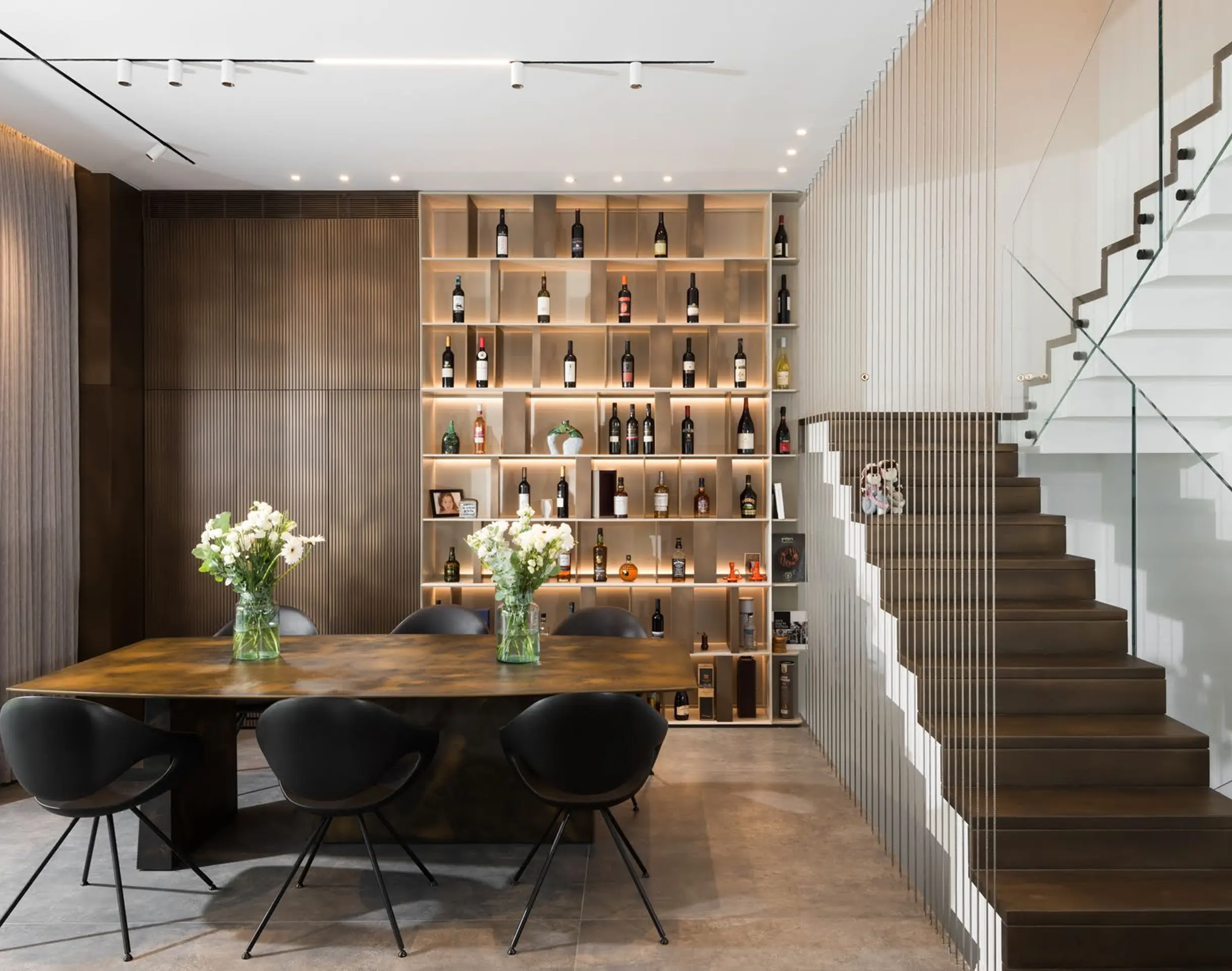
The service is suited to elements like a kitchen island and fronts, a reception desk, a custom bookcase, luxury wall cladding, stair details and rails, portals and entrance doors, and also sculptural elements that are built from a practical base and then finished with a true metal layer.
From a planning standpoint, it lets you choose the right substrate for the build, and then choose the metal and finish based on the project’s material story. That way you can keep a unified language even when different trades are producing different pieces.
There are places where geometry is the whole story. Radii, thin lips, sharp edges, and clean transitions between planes. With solid metal, these details often translate straight into welding, bending, or solutions that feel too technical compared to the architectural intent.
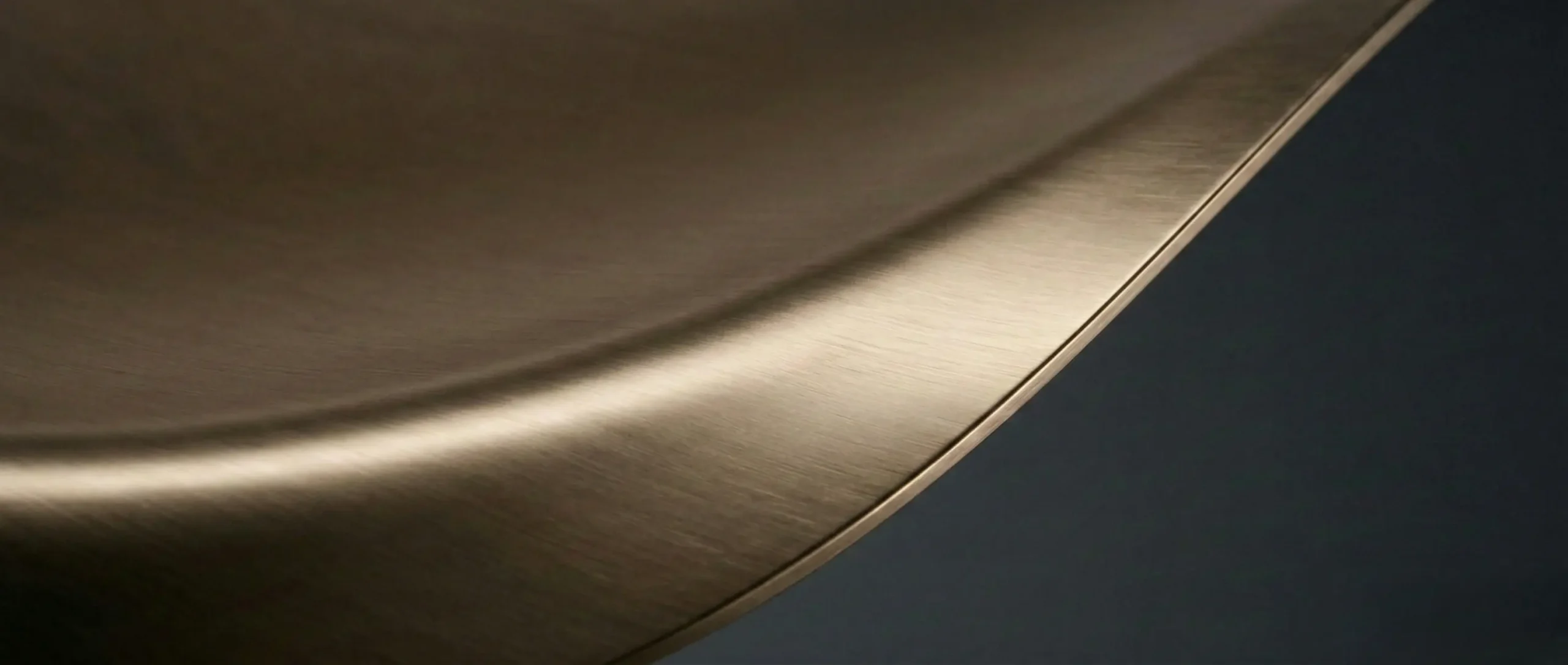
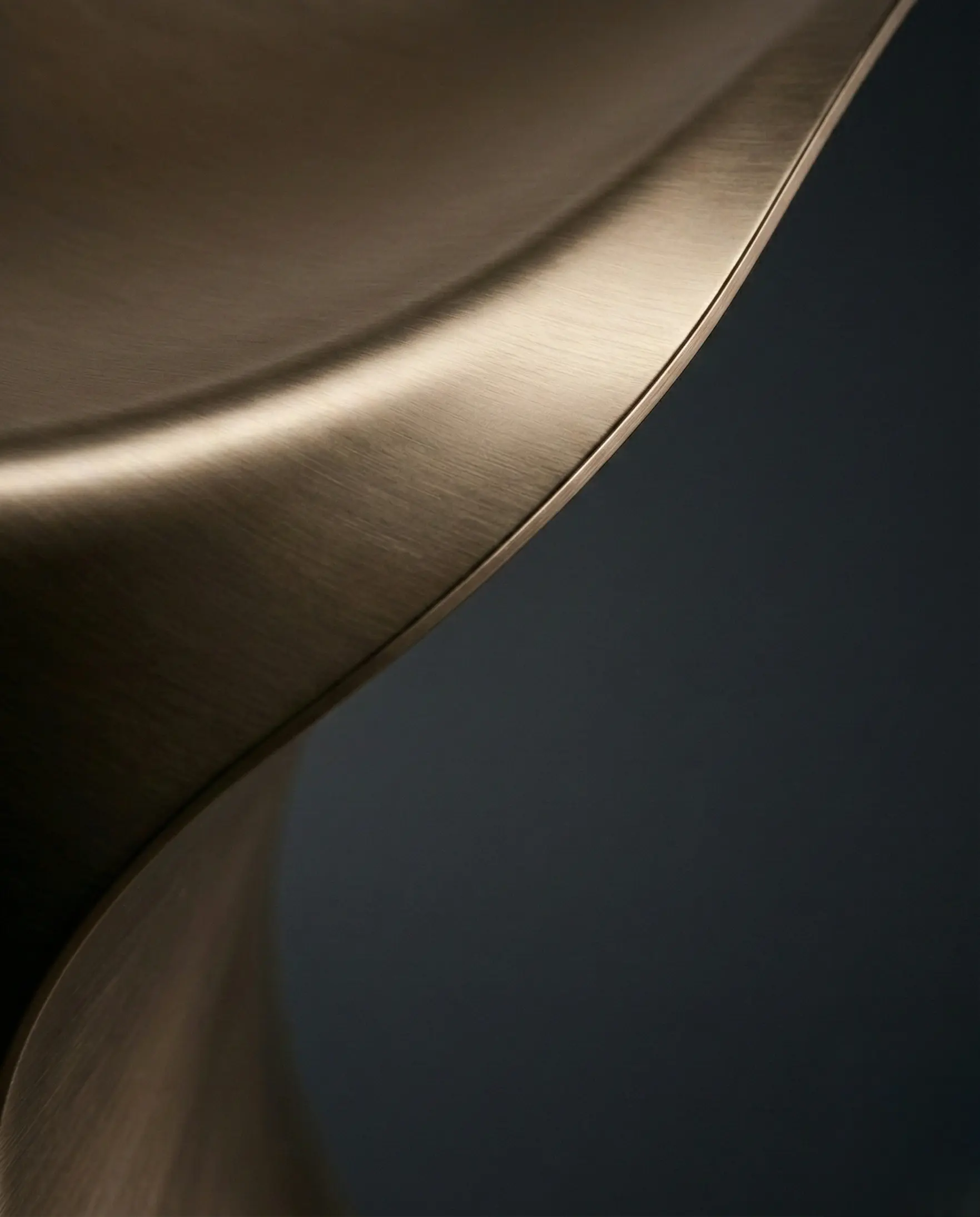
Liquid metal coating lets you build the form in the right substrate, then add a metal layer that continues the line instead of breaking it. The surface reads continuous, and light moves across it in a consistent way, even where a rigid material would have forced a joint or a cut.
As with any real metal system, protection and maintenance should match the way the element will be used. For interior projects, this is usually simple care and gentle cleaning. In high-touch zones or more demanding scenarios, we specify an appropriate protective layer based on the project requirements, so the finish stays stable and readable over time within the intended use.
Liquid metal coating delivers a surface that reads as truly metallic, with depth, texture, and reflection that follow the chosen finish. Instead of metal as “decor,” you get a material plane that holds the space. It fits projects where the material needs to feel like part of the architecture itself.
A major advantage is being able to select the substrate based on build needs, structure, or budget, and then choose the metal based on the design language. MDF, wood, aluminum, and steel can all take on the same metal character, without overloading the element and without the compromises of solid metal.
On complex elements, continuity is the difference between a finish that’s simply “nice” and one that reads architectural. Liquid metal coating helps keep a consistent read across transitions between planes, around radii, and at edge zones, so the form stays clean and light behaves predictably.
When there’s a clear approval sample and a consistent workflow, it’s easier to coordinate between design, architecture, and execution. We work in a way that allows alignment on tone, sheen, and texture to match the project brief, and then maintain that consistency across parts throughout production.
With the same metal, you can achieve different surface languages, from brushed or satin to polished, darkened, and patinated. That lets you build a material hierarchy in the space without switching materials, simply by subtly changing the surface.
Choosing a finish isn’t only a matter of taste. It’s shaped by light, scale, and how the surface will be used. Satin or brushed finishes work especially well on large planes where you want quiet depth and less “noise” from reflection. Polished finishes make more sense where you want a focal moment, a jewel-like detail, or a clear response to directed light.
To make sure the finish behaves the right way in the project, it helps to decide in advance what you want to see in daylight, in evening light, and in movement. We tune the result against the approved sample and the relevant lighting conditions, so the surface stays consistent in how it reads, and doesn’t surprise you as you move from one zone to another.
We offer liquid metal coating in a range of metals and tonal directions based on the project needs and the material character you’re after. The choice is made against an approval sample, with scale and lighting in mind, so the result stays precise to the architectural intent.
As with any metal system, the protective layer is part of the planning. A decorative interior element is not the same as a high-touch zone, and dry conditions are not the same as more demanding environments. We define the right protection level together and provide simple, clear care guidelines for everyday use.
For consistency, it’s best to work with an approval sample or a dedicated control panel before serial production. This lets you approve tone, texture, and sheen, and close decisions that reduce execution risk. When needed, we also provide a system description and relevant data for the specification, based on the project requirements.
If you’re considering liquid metal coating for a project, send us the substrate type, intended use, finish inspiration, and a photo or drawing. We’ll recommend a suitable system and propose an approval sample that matches the light and scale of the space.
WhatsApp us