In short
Architectural metal finishes come in two families. Brushing and polishing change texture and shine, blackening and patina change the color itself, and you choose between them by the light, the touch, the place and the metal.
What is an architectural metal finish?
It is a planned change to the metal's surface. The metal is chosen, but the finish decides whether it looks quiet or dramatic, and whether it throws light back like a mirror or spreads it softly.
Mechanical finishes, such as brushing, sanding and polishing, give the metal direction, texture and a level of shine. Chemical finishes, such as blackening, patina and controlled rust, change its color and depth. Many projects use both, for example brushing first and blackening after.
Which types of metal finishes are there?
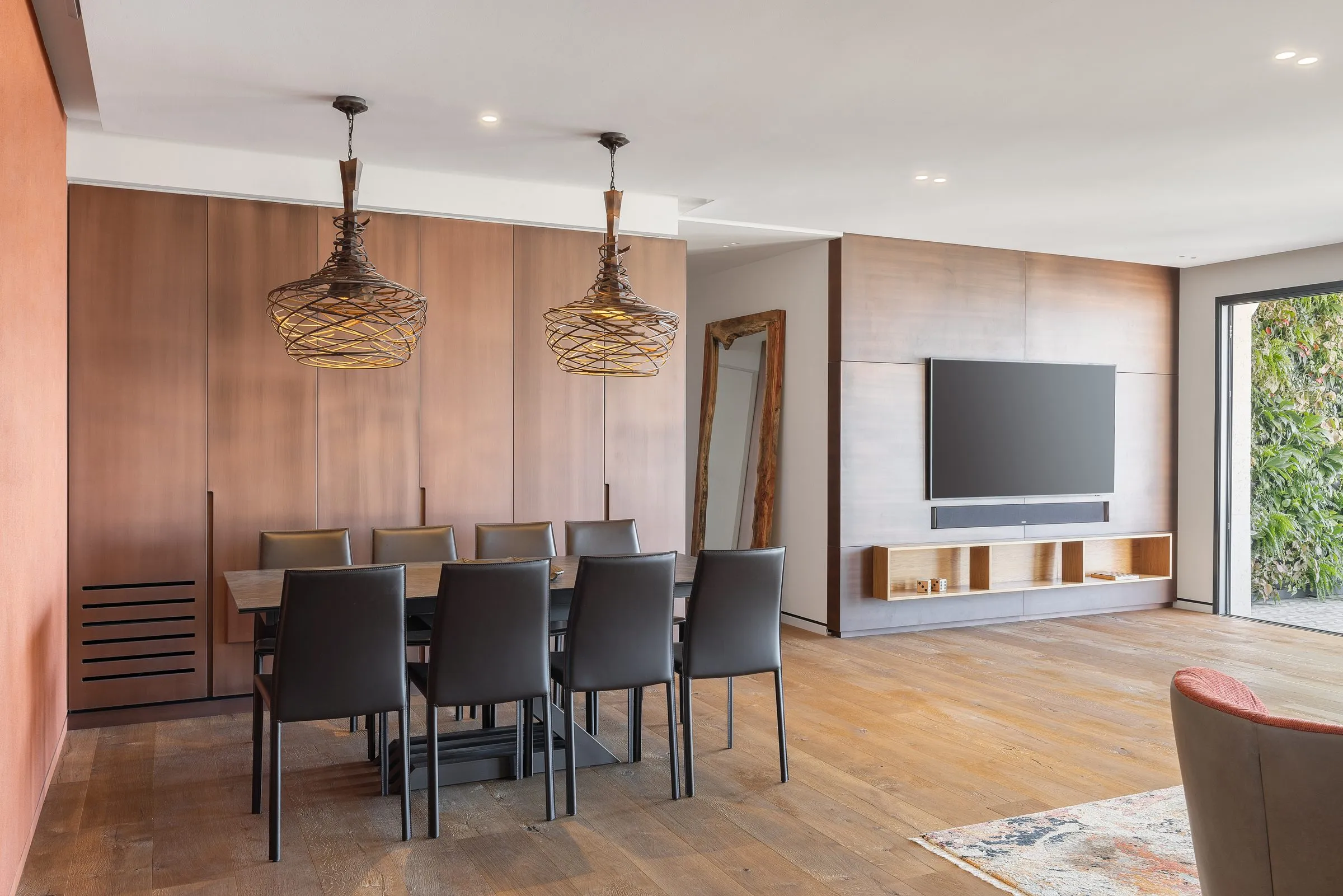
Brushing is the classic architectural finish. It leaves fine lines in one direction, cuts glare and suits large surfaces such as doors, cladding and fronts. Brushed Brass and Brushed Zinc are good examples. Polishing does the opposite. Polished Brass, Polished Bronze and Polished Copper reflect light like a mirror and sharpen every line.
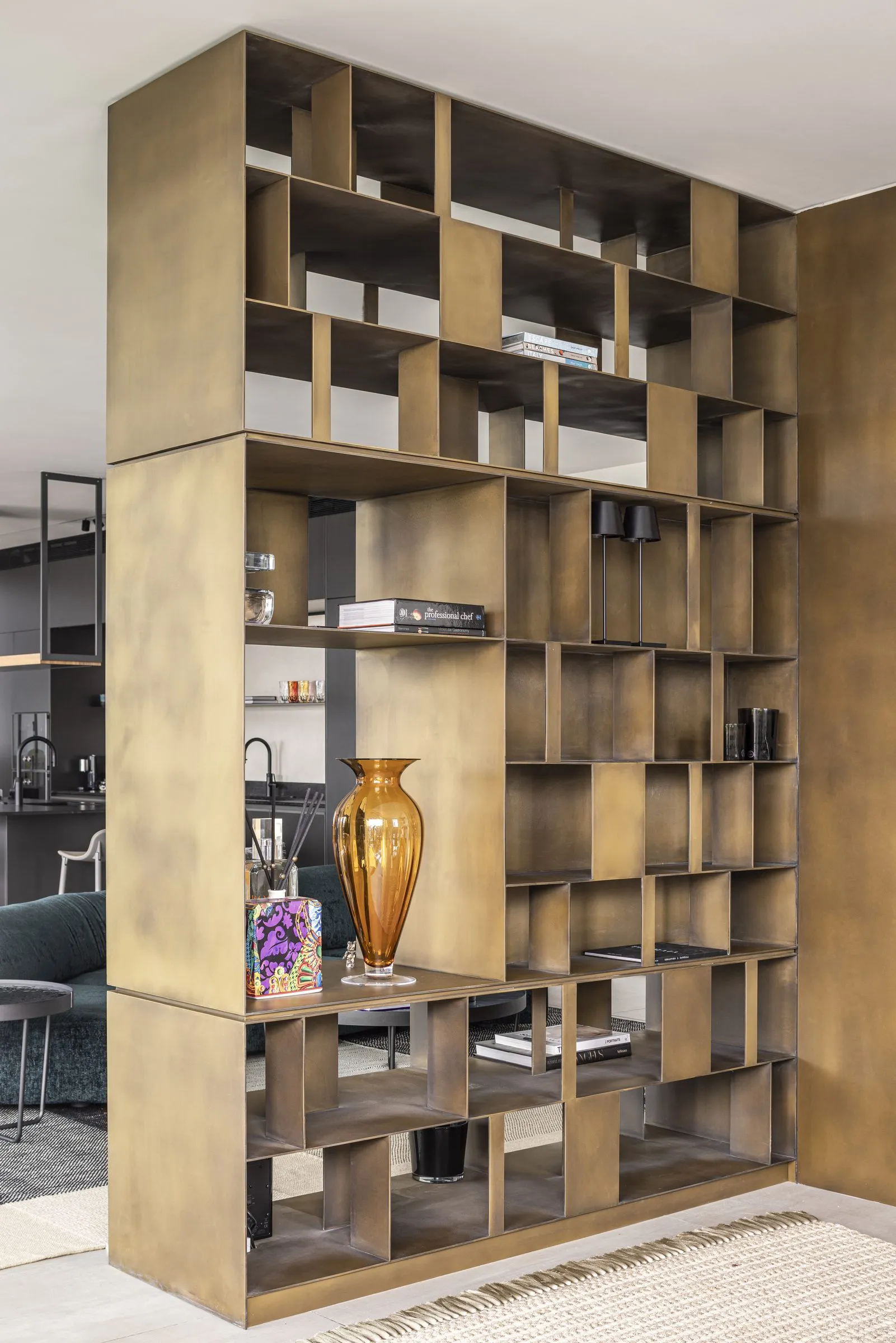
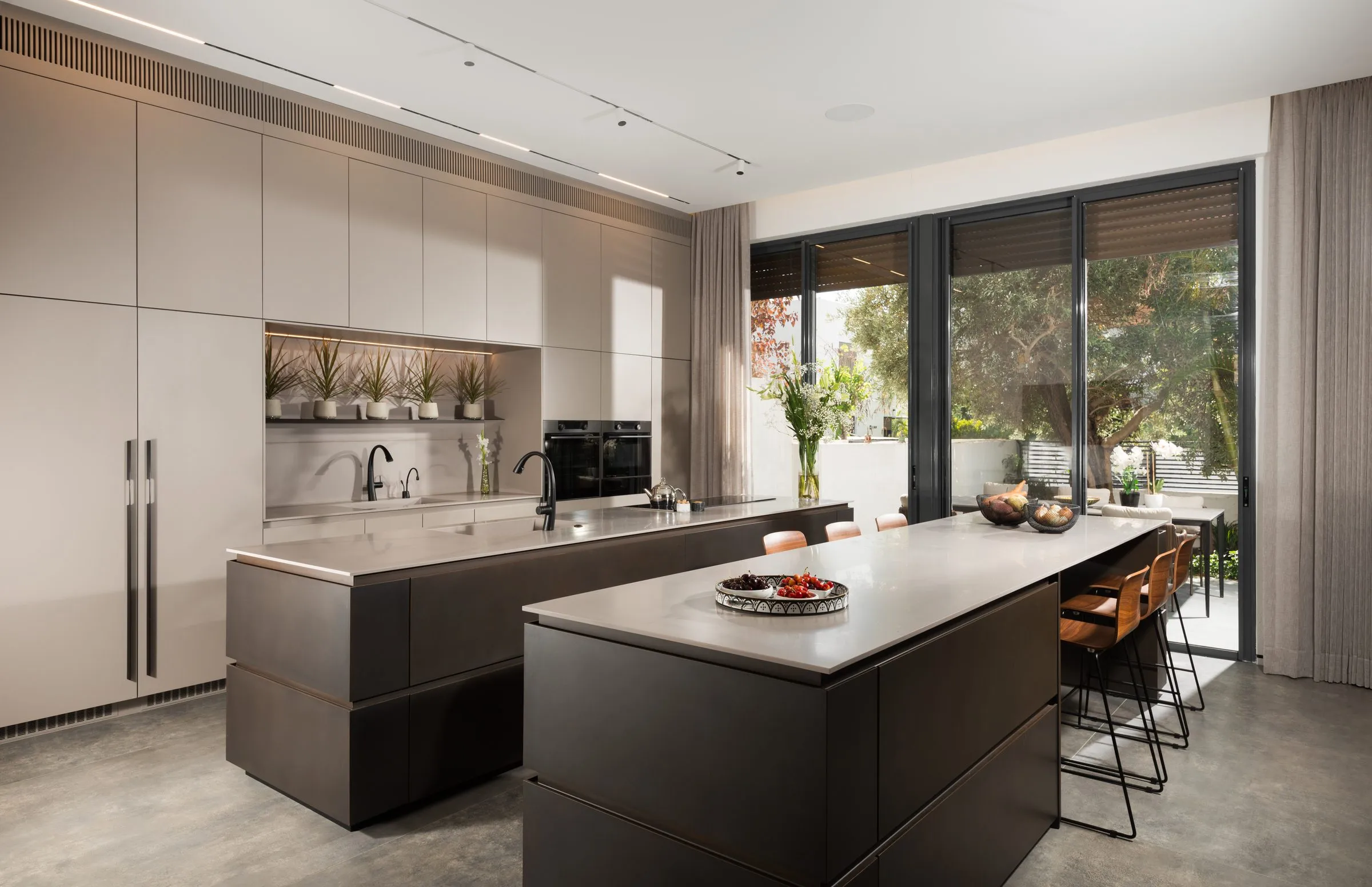
Blackening deepens the tone to dark brown or black, from matte charcoal to a graphite sheen. A bar counter in blackened zinc from our production facility is a good example. Patina adds depth and color, from the smoky brown of Smoked Patina Brass, through the gradual fade of Ombre Patina Brass, to the green blue of Copper Tiffany Patina.
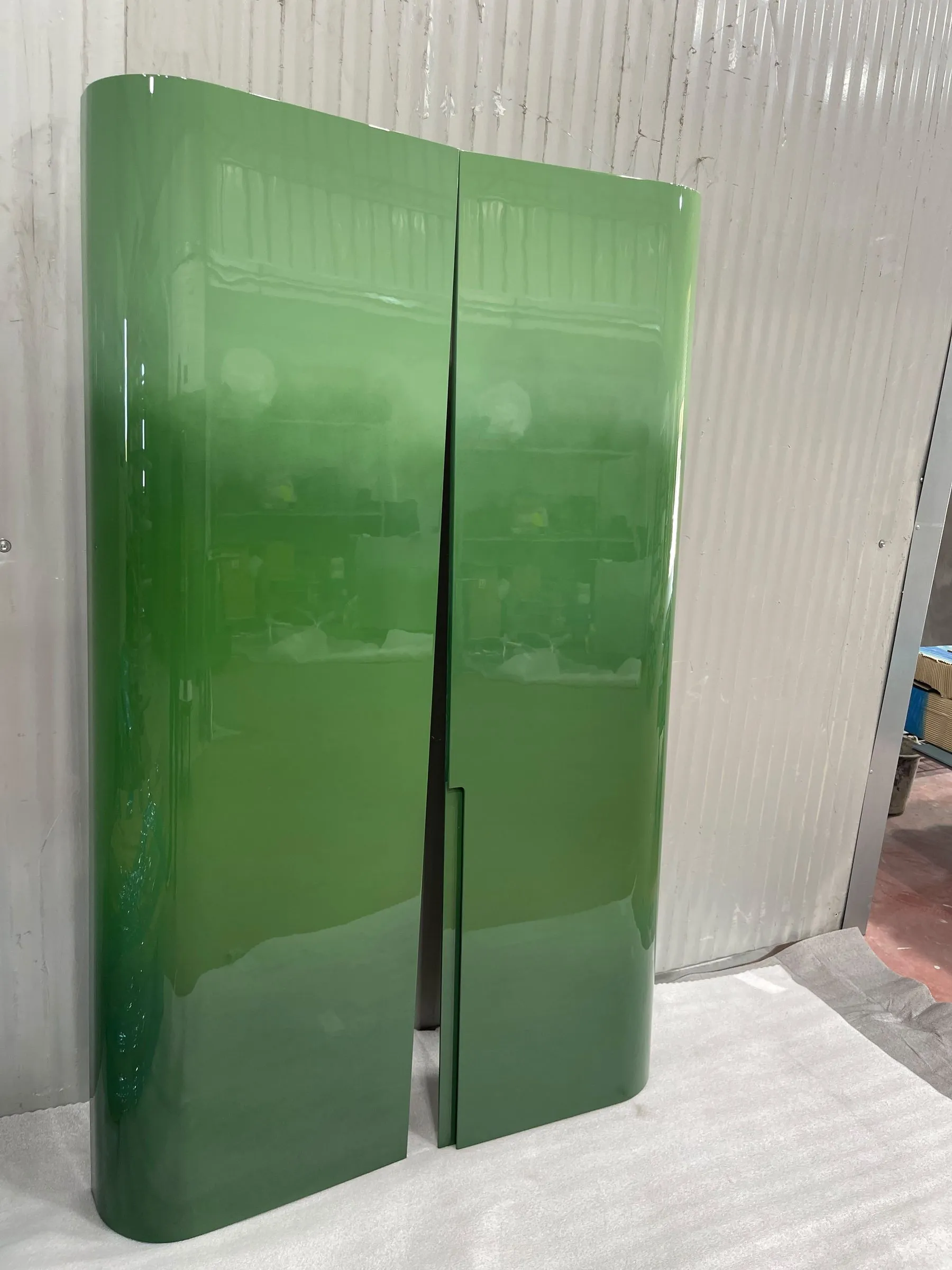
Then there is the steel family. Corten Steel is darker and quieter, and Rust is warmer and more orange. In both, the rust is stopped and sealed under a clear coat, so it does not rub off on hands, clothes or the floor, and it does not keep rusting, inside or outside. You will find all our finishes in the finish collection.
Why does the same finish look different on each metal?
Because every metal reacts in its own way. Copper, brass and bronze respond readily to chemistry, so they take a wide range of tones. Brass is an alloy of copper and zinc, and bronze is an alloy of copper and tin, so the same patina gives brass, bronze and copper three different tones.
Stainless steel and aluminum are another story. They do not react like the copper family, and each needs a process of its own. That is why planning a finish always starts with what the piece is made of, and only then with the tone you want.
Do you need solid metal to get a metal finish?
No. We have four ways to reach a finish, and each starts from a different material. When the piece is already solid metal, the way is Metal Finishes on Solid Metals. We polish, brush, blacken or age the metal itself, on brass, bronze, copper, stainless steel, steel, aluminum, zinc and Corten. Metal workshops send us the pieces they make, and we give them the finish the design calls for.
For pieces made of other materials, there are two ways to get a finish made with real metal. The first is Liquid Metal Coating – MetaliQ. Real metal powder in a binder is sprayed onto MDF, wood, metal, aluminum or stainless steel, then sanded, polished, brushed or aged like metal, in brass, bronze, copper, zinc, iron, Corten, aluminum or a blend mixed to order. The coating is lighter than solid brass and works on shapes that are hard to make from sheet metal. The Corten reception desk in the ONE Towers lobby in Ramat Gan was made in liquid metal too. We explain this route in depth in what liquid metal coating is.
The second is Arc Wire Spraying – TruMetal. Two metal wires are melted by an electric arc and sprayed onto a prepared surface, building a layer of metal. Sprayed copper, brass and bronze take a patina, and sprayed zinc protects steel from corrosion. With both methods the piece underneath keeps its own material, and what changes is the surface, which looks and feels like metal. We wrote about spraying in what metallization is.
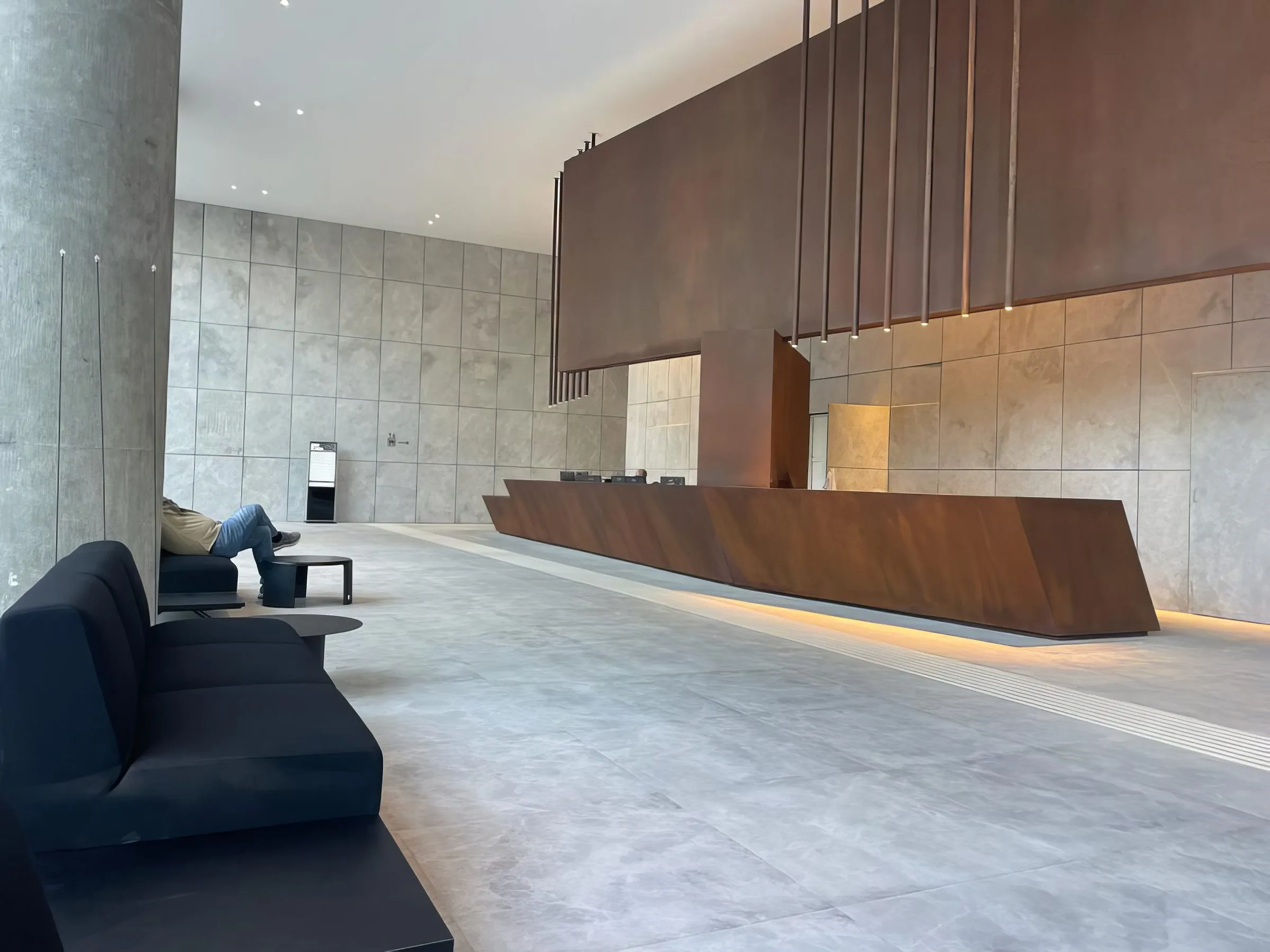
Corten Reception Desk, ONE Towers
- Technology:
- Liquid Metal Coating – MetaliQ
Design: Baranowitz Goldberg
When is architectural painting the answer?
When the design calls for color rather than metal. Architectural Painting – LuxKote is professional wet painting in solid colors and designer paint effects, on metal, aluminum, stainless steel, MDF and wood. We work with paints from Cerakote, Mipa, Sikkens and other makers, and we match a color from any catalogue or from a sample you already have.
Here too, preparation is what turns a painted surface into an architectural one. Edges, joints and long surfaces that catch the light show every shortcut. We wrote about paint types in our article on architectural painting. Any of our finishes can also take a ceramic clear coat, and we cover it in a separate article.
How do you choose a metal finish for your project?
Start with three questions. Where will the piece stand, indoors or outdoors? How often will people touch it, and how will it be cleaned? And what light falls on it, strong daylight, grazing side light or soft diffused light?
In strong side light, brushing or a cloudy finish calms the reflections. On a sculptural form, polishing brings out the lines. And if the piece stands where people touch it a lot, we choose a finish and a clear coat with you that suit the use.
Then pick the finish from our sample set, or ask for a sample made for your project, and hold it in your hand in the light of the room. Pieces are usually ready 2 to 4 weeks after the sample is approved. Since 2017 we have more than 1,000 projects behind us in Israel and around the world, all made in our own production facility.