What is a ceramic clear coat?
It's the clear top layer of a painted finish. We spray it in thin coats over the paint, in our own production facility, and it protects the color underneath while setting the sheen you see. Our ceramic clear coats are Cerakote, imported directly and exclusively from the manufacturer in the U.S.
It isn't a nano product you wipe on, and it doesn't work on its own. A ceramic clear coat does its job as the last layer of a complete paint system, where primer, paint and clear coat are chosen together for your material. So we choose the whole system, not just the top layer. Our paint systems are selected for color stability over time.
The manufacturer develops these clears as a very thin, inorganic film with hardness, wear and chemical resistance in mind, and formulates them to resist yellowing in sunlight. That is why we reach for them on surfaces that get wiped every day.
Is LuxKote just a ceramic clear coat?
No. Architectural Painting – LuxKote covers the whole painting process, and the ceramic clear coat is one of the options inside it. The work starts with preparing the surface and goes on to primer, paint and the clear coat that suits the piece. Solid colors, metallic paints, mottled effects, shading, gradients, layered color and tinted clear coats all come out of the same paint shop.
We paint MDF, wood, composite boards, aluminum, iron, steel and stainless steel. So when one project has wooden fronts, metal profiles and a reception desk, the same paint shop paints all of them, in the color you chose.
Where does a ceramic clear coat make sense?
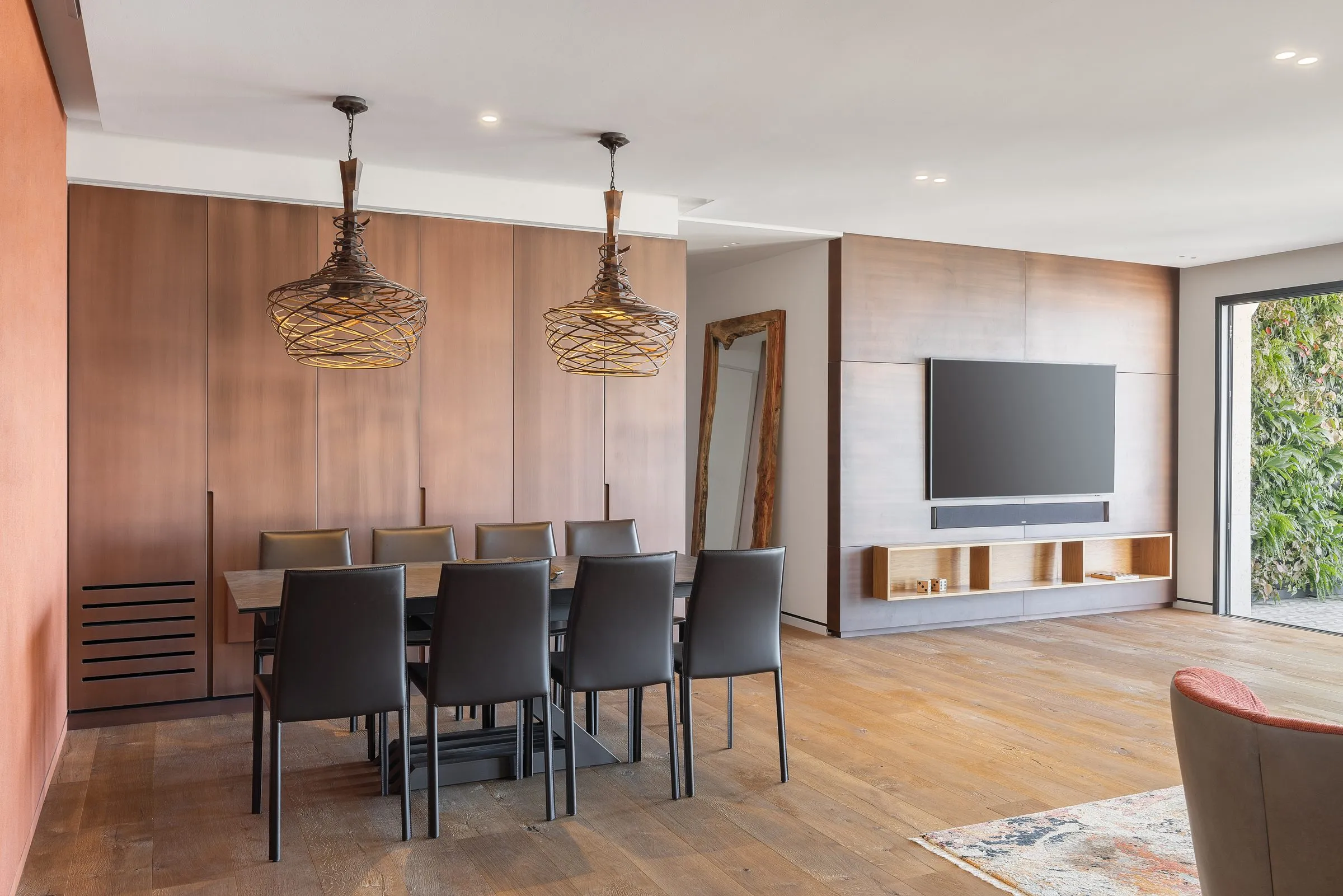
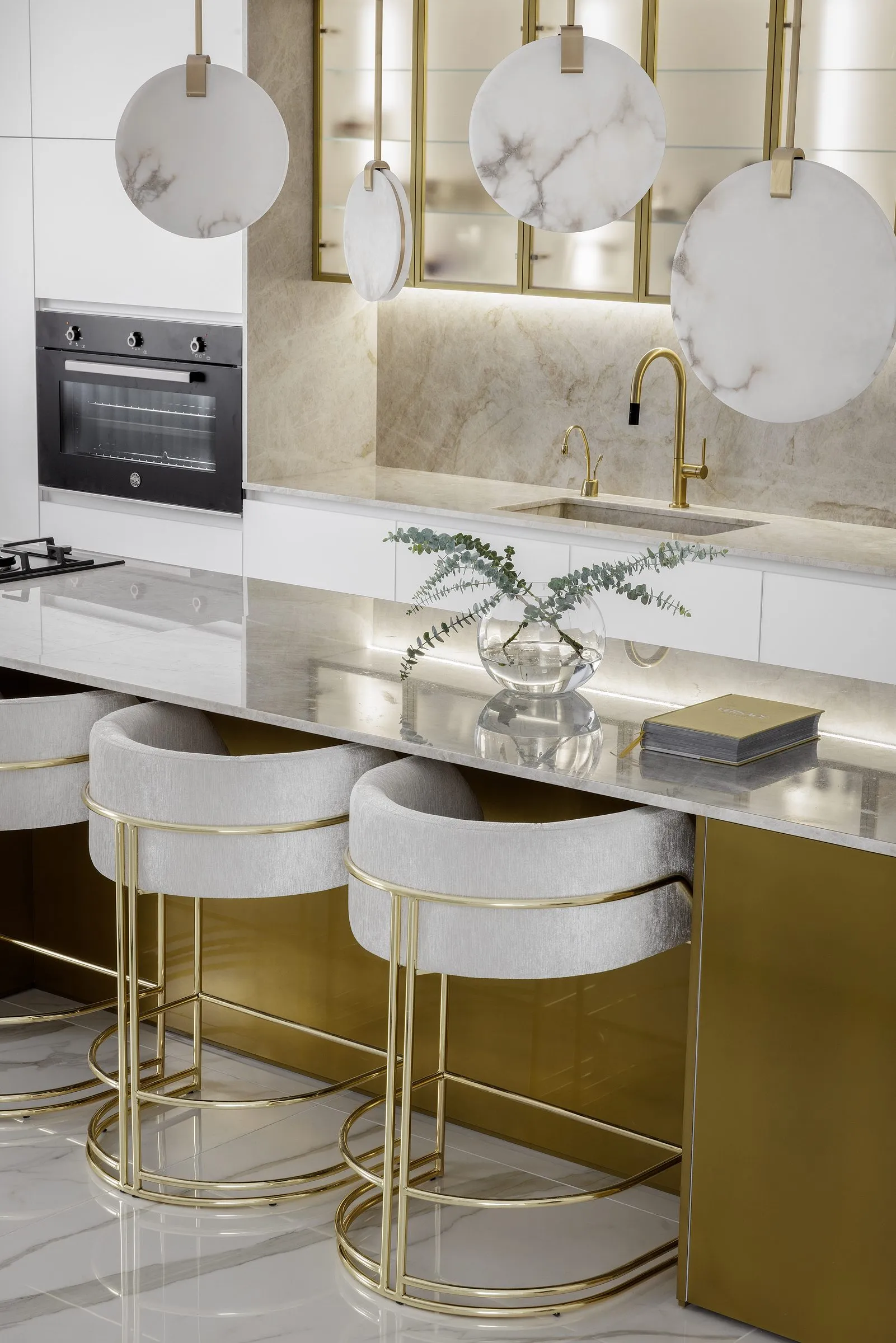
On surfaces that people touch and clean all day. A hotel reception desk, a row of doors along a corridor, a bar front, office joinery, and at home, the kitchen fronts and drawers you open every morning.
A piece that is mostly looked at and rarely touched, such as a wall panel or a high shelf, usually does fine with a regular clear coat chosen for its use. We choose the clear coat by how much the surface is touched and how it is cleaned, not out of habit.
And outdoors? Yes, even right on the seafront, once we've confirmed the system technically. Outdoors we paint on metal.
Matt, satin or gloss, which sheen should you choose?
We spray the ceramic clear coat in three sheens: matt, satin and gloss. Matt looks soft and calm, and suits large planes and quiet rooms. Satin sits in between, with a gentle depth and no sharp reflections. Gloss is sharp and reflective and brings out every line of the design, which is why it asks for the most exact preparation.
The sheen also depends on what lies under the clear coat. Over smooth, even paint the gloss looks deep, while over a textured surface the same clear looks softer. So you judge the sheen on the sample, not on paper.
You choose the color and sheen from our finish catalogue, or match a color you already have, from any color catalogue or from your own sample. Before production you can see the result on an ordered sample.
Ceramic clear coat, anodizing or PVD?
They answer different questions. Anodizing is a treatment for aluminum and titanium, and its color comes out of the process itself. That is why its palette is narrower and why, as the maker of our clears points out, the shade can shift from part to part and from batch to batch. A ceramic clear coat is the top layer of a painted finish, so it goes wherever paint goes, on MDF, wood, composite boards and metal, in the color you picked.
PVD is also a treatment for metal parts, with its own range of tones. And it isn't always an alternative. The manufacturer lists PVD finishes among the surfaces its ceramic clears can be sprayed over.
What decides it is what the piece is made of and how you want it to look. When one series mixes wood and metal, or the color has to work with a fabric or a stone in the room, painting with a ceramic clear coat gives you that freedom. Send us the piece and we'll tell you which way suits it.
Why does preparation matter more than the clear coat?
Because a clear coat shows everything under it. A painted finish is judged on long planes, edges and corners, so every piece is prepared before we paint. We clean and degrease it, fill and level where it needs it, work the edges and choose a primer that suits the material.
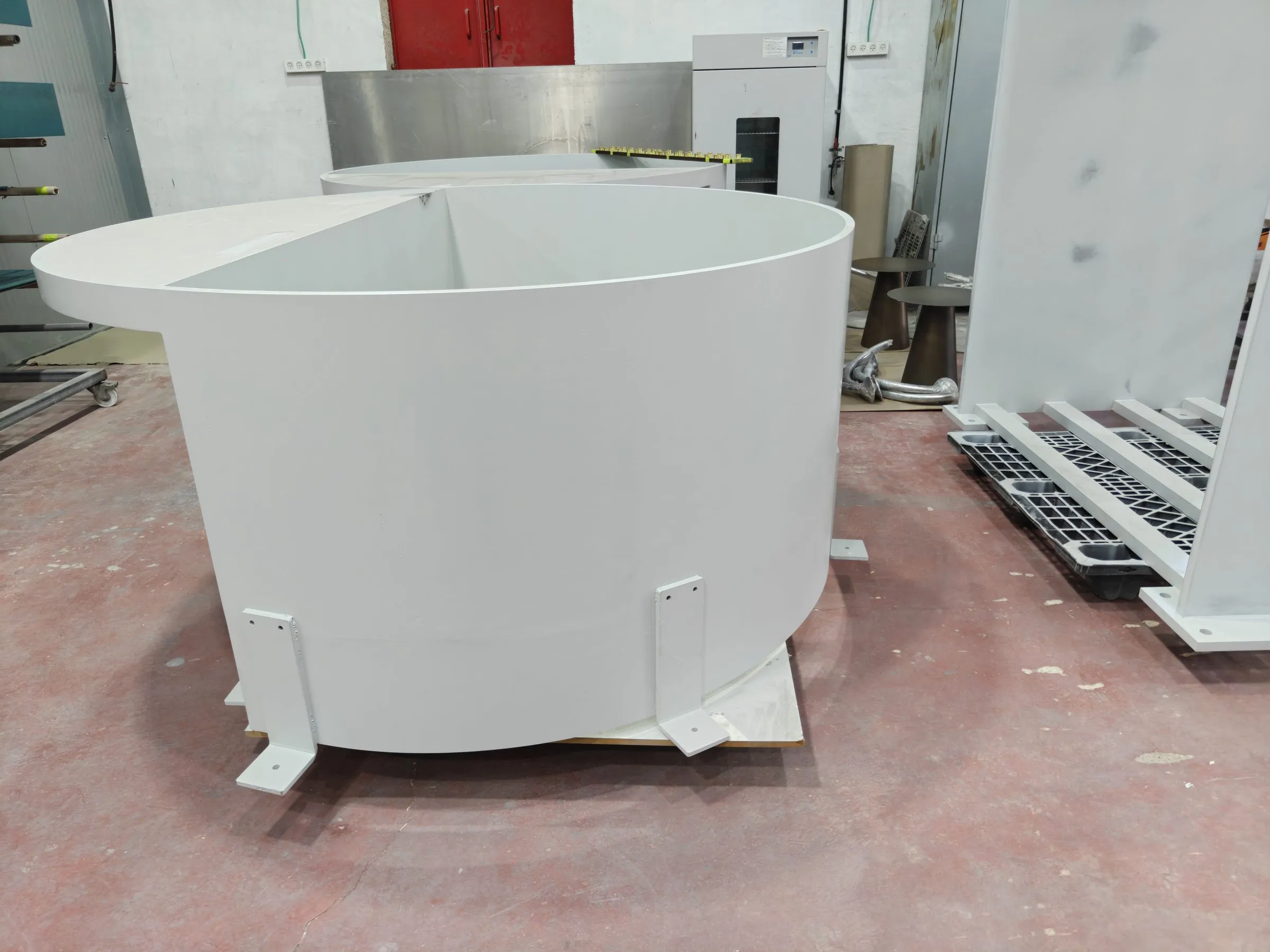
Then we spray the paint and clear coat in thin coats and let each layer cure the way the system needs, before the piece is packed and leaves our production facility.
How long does it take, and how do you care for it?
A typical project is ready 2 to 4 weeks after you approve the sample. We do all the work in our own production facility, for projects in Israel and abroad, and every project comes with a warranty of 2 years on workmanship and coating quality.
Care is simple. Wipe with a soft cloth and a neutral cleaner, with nothing abrasive. Ready to start? Send us your design, tell us the color and where the piece will stand, and we'll come back with the paint system and clear coat we'd choose. 10 years, more than 1,000 projects in Israel and around the world, all made in our own production facility.