What is metallization by arc wire spraying?
It's a method from the thermal spray family. The spray gun takes two metal wires, an electric arc melts them, and compressed air throws the molten metal onto the piece in fine droplets. Each droplet flattens as it lands and grips the prepared surface and the droplets before it. Pass after pass, a layer of the metal you chose builds up on the surface.
That layer is real metal. Not paint in a metallic color, and not metal powder in a binder. Sprayed copper is copper, so we polish it, brush it and give it a patina the way we would copper. The piece underneath stays what it was built from. What changes is the surface. And like any copper, left bare it changes with the air over time, which is why we seal it once the finish is right.
Why not build the piece from solid metal?
Because solid metal isn't always the right material for the body of a piece. Solid brass or bronze is expensive and heavy, and it doesn't always suit the structural job. A large cladding panel, a frame or a sculpture first has to stand steady and connect properly.
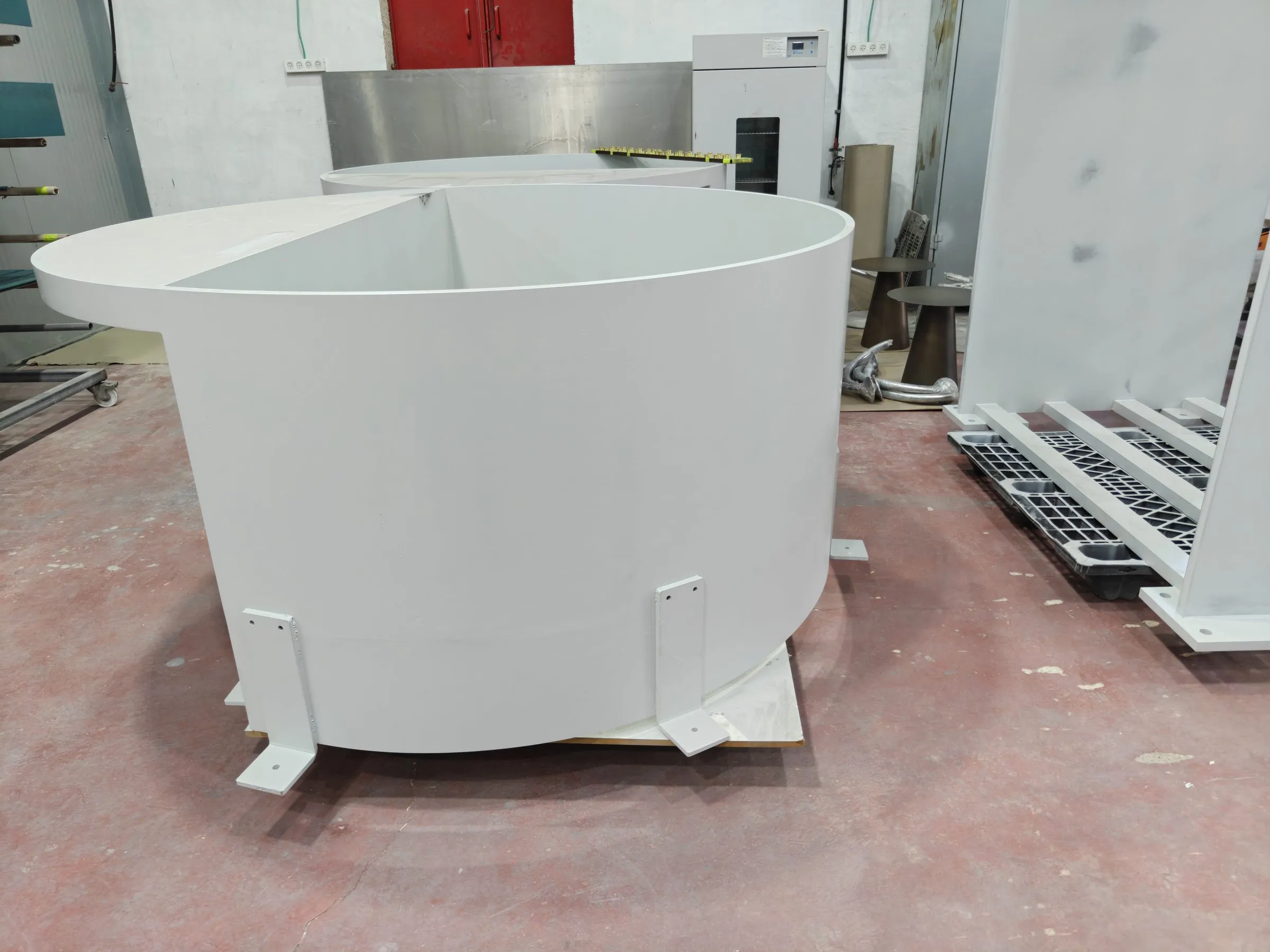
Arc wire spraying splits the two jobs. The body is built from steel or aluminum, whatever the structure needs, and the metal you see and touch is sprayed on top. Your design stays true to the idea, even when the engineering calls for another material.
Why does spraying give you more design freedom?
Because the metal goes on after the piece is built. The shape comes first, the spray follows it, and curves, rounded corners and large surfaces all take the same metal. Nobody has to bend a brass sheet around a curve or find a bronze casting in the size you drew.
Joined parts are where you see it most. A frame welded from several sections gets one layer that runs across the welds too, and the eye sees one piece in one finish. A wall built from many panels gets the same metal and the same finish on every one of them.
And when the design changes its metal, the structure stays as it is. The same steel frame can come out copper, brass or Corten.
Which metals can be sprayed, and onto what?
Zinc, aluminum-zinc, copper, brass, bronze, Corten and rose gold, and more. If your design needs something else, we import a custom alloy for the project, with a minimum order we agree in advance.
We spray mostly onto steel, aluminum and pieces already fabricated from metal, and also onto concrete, mineral boards, fiberglass and composites. Spraying is a hot process, so for MDF and wood pieces we usually choose Liquid Metal Coating – MetaliQ. And if the piece is already solid brass, bronze or copper, it needs no spraying. We finish it directly, through Metal Finishes on Solid Metals.
Before we spray, we check every piece, its material, shape, edges and joints, and prepare the surface so the metal grips it well.
Which finishes can sprayed metal take?
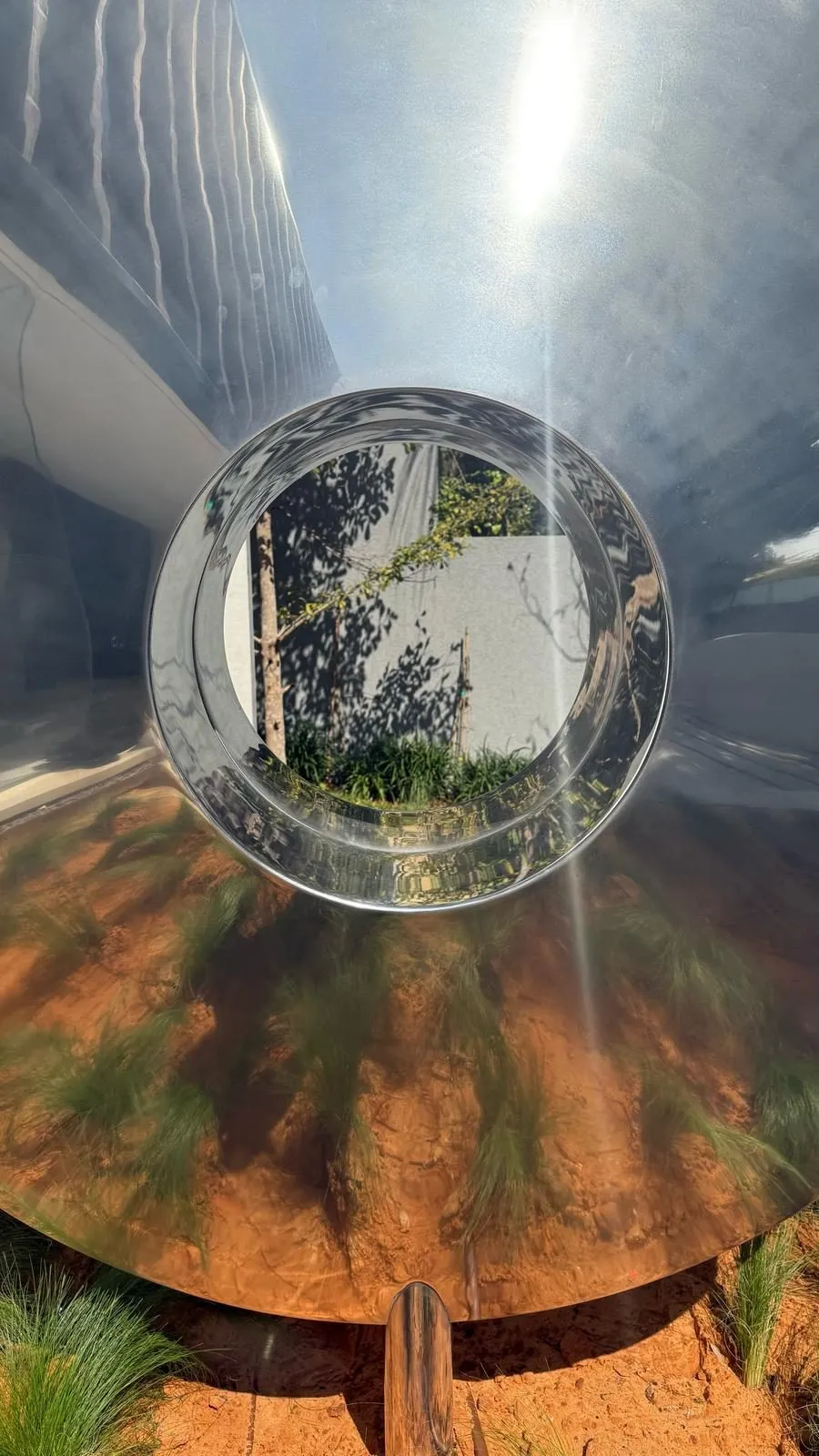
Sprayed metal comes out of the gun with a texture of its own, and that's where the finishing starts. We brush it, polish it or give it a patina. Sprayed copper we polish to a mirror, and sprayed copper, brass and bronze all take a patina. Brushed, sprayed metal gets fine lines that catch light from the side. Polished, it turns smooth and bright.
Several finishes in our catalogue are also made by spraying, such as Polished Copper, Copper Tiffany Patina, Brushed Zinc, Blackened Zinc and Corten Steel. Finally we seal the finish with a ceramic clear coat chosen for the metal, the finish type and the place where the piece will stand.
Where does arc wire spraying work best?
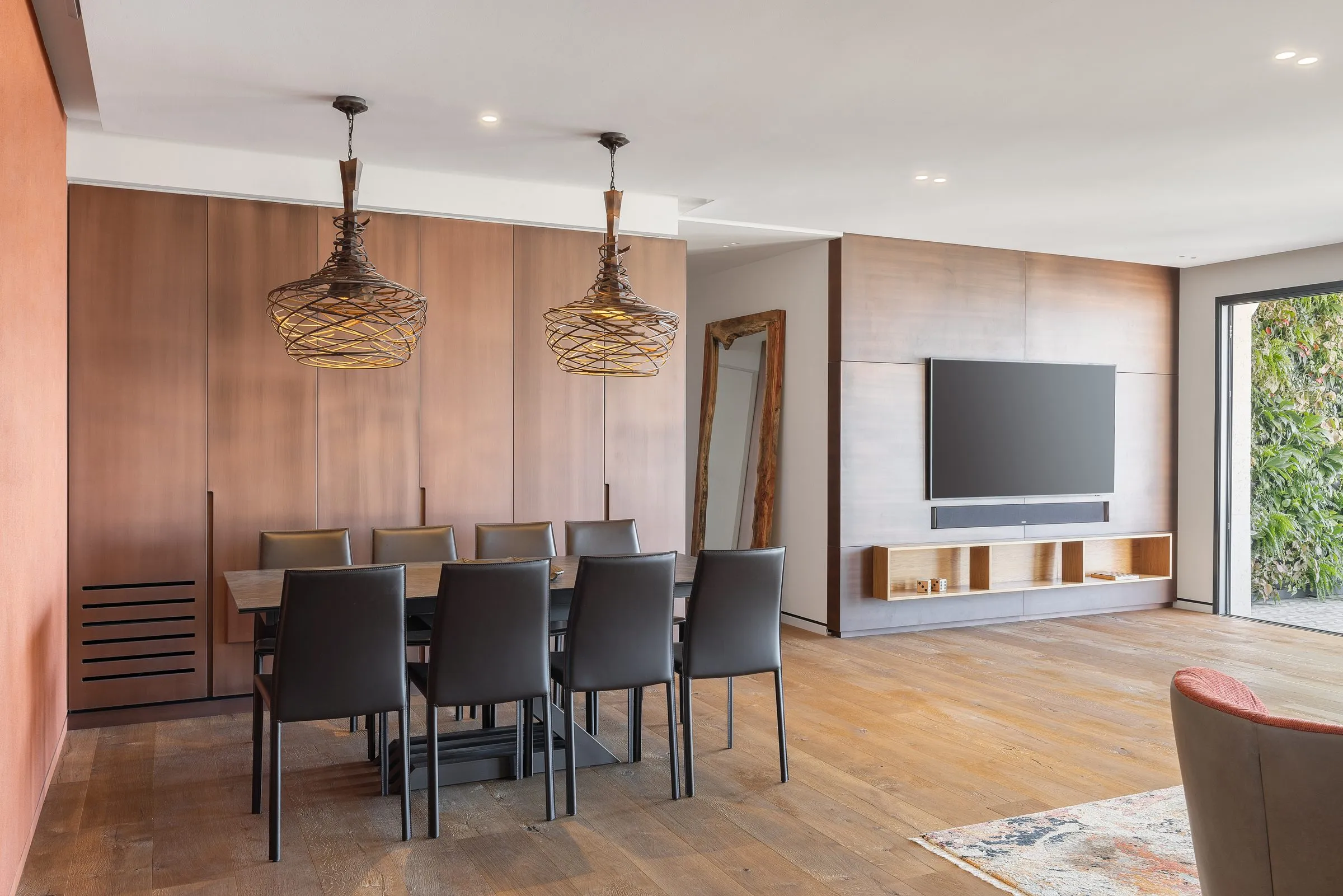
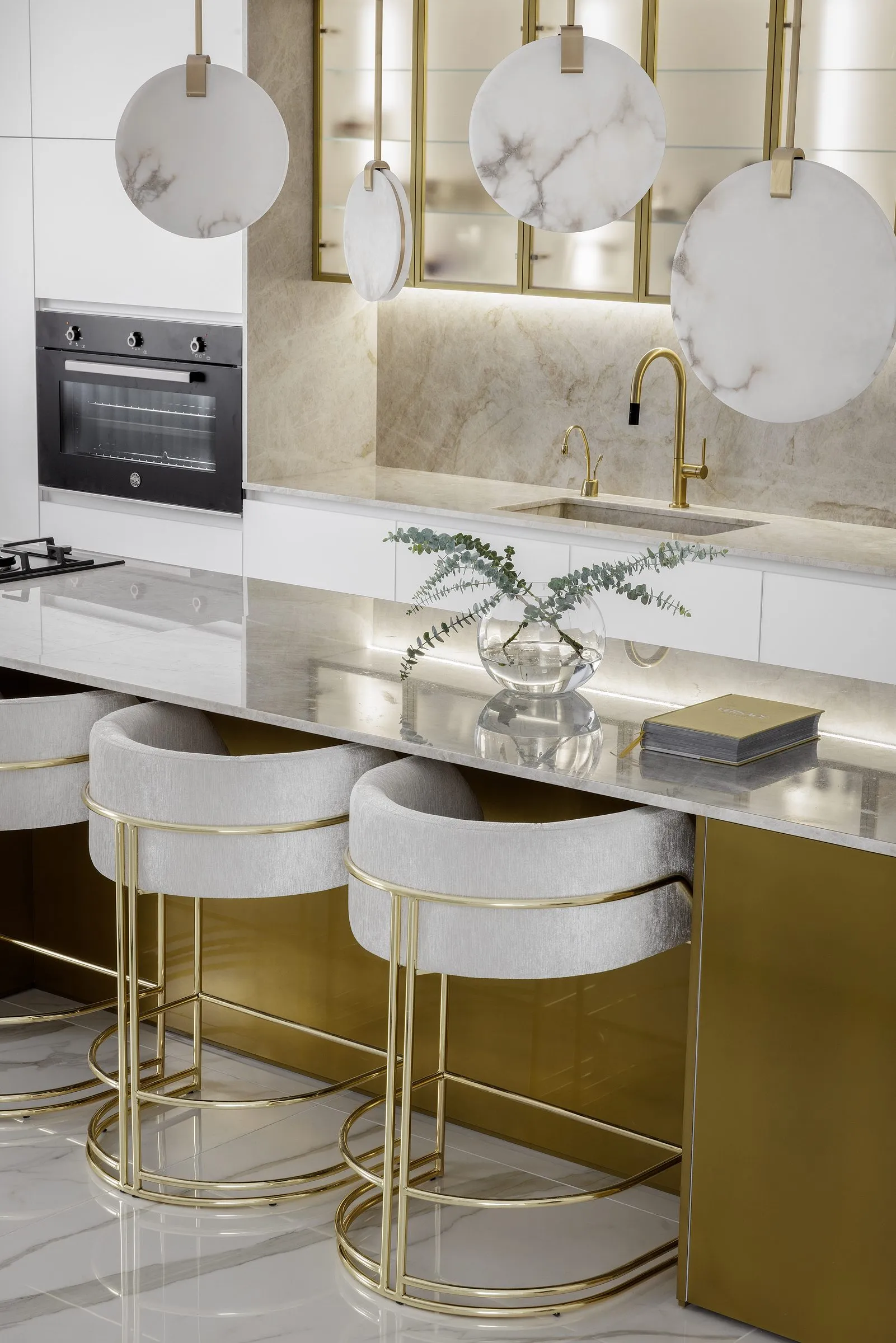
In lobbies, hotels, offices and restaurants, and at home too. Feature wall panels, wall cladding, furniture, sculptures and pieces for public spaces. Anywhere you want the metal to be the first thing people notice.
For pieces people touch a lot, we choose the metal and the clear coat to match the use. Outside, in the open or under a roof, sprayed metal works for architectural details, and we confirm every outdoor project technically before we start.
Metal spraying actually began as corrosion protection, with zinc sprayed onto steel. Sprayed zinc or aluminum-zinc still protects steel that way, and we can give that layer a finish that looks good.
How does a project run, and how do you care for the finish?
Send us drawings or photos, and tell us what the piece is made of and where it will stand. We suggest the metal, the finish and the clear coat, and you choose from our finish catalogue or order a sample. From sample approval to finished pieces usually takes 2 to 4 weeks.
We make everything in our own production facility, for projects in Israel and abroad, and every project comes with a warranty of 2 years on workmanship and coating quality. Care is simple, a soft cloth and a neutral cleaner, nothing abrasive. 10 years, more than 1,000 projects in Israel and around the world.